Here is a review of the focus of each gospel:
Matthew
|
Mark
|
Luke
|
John
| |
Jesus is . . .
|
Promised King
|
Servant of God
|
Son of Man
|
Son of God
|
Targeted readers were . . .
|
Jews
|
Gentiles, Romans
|
Greeks
|
The World
|
Themes
|
Jesus is the Messiah because He fulfilled Old Testament prophecy
|
Jesus backed up His words with action
|
Jesus was God but also fully human
|
Belief in Jesus is required for salvation
“I AM”
|
The writer was a . . .
|
Teacher
|
Storyteller
|
Historian
|
Close disciple of Jesus and theologian
|
Greatest emphasis is on . . .
|
Jesus’ sermons and words
|
Jesus’ miracles and actions
|
Jesus’ humanity
|
The principles behind Jesus’ teaching and relationship
|
BACKGROUND
Book of Luke
Luke's books (Luke and Acts) make up 28 percent of the New Testament. He is mentioned in Colossians 4:14; 2 Timothy 4:14; and Philemon 24. He also is part of the "we" in Acts 16:10-17; 20:5-21:18; and 27:1-28:16. He was a Gentile and physician (Colossians 4:10-14). He identifies himself as a historian (Luke 1:1-4) who carefully researched his material. It is believed he wrote it between A.D. 58 and 60.
Luke takes us consecutively through the days of Jesus as the Son of Man, fully human but fully God. Luke was careful to point out that Jesus was the fulfillment of the things written in the law of Moses, the Prophets, and the Psalms. It seems he wrote this book primarily for Gentiles because he frequently explained Jewish localities (4:31; 8:26; 21:37; 23:51; 24:13) and he traced Jesus' genealogy all the way back to Adam (3:23-38) indicating that Jesus represented all of mankind and not just the Jews. Jesus preached to the Gentiles because of his rejection by Israel. Luke also used the Septuagint for quotes from the Old Testament. Since this is the Greek translation of the Old Testament, it is believed that Greeks were his specific Gentile audience. Luke is the longest book with 1151 verses.
BACKGROUND of LUKE 1
Each event has a background that gathers information from the other gospel accounts where they are mentioned with hyperlinks to the references.
1. Luke's purpose in writing: Luke 1:1-4
Luke took the things orally handed down by eyewitnesses of Jesus and compiled them together after careful investigation and research of the life of Christ. We do not know who "Theophilus" was, but we know that his name means "lover of God" so maybe it was written for all of us who love Him!
4. An angel promises the birth of John to Zechariah: Luke 1:5-25
The "angel events" in Luke 1 and 2 are so significant! God had not spoken through angels or prophets for four hundred years.
Zechariah and Elizabeth were godly people but were not able to have children, which was shameful in Jewish culture and a sign of the absence of God's blessing. But God had broken through the barrenness barrier to accomplish His purposes in the past (Isaac, Samson, Samuel), and He would break through it again to bring us a very key figure in the Gospel narrative.
Incense and prayers were offered twice a day, and while this happened prayers were offered by the people when they saw the smoke. Gabriel (Daniel 8:16, 9:21) announced that Zechariah's prayer for a son would be answered. Note the six things said about John in Luke 1:14-17. One significant characteristic was that John would be filled with the Holy Spirit. It should be noted that Luke refers to the Holy Spirit more than any other gospel author.
John would "go on before the Lord in the spirit and power of Elijah" (1:17). This is a reference to Malachi 3:1 and 4:5-6 which speak of a messenger to be sent to clear the way before the Lord and who would turn hearts of children to fathers and the disobedient to the wisdom of the righteous.
Zechariah had a hard time believing when God broke through the barrenness. Consequently, his punishment was that he could not speak until his son was born.
Book of Luke
Luke's books (Luke and Acts) make up 28 percent of the New Testament. He is mentioned in Colossians 4:14; 2 Timothy 4:14; and Philemon 24. He also is part of the "we" in Acts 16:10-17; 20:5-21:18; and 27:1-28:16. He was a Gentile and physician (Colossians 4:10-14). He identifies himself as a historian (Luke 1:1-4) who carefully researched his material. It is believed he wrote it between A.D. 58 and 60.
Luke takes us consecutively through the days of Jesus as the Son of Man, fully human but fully God. Luke was careful to point out that Jesus was the fulfillment of the things written in the law of Moses, the Prophets, and the Psalms. It seems he wrote this book primarily for Gentiles because he frequently explained Jewish localities (4:31; 8:26; 21:37; 23:51; 24:13) and he traced Jesus' genealogy all the way back to Adam (3:23-38) indicating that Jesus represented all of mankind and not just the Jews. Jesus preached to the Gentiles because of his rejection by Israel. Luke also used the Septuagint for quotes from the Old Testament. Since this is the Greek translation of the Old Testament, it is believed that Greeks were his specific Gentile audience. Luke is the longest book with 1151 verses.
Kingdom in the Gospel Accounts
"Kingdom/Kingdom of God/Kingdom of Heaven” is a keyword/phrase in the Matthew, Mark, and Luke accounts of the Gospel. By the way, "Kingdom of Heaven” is used exclusively in Matthew, but means the same thing as "Kingdom of God."
Ask yourself these questions as you encounter this in your reading.
- What is the Kingdom of God?
- Who is in the Kingdom of God?
- When did/will the Kingdom of God come? Is it now, in the future, or both?
- Where is the Kingdom of God?
- How does one enter the Kingdom of God?
- What does the Kingdom of God mean to us personally?
Here is my husband's definition:
"The Kingdom of God is the sphere or realm of God's influence.
Theoretically, it is everywhere, but God chooses to limit Himself
because He wants us to choose to be 'in' it."
BACKGROUND of LUKE 1
The number at the beginning of this section is the number for a chronological order of events in the life of Jesus. Here is a list of all the events: 250 Events in the Life of Christ
Each event has a background that gathers information from the other gospel accounts where they are mentioned with hyperlinks to the references.
1. Luke's purpose in writing: Luke 1:1-4
Luke took the things orally handed down by eyewitnesses of Jesus and compiled them together after careful investigation and research of the life of Christ. We do not know who "Theophilus" was, but we know that his name means "lover of God" so maybe it was written for all of us who love Him!
4. An angel promises the birth of John to Zechariah: Luke 1:5-25
The "angel events" in Luke 1 and 2 are so significant! God had not spoken through angels or prophets for four hundred years.
Zacharias was a member of the course of Abijah, one of the twenty-four clans or ranks of priests who maintained the Temple ritual (1 Chronicles 24:10). The 'courses' took turns in conducting the ceremonies of worship and each member usually had the privilege of presiding once in his lifetime (1 Chronicles 24:19). The opportunity of offering incense was the high point of Zacharias' career, for he was delegated to enter into the holy place of the Temple, where the altar of incense stood before the mysterious veil that concealed the Holy of Holies. (Merrill c. Tenney, New Testament Times, p. 139).
Zechariah and Elizabeth were godly people but were not able to have children, which was shameful in Jewish culture and a sign of the absence of God's blessing. But God had broken through the barrenness barrier to accomplish His purposes in the past (Isaac, Samson, Samuel), and He would break through it again to bring us a very key figure in the Gospel narrative.
Incense and prayers were offered twice a day, and while this happened prayers were offered by the people when they saw the smoke. Gabriel (Daniel 8:16, 9:21) announced that Zechariah's prayer for a son would be answered. Note the six things said about John in Luke 1:14-17. One significant characteristic was that John would be filled with the Holy Spirit. It should be noted that Luke refers to the Holy Spirit more than any other gospel author.
John would "go on before the Lord in the spirit and power of Elijah" (1:17). This is a reference to Malachi 3:1 and 4:5-6 which speak of a messenger to be sent to clear the way before the Lord and who would turn hearts of children to fathers and the disobedient to the wisdom of the righteous.
Zechariah had a hard time believing when God broke through the barrenness. Consequently, his punishment was that he could not speak until his son was born.
 |
| "The Annunciation" By Paolo de Matteis (Saint Louis Art Museum official site) [Public domain], via Wikimedia Commons |
5. An angel promises the birth of Jesus to Mary: Luke 1:26-38
Mary was a poor, young girl (some commentators think as young as 12 or 13) from Nazareth, and God chose her to be the mother of the Messiah. WOW! The Greek word for "highly favored" comes from the root word charis, "grace." Mary was a recipient of God's special grace.
Note that Gabriel said, "Do not be afraid" to both Zechariah and Mary. He also told her of her Son's special characteristics, as he did to Zechariah. He was to be the "Son of the Most High":
The name Jesus is also very significant. It is the Greek form of the Hebrew name, Joshua, which means "the Lord saves." Joshua led the people into the promised land (Joshua 1:1, 2), and Jesus would lead His people to salvation.
Unlike Zechariah, Mary was not punished for her questioning. She asked how Jesus would be born to her if she was a virgin, Gabriel must have known the heart behind her question.
Mary's response is so beautiful: “Behold, the bondslave of the Lord; may it be done to me according to your word” (Luke 1:38). I wish we could all have that response to God's will!
Some commentators believe that Luke must have interviewed Mary personally because this account is so personal, reflecting her deep inward feelings.
6. Mary visits Elizabeth: Luke 1:39-56
Shortly after Gabriel visited Mary, she went to spend three months with her pregnant relative Elizabeth. What joy and female bonding!
Luke frequently used the word "joy" in the two books he wrote (Luke and Acts). He often links this word with salvation. We have seen him use it in describing John the Baptist (1:14), and it is in full view in this section! John leaped for joy in Elizabeth's womb when Mary came carrying Jesus. Elizabeth responded in joy when she said that Mary was carrying the mother of her Lord. The term "Lord" (kyrios) was often used to describe Jesus in the book of Luke because "Christ" ("Messiah") would have not meant as much to his target audience, the Greeks, because they did not know all the prophecy leading up to His coming.
Lastly, Mary responded in joy at carrying Jesus by singing a hymn of praise and quoting many Old Testament Scriptures (Psalms and Hannah's song in 1 Samuel 2:1-10). This song is often called "The Magnificat" because the opening words, "My soul doth magnify the Lord," is Magnificat anima mea Dominum in Latin. Many beautiful pieces of music have been written to this music by composers like Vivaldi and Bach (I sang the Vivaldi version my freshman year in college).
7. John the Baptist is born: Luke 1:57-80
More rejoicing occurs as John is given to this once-barren couple. They named him John (meaning "God has been gracious") just as the angel had instructed even though it was tradition to name a baby boy after the father or someone else in the family. With their insistence that his name be John, Zechariah let out Holy Spirit-inspired praise. Significant words from his hymn of praise indicate what Jesus' coming to earth would mean for us:
I have never had an angel visit me, but this story brings back fond memories of a day during the Christmas season of 1991 when God told me that the baby due in January would be a boy. Later that day, while driving to a performance of The Nutcracker, I told George about what God told me, and to my surprise, he said, "Carol, God told me the same thing this morning!" It was fun to tell our son that story on the way to see The Nutcracker again twenty years later!
I think that this is confirmation that God does speak to us today, and we do not have to wait four hundred years for God to break through the silence.
APPLICATION
Here are some possible suggestions for application:
PRAYER
Lord, I cannot study this and not believe that You are the LIGHT OF THE WORLD who came into my dark life. Everything fits together so perfectly. Thank You for Your Word that shows us all of this. Amen. Would you shine on my friend's dark life today.
Note that Gabriel said, "Do not be afraid" to both Zechariah and Mary. He also told her of her Son's special characteristics, as he did to Zechariah. He was to be the "Son of the Most High":
The Septuagint often used the term “Most High” (hypsistou) to translate the Hebrew ‘elyôn (cf. v. 76). Mary could not have missed the significance of that terminology. The fact that her Baby was to be called the “Son of the Most High” pointed to His equality with Yahweh. In Semitic thought a son was a “carbon copy” of his father, and the phrase “son of” was often used to refer to one who possessed his “father’s” qualities (e.g., the Heb. trans. “son of wickedness” in Ps. 89:22 [kjv] means a wicked person). (The Bible Knowledge Commentary: An Exposition of the Scriptures, 2:205)God promised David that his kingdom would last forever (2 Samuel 7:16). Jesus fulfilled this promise.
The name Jesus is also very significant. It is the Greek form of the Hebrew name, Joshua, which means "the Lord saves." Joshua led the people into the promised land (Joshua 1:1, 2), and Jesus would lead His people to salvation.
Unlike Zechariah, Mary was not punished for her questioning. She asked how Jesus would be born to her if she was a virgin, Gabriel must have known the heart behind her question.
Mary's response is so beautiful: “Behold, the bondslave of the Lord; may it be done to me according to your word” (Luke 1:38). I wish we could all have that response to God's will!
Some commentators believe that Luke must have interviewed Mary personally because this account is so personal, reflecting her deep inward feelings.
 |
| The Birth of John the Baptist by Jacopo Pontormo [Public domain], via Wikimedia Commons |
6. Mary visits Elizabeth: Luke 1:39-56
Shortly after Gabriel visited Mary, she went to spend three months with her pregnant relative Elizabeth. What joy and female bonding!
Luke frequently used the word "joy" in the two books he wrote (Luke and Acts). He often links this word with salvation. We have seen him use it in describing John the Baptist (1:14), and it is in full view in this section! John leaped for joy in Elizabeth's womb when Mary came carrying Jesus. Elizabeth responded in joy when she said that Mary was carrying the mother of her Lord. The term "Lord" (kyrios) was often used to describe Jesus in the book of Luke because "Christ" ("Messiah") would have not meant as much to his target audience, the Greeks, because they did not know all the prophecy leading up to His coming.
Lastly, Mary responded in joy at carrying Jesus by singing a hymn of praise and quoting many Old Testament Scriptures (Psalms and Hannah's song in 1 Samuel 2:1-10). This song is often called "The Magnificat" because the opening words, "My soul doth magnify the Lord," is Magnificat anima mea Dominum in Latin. Many beautiful pieces of music have been written to this music by composers like Vivaldi and Bach (I sang the Vivaldi version my freshman year in college).
7. John the Baptist is born: Luke 1:57-80
"The greatest forces in the world are not the earthquakes and the thunderbolts.
The greatest forces in the world are babies."
Dr. E.T. Sullivan
1) Redemption (1:68) - The Greek word is lýtrōsis, and it means "release from an obligation" In 1:68 and 2:38, it means "liberation" from the yoke of enemies (Luke 24:21). In Luke 4:18, Jesus will say he has brought "deliverance to the captives." And Hebrews 9:12 brings it more into focus: Jesus would bring deliverance through His death, from the guilt and power of sin.
2) Salvation (69-75) - Jesus is the "horn/strength of salvation." Simeon would later call Him, "Your salvation" (Luke 2:30). This metaphor is from the Old Testament (Psalm 18:2; 75:10; 132:17) where the strength of the animal is seen in their horns. He would deliver them from their enemies (1:74). As foretold, Jesus came from the house of David (1:69) as we learned when we read about Mary and Joseph's lineage, a Jew (Genesis 12:1-3), and was born in David's city, Bethlehem (Micah 5:2).
3) Forgiveness (1:76-77) - Forgiveness means "letting them [sins] go as if they had never been committed" (The Enhanced Strong's Lexicon). Jesus' death paid our debt of sin to a most holy God.
4) Light (1:78-79) - Jesus is the "Sunrise from on high." We read in John 1 that Jesus is the light for people sitting in darkness and death. He brought light to shine a path in our life that leads to peace and abundance. HALLELUJAH!REFLECTION
I have never had an angel visit me, but this story brings back fond memories of a day during the Christmas season of 1991 when God told me that the baby due in January would be a boy. Later that day, while driving to a performance of The Nutcracker, I told George about what God told me, and to my surprise, he said, "Carol, God told me the same thing this morning!" It was fun to tell our son that story on the way to see The Nutcracker again twenty years later!
I think that this is confirmation that God does speak to us today, and we do not have to wait four hundred years for God to break through the silence.
APPLICATION
Here are some possible suggestions for application:
- Spend some time listening to God. That means shutting out the busyness of your life to really find some solitude and silence. It doesn't need to be a long and formal thing. Simply bow your head, connect to His presence, and listen.
- Worshiping God as You pray through Mary's Magnificat (see video below)!
- Try this Lectio Divina of Mary visiting Elizabeth or the Angel Visiting Mary.
- Try a Visio Divina of this wonderful picture (the artist gave me permission to use this here. Follow this link to other art by him):
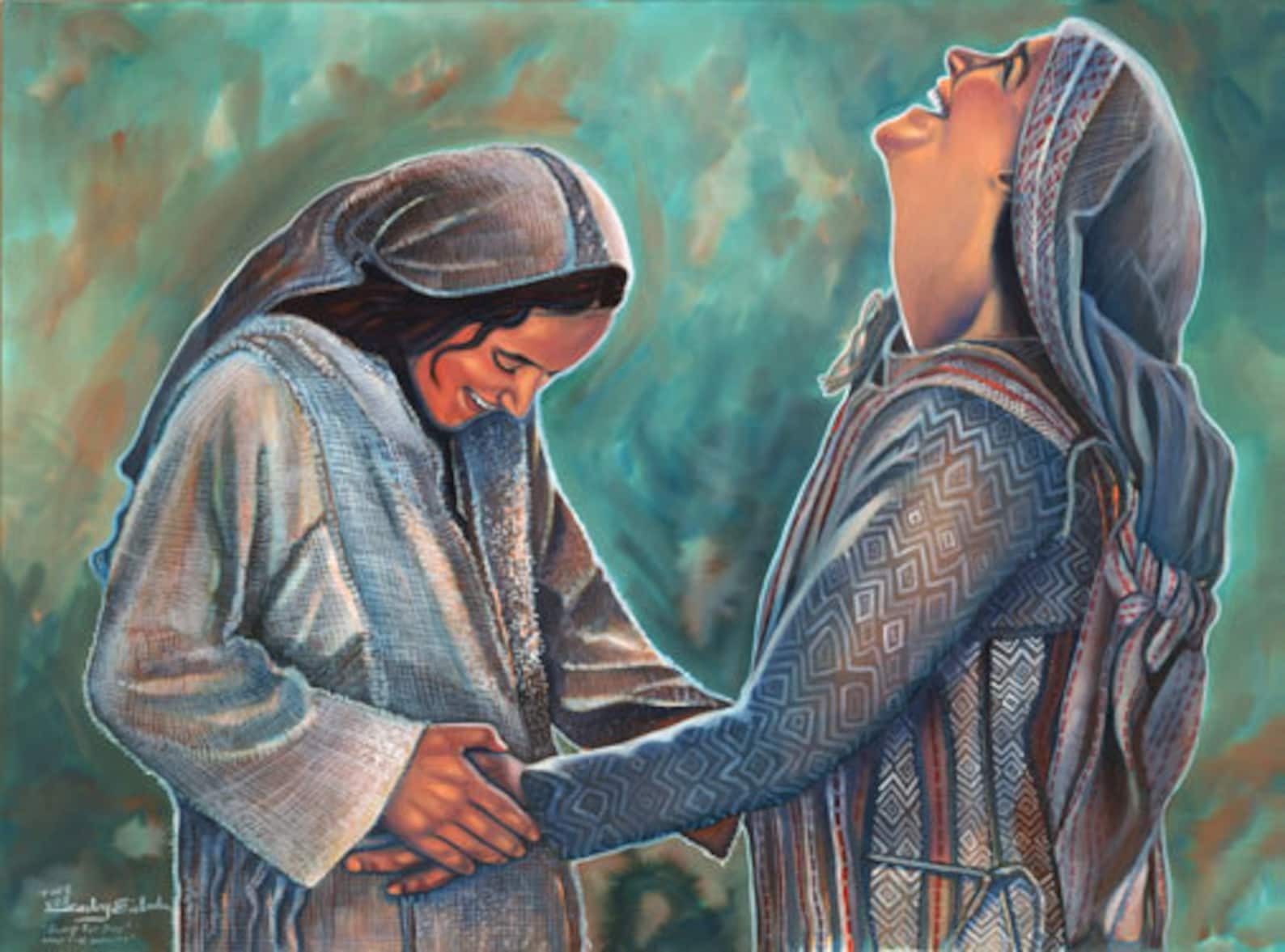
- Meditate on Jesus being redemption, salvation, forgiveness, and light for you.
I paused and connected with God by stilling myself. Then I reflected on the path of light He has given me, recalling times where He led me in a clear, well-lighted path. I had a time of Interactive Gratitude journaling, reflecting on the peace and abundance I have experienced as I have followed that path. Then, I listened to what He had to say to me about that.
Let John Rutter's rendition of the Magnificat lead you into worship and prayer:
Lord, I cannot study this and not believe that You are the LIGHT OF THE WORLD who came into my dark life. Everything fits together so perfectly. Thank You for Your Word that shows us all of this. Amen. Would you shine on my friend's dark life today.


 by Kenneth Boa, pp. 7-9)

 because his voice sounds so gallant! In the margin of the New American Standard Bible, it says he was a "mighty, valiant man." The same Hebrew word also describes Judges Gideon and Jephthah (Judges 6:12; 11:1). Boaz was a godly man also (2:4, 12). His actions toward Ruth in the fields proved his faith and character. The poor were allowed to reap (glean) the corner of the fields after the harvesters had left, but he allowed her to follow along with the reapers and drink with them. This was far beyond the requirements of the Law (Leviticus 19:9-10; 23:22). Ruth received unexpected favor (
 by Leon Wood, pp. 94-99).
 , "Jericho grew rich by trading with other communities, and people in the nearby villages became jealous. To protect themselves, the people of Jericho built a massive stone wall around the town" (p. 109). There are many pictures on the web of the site.
BACKGROUND
A new generation had entered the Promised Land. Therefore, they needed to be circumcised to fulfill the covenant. For an explanation of this, see the post for Genesis 17 here.