Pages
- Home
- BOOKMARK DOWNLOADS FOR EACH YEAR
- Psalms in Numerical Order
- How the Bible Book Club Came to Be (December 2007)
- Kings of Israel and Judah
- Links to Bible Chapters
- Different Ways of Reading
- Bible Study and Meditation Tools
- DOWNLOADS of Bible Book Club Books
- CREATION TO CHRIST STORYTELLING
- Storytelling as Spiritual Discipline
Friday, May 1, 2020
May in Numbers and Deuteronomy
Tuesday, May 31, 2011
Psalm 90 – Our Dwelling Place
The Psalms will be interspersed in chronological order over Year One and Year Two of the Bible Book Club. HERE is a link to the Psalms in numerical order if you prefer to do it that way.
BACKGROUND
This is the oldest psalm and was written by Moses, the man of God (Joshua 14:6; Ezra 3:2). While the occasion of its writing is unknown, it would fit with the 40-year wilderness wanderings of the Israelites.
In this psalm, Moses contrasts God’s eternal nature with man’s frailty.
This poem is a “chiastic” or “stair-step” poem – “one in which the psalmist builds to a climax, then reverses directions in the middle and repeats himself using synonyms” (The Daily Walk: June 2008, p. 24).
Here is an example of this from Psalm 90:1-2:
A Lord
..B You have been our dwelling place
….C Throughout all generations
…...D Before the mountains
….....E Were born
….....E Or You brought forth
…...D The earth and the world
….C From everlasting to everlasting
..B You are
A God
Isn't that cool?
REFLECTION
This Psalm has significant meaning to me. If you come to my house, you will see it quoted in a metal sculpture next to our front door (thanks Kevin and Nancy Higgins!).
APPLICATION
Is God your dwelling place? Are you living in light of eternity in your marriage and family?
PRAYER
Lord, thank You that You are our home, safe and secure. Help us to live in the light of eternity today. We ask this in Jesus’ name. Amen.
Monday, May 30, 2011
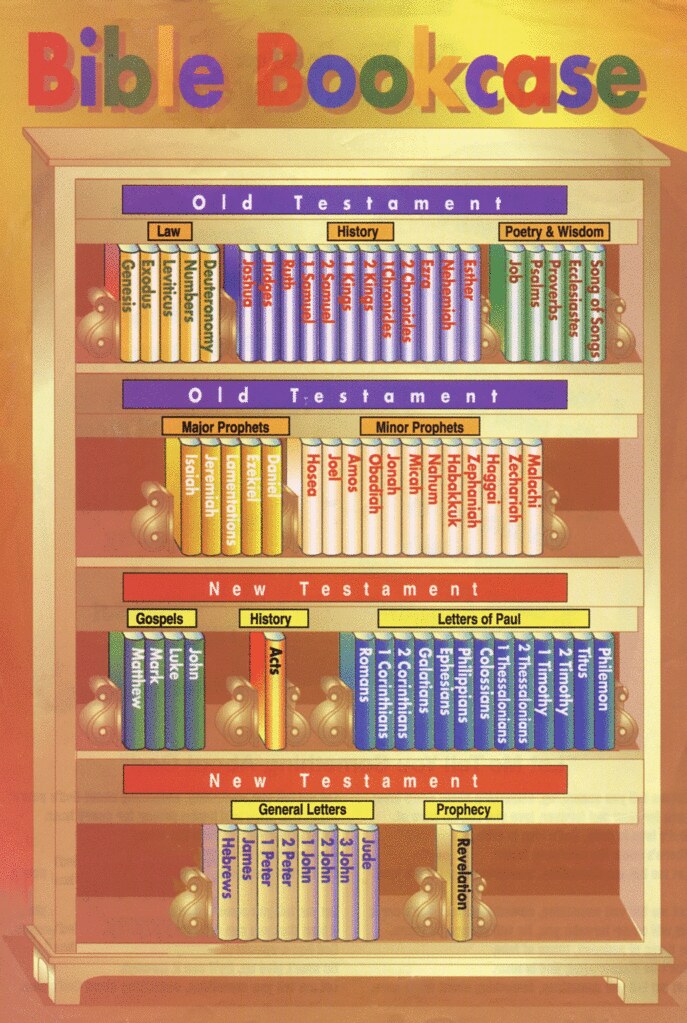
Put Deuteronomy Back on the Shelf - You are done with the Pentateuch!
You have completed the first five books of the Bible called the "Pentateuch"!
Congratulations!


Deuteronomy Chapter TItles
Chapter Titles
1: What God Has Already Done
2: God's Faithfulness in the "Trudging"
3: Review of Conquests East of the Jordan/Reminder that Moses Would Not Enter the Land
4: So That You May Live
5: Review of the Ten Commandments
6: Wholehearted Love for the LORD
7-8: Destroy the Canaanites and Remember From Whence You Came
9: "You Have Been Rebellious Since the Day I Knew You"
11-12: Circumcise Your Deceitful Hearts and Walk in the Ways of Your Mighty God
13-14: Just Say No to Idols and Unclean Animals
15: Generosity
16: The Three Big Feasts and Impartiality of Judges
17: Qualifications of a King
18: The Portion for the Levites and Prohibition of Occult Practices
19: Cities of Refuge and Purging the Evil from Among You
20: On Fear and Faith and Holy War
21: Holiness in the Home
22: God's Plan for Protection
23: Exclusion for the Assembly, Uncleanness in the Camp, and Miscellaneous Laws
24: More Miscellaneous Laws (One about Divorce and Remarriage)
25: More Miscellaneous Laws
26: First Fruits and Tithe Ceremony
27: Consequences of Obedience and Disobedience
28: Blessings and Cursings
29: Summary of the Covenant Demands: Choose Life!
30: Circumcision of the Heart
31: Moses' Final Words: Be Strong and Courageous and Read the Word
32: "Not an Idle Word for You"
33: Moses Blesses
34: Moses Dies
Deuteronomy 34 - Taking a Last View from Mount Nebo
![]() |
| The View from Mount Nebo (http://www.bamjam.net/Jordan/Nebo.html) |
LINK: Deuteronomy 34
The Scarlet Thread of Redemption
Therefore, holy brethren, partakers of a heavenly calling, consider Jesus, the Apostle and High Priest of our confession; He was faithful to Him who appointed Him, as Moses also was in all His house. For He has been counted worthy of more glory than Moses, by just so much as the builder of the house has more honor than the house. For every house is built by someone, but the builder of all things is God. Now Moses was faithful in all His house as a servant, for a testimony of those things which were to be spoken later; but Christ was faithful as a Son over His house--whose house we are, if we hold fast our confidence and the boast of our hope firm until the end. (Hebrews 3:1-6)
14. Perseverance, keeping the heart for the battle
“I beseech you therefore, brethren, by the mercies of God, that ye present your bodies a living sacrifice, holy, acceptable unto God, which is your reasonable service” (Rom. 12:1).
If you get used to seeing God do miracles, you quickly stop being thrilled and thankful. The things of God can become old hat, and you can fall into complacency. Remember thestory of the hare and the tortoise? The but he was sidetracked along the way because it was so easy - success was assured, he thought. The tortoise, on the other hand, just kept plugging along, recognizing that in order to win the race, he needed to put all his efforts into it. And he won. He kept his eye on the objective and did not allow himself to be distracted.hare started out great,
Like the race between the tortoise and the hare, the battle which Christians face today needs to be won. It is for keeps. And also, like that fabled race, the racetrack today needs to be won. It is for keeps. And also like that fabled race, the racetrack contains many potential distractions. Have no doubt that Satan will try everything he can to disqualify you and get you out of the fight.
This list is just a few suggestions to help you from becoming a casualty of the fight, the war that is the Christian life. Too often, Satan is successful in taking believers out of the battle. While many begin well, few end well. Many aspire, but few attain. My prayer is that you may be one of those that attains.
Sunday, May 29, 2011
Deuteronomy 33 - Moses Blesses
BACKGROUND
- Genesis 49:4; Judges 5:15-16
- Genesis 49:8-12; Ezekiel 19:1-7; Micah 5:8; and Revelation 5:5 (Look for the Scarlet Thread of Redemption and Jesus!!!!)
- Genesis 49:5-7; Exodus 32:25-29; Joshua 14:4; 21:41
- Genesis 44:20 Genesis 49:27; Judges 3:12-30 (Ehud); Judges 19 - 21, 1 Samuel 11-15 (Saul and Jonathan).
- Genesis 48:17-20; 49:22-26; Joshua 16:9; 17:14-18; Judges 8:1; 12:1; Hosea 12:8; 13:1
- Genesis 49:13-15; Judges 5:14,15
- Genesis 49:19; Joshua 13:24-27; Joshua 22:1-6; 2 Kings 3:4
- Genesis 49:17; Judges 14-17 (Samson); Judges 18:27
- Genesis 49:21; Joshua 19:32-38
- Genesis 49:20; Joshua 19:24-30
Saturday, May 28, 2011
Deuteronomy 32 - Not an Idle Word for You
BACKGROUND
This is indeed Moses' final song to the people of Israel. Israel's future is not painted in a very positive light: wealth would lead to apostasy. Yet, after severe judgment, God would have compassion and deliver His people:
The last part of this chapter includes his "final charge" to the people of Israel: "Take to heart" all the words. Why? Because they are not just idle words. They are life!For the LORD will vindicate His people,
And will have compassion on His servants,
When He sees that their strength is gone,
And there is none remaining, bond or free. (32:36)
REFLECTION
When something is an "idle" thing, what does it mean to you? When something is your "life," what does it mean to you?
You have heard the expression, "_____________ is my life!"
Think about this. Is God's Word a trifle or your life?
Usually, parting words are ones we want people to remember after we die. My father's last words were, "I love you." Essentially, the last words of Moses, this spiritual father of Israel, were:
My friend, Jack, asked me once, "Carol if you were going to die, what would be the most important spiritual discipline that you would want to pass on before you left this world?" Without hesitation, I said, "Prayerful meditation through the Scriptures. Meditating and letting God speak to you through them and praying responsively back to Him." The main reason I said this was because I had seen the change this had made in my own life.
I am in my fourth decade of discipling women. I have had so many women come back to me and say that this was the one thing that they most appreciated about our time together. Here are a couple of letters:
Beyond Malibu seems like so long ago when you introduced me to a deeper way of seeking and knowing God. Thank you." (I taught her how to pray through Scripture in a boat! We were at Young Life's Beyond Malibu in British Columbia in 1986.)
Just about a month ago my husband preached on "praying through Scripture" and I can't tell you how many times he and I talked about the way you taught me to pray through a Psalm. He said in his sermon, "There should be less and less of a separation between your Bible reading and your prayer life. They should become increasingly melded together." God used you to start me on this, and it has been so valuable to me over the years. It's a discipline to be taught -- thank you for teaching me." (We met together back in 1988.)In Hebrew, the word "idle" ("trifle" or "vain" in other translations) means "worthless." Webster defines this as "something of little value, substance, or importance." Is the Word of God a worthless thing to you or is it your life?
In Hebrew, "life" is defined as "sustenance, nourishment." In the Old Testament, "life" is decided by a right relationship to the righteous standards of the Word of God.
If you were in a country that did not allow you to have the Word, would you risk death to have it? Is it that important to you?
APPLICATION
On a scale of 1 to 10, what is your conviction about the importance of the Word of God in your life?
On the same scale, what is your actual practice?
Is there a difference?
Write out the scales in your journal. What measurable steps can you take to move along the scales of conviction and practice? Who are you going to tell to keep you accountable?
PRAYER
Lord, I pray that You would cause each and every person in the Bible Book Club to grow in their love for You through Your Word. Thank
Friday, May 27, 2011
Deuteronomy 31 - Be Strong and Courageous
We have a Bible Study Tool Time today: Character Study
BACKGROUND
Moses was 120 years old, and he reminded the people that he would not enter the Promised Land. They were reminded to "be strong and courageous" (31:6) because the Lord was with them and with the newly commissioned leader, Joshua.
The priests were reminded to read the whole law every seven years at the Feast of Booths to the whole congregation of Israel so that they and the generations to come might hear, learn, fear the Lord, and be careful to observe all the words of the Law.
Again, God reminded Moses that the people will rebel with bitter consequences for them.
REFLECTION
I have been reflecting quite a bit on what I have learned from Moses' life as I read his last words. We have been walking with Moses since Exodus. What have you learned from his life?
It is funny because coinciding with this, my prayer book had a verse of prayer to be "like Moses in how he did all the Lord commanded," and even a book from the Renaissance period that I read this week (The Prince
In addition to the chapter studies we do daily in the Bible Book Club, I like to do a "character study" sometimes to summarize principles from a person's life that I might apply to my own.
Here is a short primer on how to do character studies adapted from How to Study Your Bible
1. Gather All Information on the Character
You can do this from a concordance, topical Bible, or cross-reference system in your Bible. In the life of Moses, we do not need to do this because we already know his life is spotlighted from Exodus 1 to the end of Deuteronomy!
2. Read and Make Notes on the Main Truths
As you do, look for things like the following:
* Meaning of name -- In Scripture, the meaning of a person's name is sometimes (but not always) significant.
For example, Moses means "to draw out of water."
* Ancestry -- Who were the character's father, mother, tribe, and nation?
For example, Moses was born an Israelite but raised an Egyptian. This gave him a unique perspective and also created considerable difficulties for him.
* Training and conversion -- What caused the character to turn toward God, or to turn away from Him? What was this person's upbringing like, and where did it occur? Ask the 5 W's (who, what, when, where, why) and an H (how) about his/her life.
* Times lived in, number of years lived, periods of life --
For example, Moses had three significant 40-year periods.
* Shortcomings and accomplishments
Shortcomings: Moses did not think he could speak to Pharaoh. He hit the rock instead of speaking to it.
Accomplishments: He stood up to Pharaoh. He led the Israelites out of Egypt. He gave them God's Law.
* Spiritual life -- What about the character's prayer life, obedience, suffering, and personal lessons learned from God, attitudes, responses, and reactions?
* Scripture that can be used as cross-references to illustrate spiritual principles -- Discovering these references will become easier as we study the Bible!
* Effect of his/her life on others.3. Check Extra-Biblical References
* The way he/she died and the impact of his/her death.
After you have read all you can on your own from the Bible, check out a good Bible dictionary or other reference books to see what they have to say about the person you are studying.
4. Compile Your Material
Organize the truths you have discovered depending on the emphasis you choose to make. You could organize it:
* Chronologically from birth to death.
* According to major events in the person's life.
* According to principles of life and ministry. Example: Moses the intercessor, Moses the leader.5. Apply Truth to Your Own Life (make an "I WILL" statement)
Using the first person (I, me, my) list or write out in some detail the major truths God has taught you.
For example:
* I know that to be used by God I must be taught of God as Moses was. Therefore, "I WILL" saturate myself in God's Word every morning, praying for God to teach me, listening to His voice, and obeying what He says. I will keep a journal of what God speaks to me through His Word. This will be my daily "Listen and Obey" time like Mary Gheegh in God Guides.
* I might be in a hurry to do God's work, as was Moses (Acts 7:23-25), but God is not in a hurry. First, He must equip and prepare me until I see that only God can do God's work.APPLICATION
What have you learned from Moses' life that you would like to apply? What is your "I WILL" for today?
Lord, teach us what You want us to learn from the life of Moses. Help us to be strong and courageous in all that You have set out for us today. We pray this in Jesus' name. Amen.
Thursday, May 26, 2011
Deuteronomy 30 - Restoration Promise and Choose Life
BACKGROUND
God wanted to bless Israel. Israel could choose life or death. Moses knew that they would choose death by not following the Lord, and they would eventually go into captivity. But God would restore them at a future time.
Key repeated words in this chapter are "heart" (30:2, 6, 10), "command/commandment" (30:2, 8, 10, 11, 16), "turn/return" (30:2, 3, 8, 10), and "life" (30:15, 19, 20). If Israel turned to the Lord with all their heart by keeping His commandments, then they would enjoy a blessed life from Him.
There would be a time in the future when Israel would repent and return to the land after the Babylonian Captivity. The temple would be rebuilt, but the true fulfillment of what is said in this chapter will come at the end of time with the righteous return of Jesus. Their hearts will be circumcised, and they will turn to the Lord. There are many disagreements regarding the future of Israel. Some say that the church is "spiritual Israel," but I do not see a covenant relationship with the church in this chapter. God is speaking to Israel alone here. I do not know how it will all play out in the end times, but the passage has a lesson for all of us.
REFLECTION
Jesus said, "I came that they may have life, and have it abundantly" (John 10:10). He gives us eternal life when we believe in Him, but He also gives us life on a day-by-day and moment-by-moment basis. I pray you choose life by choosing to abide in Him throughout the day.
PRAYER
Lord, draw us to You. Help us to choose life. We pray this in Jesus' name in which we abide. Amen.
Tuesday, May 24, 2011
Deuteronomy 28 & 29 - Choices Have Their Consequences
BACKGROUND
(Written after my angioplasty in 2008.)
Deuteronomy 28
Whew! I'm exhausted after reading/listening to this chapter; fourteen verses of blessings if Israel obeyed, followed by fifty-four verses of curses if they did not obey - about four times longer than the blessings! I think this is because God knew that Israel would disobey and suffer the consequences of disobedience to the covenant. This is definitely a foreshadowing chapter. In fact, the horrible curse of 28:68 came true:
The LORD will bring you back to Egypt in ships, by the way about which I spoke to you, "You will never see it again!" And there you will offer yourselves for sale to your enemies as male and female slaves, but there will be no buyer.After the fall of Jerusalem in A.D.70, the slave markets of Egypt were glutted with Israelites that had been captured. There were so many that there were not enough buyers for them all!
Deuteronomy 29
This chapter is considered by some to be the conclusion of his third address and by others to be the start of his fourth address. Regardless, it is a summary of the covenant demands. He starts by giving a historical review of the Lord's faithfulness to Israel followed by more curses!
This review and renewal of the covenant are culminated in Moses' dramatic challenge at the end of the ratification:
I have set before you life and death, the blessing and the curse. So choose life in order that you may live, you and your descendants, by loving the LORD your God, by obeying His voice, and by holding fast to Him; for this is your life and the length of your days, that you may live in the land which the LORD swore to your fathers, to Abraham, Isaac, and Jacob, to give them. (30:19-20)We can summarize these chapters with their blessings and curses in this way:
OBEDIENCE = LIFE
Sadly, as we continue reading through the pages of the Old Testament, we will read of bad decisions leading to tragic consequences for the nation of Israel.
Dr. Faustus was written in 1588. He sells his soul to the devil in exchange for magical powers, knowledge, reputation, etc.; and in the end, he is taken away to hell. They both faced similar choices, but the former chose life and the latter chose death.
Look at the decisions you are making today, some may seem insignificant, but many little decisions can amount to far-reaching consequences. We can make decisions that cause us to go farther and farther away from God or decisions that are marked by ever-deepening daily fellowship with Him.
Which will it be for you today?
Saturday, May 21, 2011
Deuteronomy 23-27 - Stipulations of the Covenant
(Read over the next three days.)
BACKGROUND
(Written in 2008, before my angioplasty.)
We are continuing with societal regulations through Deuteronomy 26 with the ending of Moses' second address. Deuteronomy 27 begins Moses' third address with a command for a renewal of the covenant.
Deuteronomy 23
This chapter deals with those who were excluded from the assembly of the Lord, uncleanness in the camp, escaped slaves, prohibition of temple prostitution, lending and charging interest, vows, and eating in a neighbor's field. Regarding the escaped slaves, they were not Israelites. They were people from other countries who had sought refuge in Israel. The command to not hand them over to their master was not a normal practice in the ancient Near East. Treaties usually included a stipulation that escaped slaves be returned.
Deuteronomy 24
This chapter deals with divorce and marriage, pledges, kidnapping, skin diseases, collecting a pledge, paying workers, responsibility for guilt within the family, and treatment of the alien, fatherless, and widow.
This chapter contains a key passage on divorce and remarriage. Divorce was widespread in the ancient Near East, but God hated it (Malachi 2:16). These commands were given to regulate what was already a practice in the culture. A remarriage to a former husband was legal but considered detestable to the LORD. This law discouraged divorce for frivolous reasons. Jesus also interpreted this passage and implied that divorce was not God's ideal solution (Matthew 19:3-9). But divorce does happen, and God is always on the side of the innocent. Please read the background study on Matthew 19 for more information on that subject.
This chapter also shows us that God is compassionate toward the oppressed. (This includes those who have been through difficult divorces. Please read the Matthew 19 post.) Israel was to remember that they were slaves in the land of Egypt, and this should invoke their compassion toward the helpless.
Deuteronomy 25
The chapter deals with the prosecution of criminals by judges to regulate capital punishment, kindness and fairness to animals, levirate (levir in Latin means "brother-in-law") marriage for the continuation of a family line, stopping a fight, being totally honest in business practices, and the destruction of the Amalekites.
A note on muzzling the oxen in 25:4, Paul quoted this verse in 1 Corinthians 9:9, and it is not meant to imply that God did not care about animals! Paul was saying that if God cares for a working ox, He certainly cares for a human being laboring for the kingdom of God!
Concerning the levirate marriage in 25:5-10, we have already read an example of this with the story of Judah and Tamar in Genesis 38!
Regarding stopping a fight, this is the only example where physical mutilation served as a punishment for an offense. This is contrasted with the ancient Near Eastern practice that provided for a wide range of physical mutilations for crimes. For example, in Assyrian law, a man who kissed a woman on the street who was not his wife had his lip cut off with a sword.
Deuteronomy 26
This chapter explains the liturgy for two ceremonies to be performed when they entered the Promised Land: the first fruits and the tithe. This first fruits ceremony is not to be confused with the first fruits ceremony that was to be celebrated every year (Exodus 23:16-19, 34:26; Leviticus 23:10-11; Numbers 15:18-20). The ceremony here is so beautiful. I can envision the bringing of the first fruits of the new land, and the recounting of the story of Israel from the wandering Aramean, Jacob, who had wandered from southern Canaan to Haran and back (Genesis 25-35), migrated to Egypt (Genesis 46:3-7), married an Aramean woman (Genesis 28:5; 20:16,28), and went from a small nation to a great one (Exodus 1:5; 1:7). It is a recounting of God's faithfulness to His chosen people out of Egypt and into the Promised Land. This recounting would lead them to worship before the LORD their God (26:10).
This chapter concludes with a calling forth of a total commitment to the Lord and His commands and a reaffirmation of God's commitment to Israel. It might be called a "ratification" of the covenant between the Lord and Israel covering Israel's responsibilities and the Lord's responsibilities.
Deuteronomy 27
This chapter is the beginning of Moses' third address to Israel which will go through 29:1 and discusses the consequences of obedience and disobedience. Moses commanded the Israelites to set up stones with the law on Mount Ebal along with an altar for burnt offerings. He also commanded them to OBEY! It did not do any good to just know the words of the Law. They needed to obey them. This is a great word for us when it comes to the study of the Bible. D.L. Moody said, "The Scriptures were not given to increase our knowledge but to change our lives." The only way to do that is through obedience to it!
The chapter concludes with a series of curses that were to be spoken by the priests and affirmed by the people and followed by an Amen that meant "So be it."
REFLECTION - "Remembering" (2008)
My mind focused on two different passages that have a common theme of remembering.
In Deuteronomy 24, my heart camped on God commanding Israel to be compassionate toward the alien, orphan, and widow by reminding them of their own slavery in the land of Egypt:
But you shall remember that you were a slave in Egypt, and that the LORD your God redeemed you from there; therefore I am commanding you to do this thing. (24:18)
You shall remember that you were a slave in the land of Egypt; therefore I am commanding you to do this thing. (24:22)
I was losing a grip on my compassion for her amid the conversation until God spoke to me very clearly, "Carol, remember when you used to feel paranoid and get frustrated and angry just like this woman? Do you remember the times when you were all alone and defenseless? You had the same reaction this woman is having right now."
This gentle word from the LORD allowed me to put myself in this woman's shoes. I could say, "I can see how you could feel this way. I remember feeling the exact same way in the past. I can begin to understand your fear."
Instead of becoming defensive and angry, all of this came because God simply asked me to "remember" back to a time, not too long ago. How easy it is to forget these things when we are doing well! I could speak words of compassion and love to her because I remembered that I had once been there too. Even though I was FREE from the slavery of it, I still needed to remember what it was like to be there so I could minister healing words of encouragement and hope to her instead of reacting to her. It set a very good direction in our relationship that continues to this day. Remembering is a key part of compassion.
Now, I am called upon to literally have compassion on a friend who is recently widowed, and I cannot even begin to comprehend what that would be like because I have not experienced it, but I can "remember" what it was like to go through a rough period of transition or what it was like to be alone. This helps me to have compassion for her.
Deuteronomy 26 also touched my heart, and I did a little meditation using the "Loyola Method" where I imagined myself in the scene of bringing the basket of first fruits and telling, in front of the LORD my God, the story of my spiritual journey from slavery to freedom.
Doing this helped the Israelites to remember what God had done for them, and it can help us too. What is the history of your relationship with God? Can you find a friend with which you can share your spiritual journey? It may seem awkward to do it, but please try it! It is SO encouraging to do this! This helps to cement your story and to "remember" all that God has done for you.
APPLICATION
Do you need to have compassion for someone? Maybe you can remember what it was like to be lost, lonely, afraid, or poor? Does this remembering help you to put yourself in the other person's shoes?
Share your story with God today. I plan on doing this today after I am done with this post. Although the risk is low, my blood clot and/or this procedure tomorrow are potentially life-threatening. I have great peace, but I think it will be really helpful for me to "remember" God and His dealings with me in my "spiritual history" so far.
Another thing about remembering your journey out loud: the devil is overcome by it: "They overcame him (the devil) by the blood of the Lamb and by the word of their testimony; they did not love their lives so much as to shrink from death" (Revelation 12:11, NIV).
So, say it out loud and silence his accusations today! I guarantee that you will be encouraged by remembering out loud!
One last thing, there is a wonderful summary of the laws we have just covered in Deuteronomy called the "Major Social Concerns in the Covenant" in the Zondervan NASB or NIV Study Bible.I found it online. It is Table 3:
"Major Social Concerns in the Covenant"
It is a valuable conclusion to this section of Deuteronomy.
PRAYER
Lord, Your word is "living and active and sharper than any two-edged sword, piercing as far as the division of soul and spirit, of both joint and marrow, and able to judge the thoughts and intentions of the heart" (Hebrews 4:12). Thank You that no part of Scripture is separated from Your character, and we can learn from all of it. I thank You for blessing my heart today in the pages of Deuteronomy, reminding me to "remember" to have compassion for others who have been in similar forms of bondage that I may have experienced in the past, to give worship and praise to You for what You have done in my life, to encourage my heart when I am down and facing an uncertain future, or simply to give the devil a good swift kick. You use it all to teach me to love You with more of my heart, soul, mind, and strength, and I thank You for the gift of each and every new day to live for You. I ask this in Jesus' name. Amen.