Showing posts with label Leviticus. Show all posts

Tuesday, March 31, 2020

Monday, April 4, 2011

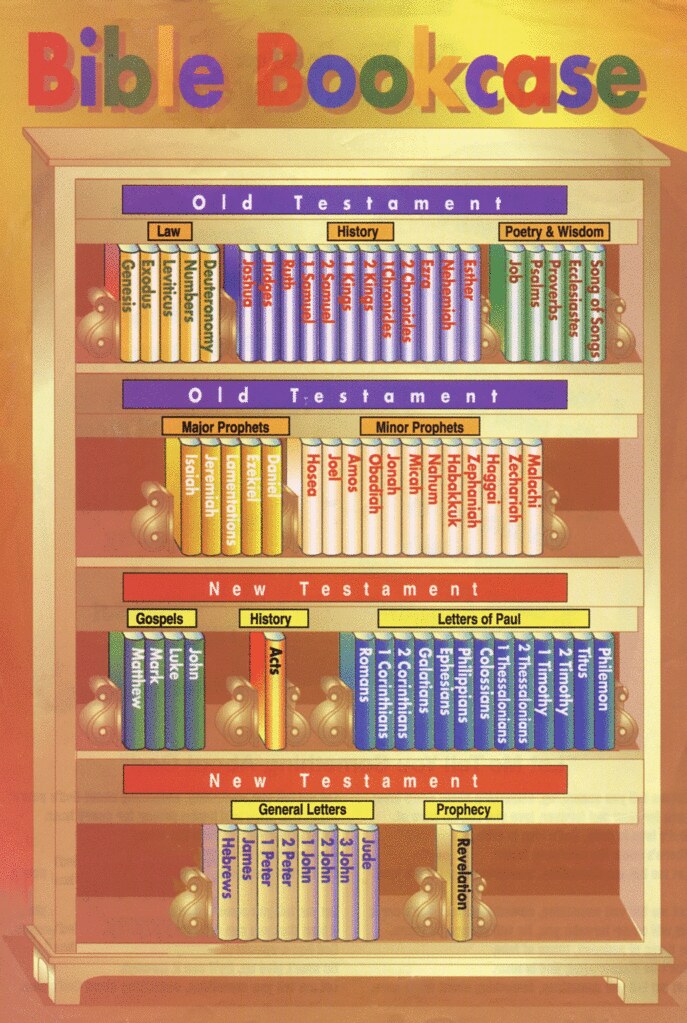
Put Leviticus Back on the First Shelf

BibleBookcase
Making it through Leviticus is a HUGE accomplishment. Remember that many attempts to read through the Bible failed at Leviticus for me! Go out and celebrate!

Sunday, April 3, 2011

Leviticus 26 & 27 - Keeping our Commitments to God

LINK: Leviticus 26-27 (Read over the next two days)

BACKGROUND

The things in these chapters are pretty straightforward. Leviticus 26 is about the blessings of obedience and warnings against disobedience.

REFLECTION

If you made it through Leviticus, give yourself a high five! If you recall, I had many false starts of reading through the Bible because of Leviticus. I just did not get its significance. I hope these posts helped you see the significance.

If you did not get through, please do not be discouraged! Just keep reading from where you last left off. If these blog posts help you, that is great! If they do not, just keep reading without them. Remember: it took me five years to read through the Bible the first time. I just kept putting a bookmark in it and would continue it when I could!  

Just Remember:

God's grace is at a slow pace!

I have been through Leviticus many times, and I enjoyed it this time the BEST of all. I think having to think through a post five days a week has really helped me digest it and make it practical for my everyday life. I have been making some very good and real changes as a result. I am grateful for that.

I think it also helped to buy that model of the tabernacle! It is still sitting on my coffee table, and I have looked at it every day as I have my quiet time. It causes me to see how CENTRAL worship was to the people of Israel, and how central it needs to be in my life. The tabernacle also reminds me that Jesus made a way for us into the holy of holies. The veil was torn in two! I look at it and marvel. He is the way, the truth, and the life!

When I originally wrote this post in 2008, I was grieving the loss of a friend whom I had known since my sophomore year of college. We were both athletes at OSU together, on Navigator staff together, and then he married my twin, Mary Beth, who was grieving the loss of her Superman (his nickname). I rejoice that Jesus made a way for Bruce!

APPLICATION

To cement Leviticus in my mind, I am going to do the following:
  • Give each chapter a title
  • Make an outline of the book
  • State a main theme
  • Continue with my "Journal of God" that I started in Genesis
  • Summarize what I am taking away from the book by way of application to my life.

You might like to try the same!

What is one thing you learned from the book?

PRAYER

God, thank You for teaching us more about Your holiness through the reading of this book. Help us to reflect on the lessons we have learned from it and respond to You in obedience. Speak to us, Lord, about unholiness in our lives. Make us holy for You are holy. We love You, Lord, and thank You that You have made a way for us into Your very presence through Jesus Christ, our Lord. And it is in His name we pray. Amen.

Saturday, April 2, 2011

Leviticus 25 - The Sabbatical Year and Year of Jubilee

LINK: Leviticus 25 

BACKGROUND

The Jewish calendar was based on a series of sevens. There were seven annual feasts, and the seventh day of the weeks was the Sabbath day of rest. The seventh year was to be a year of rest for the land, the people, and the animals in this agricultural society. Deuteronomy 15:1-11 gives more details about the Sabbath Year including freedom from personal debt and indentured servants being set free. We will learn in Deuteronomy 31:9-12 that this year also was to include the reading of the Book of Deuteronomy during the Feast of Tabernacles so that they would "hear and learn and fear the LORD . . . and carefully observe the words of this law" (Deuteronomy 31:12).

Every fiftieth year, the holy Year of Jubilee was to begin. Jubilee means "trumpet, ram's horn" because it began with the blowing of the ram's horn on the Day of Atonement each fiftieth year. It started with repentance on the Day of Atonement, continued with release of indentured servants so they could return to their lands and families, and rest for the land, people, and animals. It was a second year of rest after the Sabbath Year, but God would provide the produce! The Year of Jubilee also included restoration of property to original owners. That seems unfair, but God wanted to remind everyone that the land was all His, and that the original allotments still stood firm. When land was "sold" it was probably more like a "lease" until the next Jubilee year. This also prevented greedy real estate speculators from having all the power! The Year of Jubilee was all about new beginnings for everyone as they separated themselves unto God.

It is interesting to note that the Year of Jubilee is not mentioned outside of the Pentateuch. Maybe it was normal so there was no reason to mention it or the Israelites never observed it and was one of the reasons for their exile (2 Chronicles 36:20-21).

REFLECTION

Jesus is our Jubilee! I love the song by Michael Card about it. Here is a video of him singing it!


APPLICATION

How radical would it be if we all took a rest every seven years! I am seriously considering a Jubilee year of rest in 2018 for my fiftieth year of following Jesus! It just happens to be that the week I started to follow Jesus is the same week as the Day of Atonement for that year! How cool is that?

George and I took a Sabbath year of rest on our first year of marriage, and it was really fruitful! We were freed up from structured ministry, and God brought along wonderful "impromptu" fruit! We loved it!

Do you take rests on a regular basis? I sure hope so!  As I type this, it is my day of rest, but typing Bible Book Club posts is very relaxing for me. It is not work for me. :)

PRAYER

Thank You for seasons of rest. Help us to rest in You. We ask this in the name of Jesus, our Jubilee. Amen.

Friday, April 1, 2011

Leviticus 23 & 24 - The Feasts of Israel & Regulations for the Sanctuary

LINK: Leviticus 23 & 24

BACKGROUND

Leviticus 23 - The Feasts of Israel

Here is a "Feasts Chart" that will give you a great overview of this chapter as well as the scarlet thread significance of each of the feasts. Feel free to print it out.


The feasts allowed the people of Israel to have "appointed" times throughout the year to look back upon God's faithfulness in their history and forward to the time of the Messiah. There were seven. The first in the cycle was Passover. Here is a link to the dates for the feasts that vary from year to year: Jewish Feasts.

Spring Feasts - Passover, Unleavened Bread, and Firstfruits of Barley and Wheat 


Passover and Unleavened Bread are often just lumped together and called "Passover/Pesach" because they occur together over an eight day period.

The Passover looks back at the redemption of the firstborn when God "passed over" the Israelite homes sparing the firstborns of the household during the last plague. It looks forward to Christ's redeeming death. The wine of Passover signifies Christ's blood.

The Feast of Unleavened Bread was to begin the morning after the Passover lamb was sacrificed. It commemorated the flight from Egypt. You might remember that God told them not to leaven their bread (Exodus 12:14-20).  It looks at leaven as a symbol of sin. The Jews do not eat anything with leaven in it for seven days. They clear their houses of it. It represents Jesus as the sinless Bread of Life. This combined with Passover is the feast where all males were required to be in Jerusalem.

The Feast of First Fruits is celebrated on the day after the Sabbath following Passover. It was the first fruits of the barley harvest that occurs in March-April. It represents Jesus' resurrection. He was the "first fruits" of the dead (1 Cor. 15:20). This started seven weeks of gladness that ended at the wheat harvest of Shavuot

Feast of Weeks - Wheat Harvest (Pentecost or Shavuot) 

Sometimes called the Feast of Harvest or Feast of the First Fruits, it falls 50 days after Passover and originally celebrated the end of the seven-week grain-harvesting season. In later tradition, it also celebrated the giving of the Law to Moses on Mount Sinai. This was a feast that required that all males attend the central place of worship in Jerusalem. It was the day when God-fearing Jews from many peoples saw the "first fruits" of the Holy Spirit in Acts 2:1-13.

Fall Feasts - Trumpets, Day of Atonement, and Booths

Feast of Trumpets (Rosh Hashanah

This day marks the beginning of the Jewish year and opens the Ten Days of Penitence called "High Holy Days" or "Days of Awe" which close with Yom Kippur. One tradition is called tashlich which is the Hebrew word for "thou shalt cast into the seas." Jews traditionally go to a river or body of water and cast rocks which designate sins for which they are sorry. We did this when the kids were small, and it was quite fun!

Day of Atonement (Yom Kippur

This day marks the end of the Ten Days of Penitence that began with Rosh Hashanah. It is a day of rest and was discussed in Leviticus 16. It is for repentance and fasting.

Feast of Tabernacles/Booths (Sukkoth

This feast looks back at the wandering of the Israelites in the wilderness. Sukkoth was the first stopping place for the Israelites. Sukkoth means "huts" in Hebrew. Jacob journeyed there, and he built himself a house and made booths for his livestock (Genesis 33:17). It is a seven day feast where Jews live in huts. It is my favorite! This is another feast that required all males to attend the central place of worship in Jerusalem. This feast also includes a water festival in which Jesus proclaimed He was the Living Water (John 7:37-38). 

NOTE: All feasts begin at sundown on the previous day

Leviticus 24 - This chapter covers regulations for the sanctuary.

REFLECTION


In 1992 -1993, we got together with 25 other people and celebrated the feasts together. It was a blast! I heartily recommend it. They contain so much rich symbolism and spiritual truth. I was amazed at how much it helped me in my study of John a few years later since many of the important things that Jesus did during his public ministry occurred during these feasts!


APPLICATION

Celebrating Biblical Feasts by Martha Zimmerman is an excellent tool for understanding the feasts, and their significance to us as New Testament believers. We used it when we did it with our group.

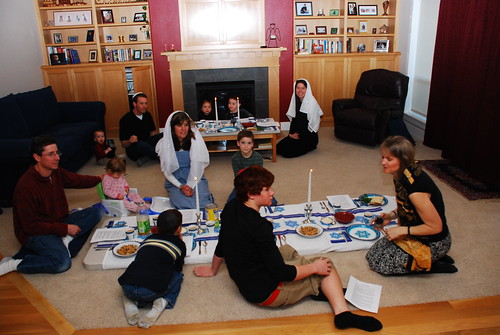
You might want to consider celebrating some of these feasts with family and friends. The pictures above were from a Passover that we did before Easter in 2008 with some Bible Book Club families!

PRAYER

Lord, we worship You and adore You as our living God. Thank You that You created these feasts to remind us of Your faithfulness in the past and the fulfillment of Your promises in the future. Amen.

Thursday, March 31, 2011

Leviticus 22 - Priests from the Heart

LINK: Leviticus 22

BACKGROUND

A priest was to please the Lord in the execution of his duties. He was to be careful in handling the sacred offerings. These offerings or gifts were probably tithes, first fruits, and sacrifices (Numbers 18:8-19). Their hearts were to be 100% invested in what they were doing. They were to be clean, monitor who ate the offerings, and make sure that sacrificial animals were qualified.

Why were they to follow all these holiness regulations? There is a hint of this in the key repeated phrase of this chapter: "I am the LORD." He is a holy God, and His commandments were to be obeyed! He had brought them out of Egypt and set them apart (sanctified) as a people for Himself, that was all the reason they needed.

REFLECTION

The people would have been familiar with the priests of Egypt who were into greed, power, and control. God was calling His priests to be different. They were to be set apart and to do their duties with a heart to please only God and help the worshipers draw near to Him.

Those of us who follow Jesus are priests who offer up spiritual sacrifices acceptable to God through Jesus Christ (1 Peter 2:5, 9). We are to live our lives set apart and our behavior excellent as we abide in Jesus Christ (1 Peter 4:11-12).

What is your motivation for ministry?  Are you doing it from the heart to please God or just going through the motions? Do you do it for self-aggrandizement or to please the Lord? Or do you do it trying to earn acceptance from God? 

APPLICATION

Meditate and pray through 1 Peters 2:4-12 below and dedicate yourself to Him!

Is your motivation in ministry to try to gain acceptance from God in the Cycle of Works where you are trying to find your acceptance from your effectiveness (fruitfulness) in ministry?


Or do you operate in a Cycle of Grace where out of a heart understanding of your belovedness and acceptance by God?

This is something to ponder. Watch this video that explains this concept in more detail. 


Living in the Cycle of Grace Handout

PRAYER
And coming to Him as to a living stone which has been rejected by men, but is choice and precious in the sight of God, you also, as living stones, are being built up as a spiritual house for a holy priesthood, to offer up spiritual sacrifices acceptable to God through Jesus Christ. For this is contained in Scripture:
“Behold, I lay in Zion a choice stone, a precious corner stone, 
And he who believes in Him will not be disappointed.”
This precious value, then, is for you who believe; but for those who disbelieve,
“The stone which the builders rejected, 
This became the very corner stone,”
and,
“A stone of stumbling and a rock of offense”; 
for they stumble because they are disobedient to the word, and to this doom they were also appointed. But you are a chosen race, a royal priesthood, a holy nation, a people for God’s own possession, so that you may proclaim the excellencies of Him who has called you out of darkness into His marvelous light; for you once were not a people, but now you are the people of God; you had not received mercy, but now you have received mercy. Beloved, I urge you as aliens and strangers to abstain from fleshly lusts which wage war against the soul. Keep your behavior excellent among the Gentiles, so that in the thing in which they slander you as evildoers, they may because of your good deeds, as they observe them, glorify God in the day of visitation.

Wednesday, March 30, 2011

Leviticus 21 - High Standards for Priests

LINK: Leviticus 21

BACKGROUND

The priests were representatives of God's holiness. Therefore, they were held to a higher standard than others in Israel. They had greater restrictions on their conduct and a greater amount of responsibility. They were to be free from defilement or defects much like the animals used in sacrifices.

REFLECTION

As I was meditating on this chapter my mind immediately went to the standards that God sets for overseers (elders) and deacons of the New Testament church in 1 Timothy 3 and Titus 1. God has very high standards for those who shepherd and care for their flock!

Since I wrote this back in 2008, my husband served as an elder for three years. I love the high standards that this group of men maintains for each other. They email weekly accountability sheets to each other covering areas of holiness and godliness.  This is so healthy!

2023 Update: After an eight-year hiatus, he is an elder again, and they still maintain really high standards. Sadly, there was not as much accountability with our staff, and there was a moral failure with one of them. Now, there is accountability for the staff also. 

APPLICATION

Take some time to pray for the elders, pastors, and leaders in your church today. Pray through each of the character qualities in 1 Timothy 3 and Titus 1. Pray them into your own life as well.

PRAYER


Lord, we ask that You raise up leaders in our churches who are totally consecrated to You and can prove to be examples to their flocks. We ask this in Jesus' name. Amen.

Monday, March 28, 2011

Leviticus 18-20: Take Time to Be Holy

LINK: Leviticus 18-20 (read over the next two days) 

BACKGROUND

In Leviticus 18-19, the Lord gave the people rules about immoral relations and idolatry. The Canaanites had done many abominations and were defiled. The Lord wanted His people to be separate and holy.

The basic principles of the Ten Commandments are covered in Leviticus 19 in a different order. The Lord's command was clear, "You shall be holy, for I the LORD your God am holy (19:2).

Leviticus 20 supplements and reinforces the prohibitions of Leviticus 18 going into more detail about the punishments for different offenses that the community needed to carry out. Most of the crimes included the death penalty. The different methods were stoning (20:2, 27) and burning (20:14). In Jewish tradition, burning was understood as hot lead being poured down the throat! Yikes!


This chapter has a warning against sacrificing children to Molech (18:21). He was the national god of the Ammonites in which Solomon erected a shrine in 1 Kings 11:7. King Ahaz burned his children to a Molech shrine in 2 Chronicles 28:3, and Manasseh sacrificed a son in 2 Kings 21:6. Sometimes, the Bible associates Molech with Baal (Jeremiah 32:35).

The main idea of this chapter is that God would punish those who engaged in false worship including consulting a medium or spiritist (20:1-8). He would also punish those who engaged in activities that broke down the family (20:9-21). He continued to prepare them to be a separate and holy people from the nations that would surround them in the Promised Land.

Key verses in this chapter continue to support the key theme of holiness in Leviticus:
You shall consecrate yourselves therefore and be holy 
for I am the LORD Your God.
I am the LORD who sanctifies You. (20:7-8)

Thus You are to be holy to Me,
for I the LORD am holy;
And I have set You apart from the peoples to be Mine. (20:21)

It also reinforces a key repeated phrase in the book: 


"I am the Lord (your God)."


APPLICATION

Underline the key repeated phrase, "I am the LORD (your God)" between Leviticus 18-26, and meditate on what it means the He is your LORD.


How do we, as followers of Jesus Christ, exhibit practical holiness? What is an "I WILL" statement that could help you live that out?

PRAYER

You are the LORD our God. We want to take time to be holy so we might glorify You. We praise You. Amen.

Sunday, March 27, 2011

Leviticus 17 - The Life of the Flesh is in the Blood

LINK: Leviticus 17

BACKGROUND

Leviticus 17-20 was additional information about what had already been covered in Leviticus 1-7. Its emphasis was more on the mistakes that the people might make regarding sacrificing and eating meat.

Do you know what the key word is for Leviticus 17?  I'll give you some time to think about it . . .

BLOOD!


This word is used 460 times in the Bible. It is mentioned 362 times time in the Old Testament and 13 of those are in this chapter!

Blood is the key word, and Leviticus 17:11 is the key verse:


For the life [soul] of the flesh is in the blood
and I have given it to you on the altar to make atonement for your souls; 
for it is the blood by reason of the life that makes atonement.

There are seven directives that prohibit the drinking of blood in the Pentateuch (Genesis 9:14; Leviticus 3:17; 7:26-27; 17:10-14; 19:26; Deuteronomy 12:15-16, 23-24; 15:23), but this one explains why: blood makes atonement for the soul.

Yesterday, we learned about atonement when studying the Day of Atonement (Yom Kippur). The blood makes atonement. 
God has chosen sacrificial blood as the ransom price for a person's life, so the life of the substitute is given up in death; therefore to refrain from eating blood is to show respect for its sacredness as a vehicle of atonement. (The Bible Knowledge Commentary: Old Testament, p. 199)

The Scarlet Thread says that Jesus was that substitute that was given up in death for our life!

REFLECTION

We usually have a little devotional before communion every Sunday, but this morning, no one showed up for the 8:15 a.m. service! I almost jumped out of my chair and ran up there. I wanted to proclaim to the world, "The life of the flesh is in the blood! The life of the flesh is in the blood! I just read it this morning!" Well, I did consider it, but I refrained.

But I still wanted to proclaim it from the rooftop. It is an AWESOME thing.  The reason why I keep referring to it as the Scarlet Thread of Redemption is because His scarlet blood was shed at a sacrificial atonement for our sins. Jesus said:
“Truly, truly, I say to you, unless you eat the flesh of the Son of Man and drink His blood, you have no life in yourselves. He who eats My flesh and drinks My blood has eternal life, and I will raise him up on the last day." (John 6:53-54)
Can you imagine how confused the orthodox Jews would have been in light of Leviticus 17? Jesus was saying that it was His own blood would make atonement and give them life. They needed to eat his flesh and drink his blood, and that was prohibited (Genesis 9:3-4; 19:26). He was not saying to literally eat and drink but to receive Him into their innermost being and believe that His life could give them life (John 6:40, 47, 50-51).

I should have gotten up and done the communion devotional. Drat!

APPLICATION

I put a hold on The Passion of the Christ movie today.  The idea of the blood of Christ is brought home in this movie. I have not seen it since it came out in the theaters, and I have waited for my kids to be old enough to watch it before Easter. I think they are ready. It is not pretty so I am not sure I am!

PRAYER

Thank You that Your blood atones for me and gives me life. Amen. 

Saturday, March 26, 2011

Leviticus 16 - The Day of Atonement

LINK: Leviticus 16

BACKGROUND

It is important to grasp the full import of this important chapter in Leviticus.

The Day of Atonement happened annually. It was a fast day (16:29; Acts 27:9).

The Ceremony:

1) Aaron washed in the courtyard and put on special garments that were plainer than that of even the ordinary priest. He put the garments on in the holy place.

2) He sacrificed a bull as a sin offering on the altar (in the courtyard) to make atonement for his sin and that of his household. The blood was not sprinkled in front of the curtain and altar of incense like the ordinary sin offering of Leviticus 4. The blood went to the most holy place and was sprinkled in front of and before the mercy seat/atonement cover. Before he sprinkled the blood, he took coals from the altar and incense and put it on the altar of incense in order to make a shield between him and the Shekinah glory of God's presence over the mercy seat/atonement cover (see note on the mercy seat/atonement cover under #4).

3. Aaron went outside the tabernacle and cast lots for two goats. He sacrificed one at the altar as a sin offering for the people and the other would be the scapegoat.

4. He took the blood of the sacrificed goat and went back into the holy of holies and sprinkled blood on and in front of the mercy seat/atonement cover.

The mercy seat/atonement cover comes from the Hebrew word kapporeth. It is where the Jewish holiday, Yom Kippur, gets its name which means "day of atonement." The mercy seat was the gold cover of the sacred chest in the inner "holy of holies" in the tabernacle. God promised to meet with men above it (Numbers 7:89). It was the "place of atonement" in that the blood was sprinkled there on the Day of Atonement and propitiation was made. A propitiatory sacrifice was one that appeased the righteous wrath of God. (To see the connection of propitiation to redemption and justification, you can go to a post on Romans 3 HERE.)

Atonement is related to the Hebrew word koper which means ransom, "to atone by offering a substitute." This word illustrates the theology of reconciliation in the Old Testament. The life of the sacrificial animal (symbolized by its blood) was required in exchange for the life of the worshipper. It was a symbol of innocent life given for guilty life. By laying hands on the animal and confessing his sin, the worshiper identified himself with the animal as his substitute which was then killed and the blood was sprinkled on or in front of the mercy seat or sent out as a scapegoat.

5. He returned to the holy place and sprinkled the goat's blood there to make atonement for himself, his household, the whole community of Israel, and for the holy place.

6. He went outside to the altar of burnt offering and sprinkled it with the blood of the bull (for himself) and of the goat (for the people).

7. He laid hands on the second goat known as the "scapegoat." The scapegoat was sent away and bore the sins of the nation symbolizing removal of sin and its guilt. The goat would "escape" to the desert by the hands of an appointed man.

8. Aaron disrobed, washed, and put his priestly garments back on.

9. He made another sacrifice of a ram burnt offering for himself and another ram for the people.

10. The ceremony concluded with the burning of the sin offerings outside the camp and the cleansing of the man who released the goat.

REFLECTION

The Scarlet Thread of Redemption

Only Christ was the Perfect Sacrifice and the Perfect Scapegoat! He was the innocent life given for my guilty, sinful life. His sprinkled blood has cleansed me. He has "removed" my sin and the guilt associated with it.

YIPPEE!

Only Christ was the perfect High Priest who did not need to offer a bull for His cleansing like Aaron because Christ was without sin. (Hebrews 5:1-3, 7:26-28). Christ does not need to perform this ritual year after year because He made one sacrifice for sin for all time (Hebrews 9:11-14, 10).

APPLICATION

Take a look at the "Feast Chart for Leviticus." Also, try praying through Hebrews 9:11-14 in your prayer time!

PRAYER

Thank You for providing a way into the Holy of Holies through the sacrifice of Your precious Son for our sin, once and for all time. Your presence is our desire. Make Your presence more real to us as we read Your Word. Amen.

Wednesday, March 23, 2011

Leviticus 13 - 15 --Unclean! Unclean!

LINK: Leviticus 13 - 15 
(Read these chapters over the next THREE days.)

These chapters are about skin diseases, mildew, and discharges. (EWWW!)  The word "leprosy" in many Bible versions is an incorrect translation of the Hebrew word tsaraath. The mix-up came when the Septuagint (Greek translation of the Old Testament) and the Vulgate (Latin translation of the Bible) translated it lepra. The leprosy in these chapters does not refer to true leprosy (Hanson's disease). They refer to:
Epidermal maladies including boils, rashes, impetigo, and ringworm. They were ritually and medically contagious. Of more significance, perhaps, were the contagious and dangerous diseases with skin symptoms, such as scarlet fever and small pox. (Theological Wordbook of the Old Testament). 
The NIV and NLT correctly interpret it as an "infectious skin disease."

With the maladies of 15:1-15 and 25-30, sacrifices were required, but a man with a chronic discharge was not isolated outside the camp like the person with an infectious skin disease (13:45-46). With the periodic discharges of men and women in 15:16-24, no sacrifice was required, and the uncleanness was removed with washing and waiting. The woman who touched Jesus cloak and was healed in Mark 5:25-24 had the kind of malady described in 15:25-27. What a risk she was taking by touching Him!

APPLICATION

Keep reading your Bible. This is where I used to give up in my "read the Bible in a year" plans.  Do not let this part discourage you. Spend some time in praise to God that you have been cleansed by the blood of the Lamb! Watch Ben Hur! Jesus heals in this movie, and it sends chills up my spine!

PRAYER

Lord, praise You that You heal us spiritually! We love You and thank You that we have been made clean by the blood of Christ Jesus. Amen.

Tuesday, March 22, 2011

Leviticus 11 & 12 - Clean and Unclean Food and Childbirth


LINK:
Leviticus 11 & 12


BACKGROUND

In Leviticus 11 - 15, there are many instructions for the Israelite people. There were rules for handling food, disease, and sex.

The key verses for all of these chapters are found in Leviticus 11:44-45:

For I am the LORD your God. Consecrate yourselves therefore, and be holy, for I am holy. . . For I am the LORD who brought you up from the land of Egypt to be your God; thus you shall be holy, for I am holy.

They were in the "between" time in the wilderness where God had taken them out of idolatrous Egypt and was going to bring them to the land of Canaan with its pagan practices. This time in the wilderness was the time for learning to be holy in their actions and worship of a holy God.

Leviticus 11 involves a detailed list of all the foods that were clean and unclean. See current practices here. There were several reasons for their restricted diet:
1) To ensure the health of the people because the forbidden foods were usually scavenging animals that fed on dead animals that could transmit disease.
2) To distinguish them from the surrounding nations. For example, the pig was a common sacrifice in pagan religions.
3) To avoid objectionable associations. For example, many of the forbidden foods were creatures that moved on the ground and were reminiscent of serpents which often symbolized sin.
Leviticus 12 covers instructions for purity in matters of childbirth.

"Unclean" did not mean sinful or dirty. God commanded the people to "be fruitful and multiply." So there was nothing sinful about having sex or having a baby, but God wanted to make a distinction between His worship and that of the worship of fertility gods and goddess common in pagan culture. Canaanite religions practiced prostitution and immoral ceremonies as their adherents pleaded for fruitful crops, herds, and wombs. So, these were to remain separate from God's sanctuary.

At the end of Leviticus 12, a burnt offering and sin offering were for ceremonial cleaning and for rededication to worship after a woman's 40 - 80 day quarantine because of the flow of blood following childbirth.

REFLECTION

As I was meditating on Leviticus 11, my son was meditating on Acts 10 by illustrating the picture above. In Acts 10, Peter saw a sheet descending from heaven with all kinds of those forbidden animals mentioned in Leviticus 11. A voice told him to "arise, kill, and eat!" Of course, Peter said he could not because those animals were unclean! A voice said, "What God has cleansed, no longer consider unholy." Wow! What a radical shift!

The gist of what God was trying to tell Peter was what Jesus already said in Mark 7:14-23 and Matthew 15:10-20: that nothing outside the man was going to make him "unclean" but a person is defiled morally by what he thinks in his heart. He was getting at the hypocrisy of the "cleanness" of the Jews on the outside when their hearts were hard on the inside.

Through this vision, God was showing Peter that he "should not call any man impure or unclean . . . and that God does not show favoritism but accepts men from every nation who fear Him and do what is right" (Acts 10:28, 34-35). Prior to this, Peter would not have even eaten with Gentiles without risking defilement. God enlightened Peter at the proper time so that he could go to the God-fearing Gentile, Cornelius. As a result, Peter would share the good news of Jesus Christ with Cornelius and his family, and they would become the first Gentiles to follow Jesus!

While God wanted to "set apart" Israel for Himself and to separate them from the pagan practices around them during the time of Leviticus, He still desired that all nations would worship Him, and He still does to this day!

A side note: I love how God orchestrated it for Michael and me to be meditating on related passages on the same day. That is such a God thing! I am also amazed that every single animal he drew on that sheet really was an unclean animal even though he has yet to read the specific unclean animals of Leviticus 11!

APPLICATION

There is a fine balance between being holy and "set apart" from the world and reaching out to the world Jesus came to save. I have often found in my effort to reach out to non-believing friends, I have stepped over too far into the worldly "unclean" side of life where I had to reevaluate and adjust. 

I have also found the other extreme in friends who shelter themselves so much from the world that they have no meaningful impact upon the people around them.

Where are you on the continuum?

Maybe you are on one end where there are areas in which you need to consecrate to the Lord and separate from the world's ways so that the not yet followers of Jesus in your life can see that you are different in a very good way.

Maybe you are on the other end where you are so afraid of defilement from the world that you never rub shoulders with those who need Jesus.

How can you come to finding a balance between those two extremes? Talk to God about it.

PRAYER

Thank You for being a holy God who has set us apart to serve You and bring glory to Yourself. Help us to be a sweet aroma of the knowledge of Christ to those who are perishing Lord without being polluted by the things in the world that are not pleasing to You. We ask this in the strong name of Jesus. Amen.