- Isaiah 49
- Isaiah 50
- Isaiah 51
- Isaiah 52 & 53
- Isaiah 54
- Isaiah 55 & 56
- Isaiah 57 & 58
- Isaiah 59
- Isaiah 60
- Isaiah 61 & 62
- Isaiah 63 & 64
- Isaiah 65
- Isaiah 66
- Micah 1
- Micah 2
- Micah 3-5
- Micah 6
- Micah 7
- Nahum 1 & 2
- Nahum 3
- 2 Kings 22
- 2 Chronicles 34
- 2 Kings 23
- 2 Chronicles 35 & Zephaniah 1
- Zephaniah 2 & 3
- Jeremiah 1
- Jeremiah 2
- Jeremiah 3
- Jeremiah 4
- Jeremiah 5
- Jeremiah 6
Showing posts with label Nahum. Show all posts
Showing posts with label Nahum. Show all posts
Wednesday, June 30, 2021
July in 2 Kings & 2 Chronicles with Isaiah, Micah, Nahum, Zephaniah, and Jeremiah


Thursday, July 19, 2012
Nahum - Judgment for Nineveh
LINK: Nahum 1-3
Please read the Introduction to the Prophetical Books if you have not already done so.

PRAYER
Please read the Introduction to the Prophetical Books if you have not already done so.
BACKGROUND
Here is where Nahum fits within the historical narrative of the
Bible:
-----------------722
ASSYRIAN CAPTIVITY OF ISRAEL (NORTHERN
KINGDOM)
2 Chr. 33: 697-640 (2 Kings 21)
739-681:
ISAIAH 1-66
733-701:
MICAH 1-7
650-620: NAHUM 1-3
Nahum was an Elkoshite which suggests he was from Elkosh, but the site of this city is unknown. His name means "consolation" or "comfort." The destruction of Nineveh, the capital of the mighty Assyrian empire, would have been a great comfort to Judah!
This is what we know about Nineveh from our study of Jonah:
Nineveh was about 500 miles northeast of Israel. It was on the east side of the Tigris River and the distance required for the journey would have taken more than a month (15-20 miles a day). Nineveh was in modern day Iraq opposite the modern-day town of Mosul.
It was a city surrounded by a 100-foot-high wall, guarded by 200 towers stretching upward another 100 feet. It was also protected by a moat that was 60 feet deep and 140 feet wide! It seemed like an invincible city.
One hundred years earlier, Jonah had preached to this great city to repent, and they turned from their evil ways. Generations later, evil reigned once again, and Nahum pronounced judgment. Nineveh is called a "city of blood" (3:1), a city of cruelty (3:19), and Assyria is judged as arrogant (1:11), idolatrous (1:14), murderous, liars, treacherous, and socially unjust (3:1-19). Nahum predicted their destruction, and it came within 50 years.
We can place Nahum's preaching somewhere between the fall of Thebes under Ashurbanipal in the years 664-663 B.C. and the fall of Nineveh to the Babylonians, Medes, and Scythians in August of 612 B.C. Nahum was a prophet during the reign of Manasseh, one of Judah's most wicked of kings. Judah was a vassal state of Assyria. Nahum was a contemporary of the prophet Zephaniah (640-621 B.C.).
ALL of Nahum's prophesies were fulfilled and are documented in Diodorus Sculus (ca. 20 B.C.), the Babylonian Chronicles (ancient tablets), A.T. Olmstead (History of the Persian Empire, 1948), and various archaeological discoveries. Here are a few facts based on extra-biblical sources:
- The siege took three years according to Diodorus (3:14).
- The Ninevites were destroyed while they were drunk according to Diodorus (1:10; 3:11).
- The city was destroyed by a flood according to archaeological evidence (1:8; 2:6).
- The city was destroyed by fire according to archaeological evidence because the alabaster slabs of the palace were nearly reduced to lime, which indicates intense heat (1:10; 2:13; 3:13, 15).
These are the key verses in Nahum:
The Lord is good,
A stronghold in the day of trouble,
And He knows those who take refuge in Him.
But with an overflowing flood
He will make a complete end of its [Nineveh's] site,
And will pursue His enemies into darkness.
Whatever you devise against the LORD,
He will make a complete end of it.
Distress will not rise up twice. (Nahum 1:7-9)
REFLECTION
I find it amazing how all of these prophecies were fulfilled. God is true to His Word:
For as many as are the promises of God, in Him they are yes; therefore also through Him is our Amen to the glory of God through us. (2 Corinthians 1:20)
Now behold, today I am going the way of all the earth, and you know in all your hearts and in all your souls that not one word of all the good words which the Lord your God spoke concerning you has failed; all have been fulfilled for you, not one of them has failed. (Joshua 23:14)
I am not excited about the destruction of a city, but God had preached through Jonah once; and while it stuck for a while, they went back to their wicked ways. God is slow to anger (Nahum 1:3).
The Lord is not slow about His promise, as some count slowness, but is patient toward you, not wishing for any to perish but for all to come to repentance. (2 Peter 3:9)Sadly, Nineveh had not chosen repentance, and God will not leave the guilty unpunished (Nahum 1:3).
What can we learn from the fall of this ancient city more than 2,500 years ago?
1) God is true to His Word! He keeps His promises, even the negative ones.
2) Arrogance and resistance to God's authority will lead to God's wrath. So, we need to be aligned with His will!
3) God is in control of powerful people and nations, and we need not be afraid and put our confidence in God because He is the ruler of history, the earth, and all of us!
APPLICATION
Note the characteristics of God described in Nahum 1:2-11. It is a side of God many of us do not always understand. In the midst of verses about this side of God, there is a promise:
You were created to take refuge in Him. Do that today.
The LORD is good,
A stronghold in the day of trouble,
And He knows those who take refuge in Him.
(Nahum 1:7)
You were created to take refuge in Him. Do that today.
PRAYER
God, we humble ourselves beneath Your mighty, awesome, all-powerful hand today. Help us to be humble, contrite, and tremble at Your Word. We ask this in Jesus' name. Amen.
Sunday, April 15, 2012
Introduction to the Prophetical Books
INTRODUCTION TO THE PROPHETICAL BOOKS
Download the Year Two BBC Overview and Timeline
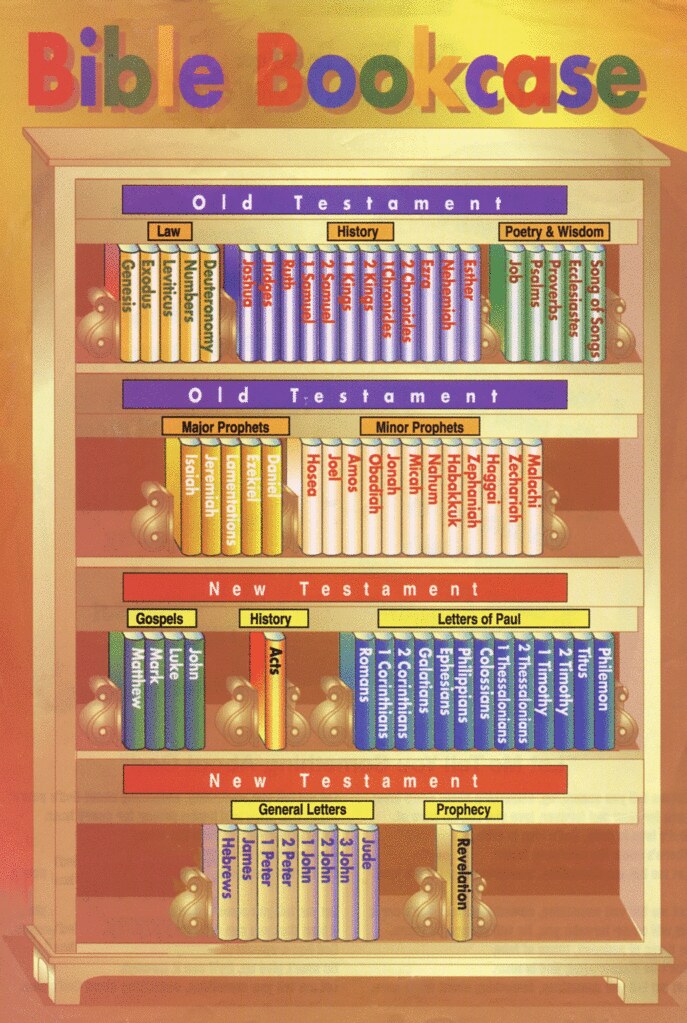
The Bible is not written in chronological order but according to the type of book:
Books of Moses (Law or Pentateuch): Genesis - Deuteronomy
History: Joshua - Esther
Poetry and Wisdom Literature: Job - Song of Solomon
Major Prophets: Isaiah - Daniel
Minor Prophets: Hosea - Malachi
Books of Moses (Law or Pentateuch): Genesis - Deuteronomy
History: Joshua - Esther
Poetry and Wisdom Literature: Job - Song of Solomon
Major Prophets: Isaiah - Daniel
Minor Prophets: Hosea - Malachi
I find it easier to understand
prophecy when it is read in the context of the historical period. So, that
is why we are interspersing the prophets in the historical context of 2 Kings
and 2 Chronicles.
I will not be doing a strictly chronological approach because I do not want to jump back and forth once we
start a prophetic book. So, when we get to a book like Isaiah, that covers the
reign of four kings of Judah spanning six decades, we will read
through all of those kings in 2 Kings and 2 Chronicles before we study the entire
book of Isaiah.
The prophetical books are broken
up into two sections: 5 Major Prophets (Isaiah - Daniel) and 12 Minor Prophets
(Hosea - Malachi). We will read them in chronological order. That way we will
get breaks between the longer major prophets of Isaiah, Jeremiah, and Ezekiel with
the shorter Minor Prophets. Here is a brief rundown of the order of the
historical dates for each prophet with the Major Prophets highlighted in bold.
They are all B.C.:
841-824.....Obadiah (this date
is hotly debated!)
825-809....Joel
784-772.....Jonah
767-755.....Amos
755-714.....Hosea
-----722 Assyrian Captivity of Northern Kingdom of Israel
-----722 Assyrian Captivity of Northern Kingdom of Israel
739-681.....Isaiah
733-701.....Micah
650-620....Nahum
636-623....Zephaniah
627-574.....Jeremiah
574-538.....Lamentations
621-609.....Habakkuk
605-586 Babylonian Captivity of Southern Kingdom of Judah
605-536.....Daniel
593-559.....Ezekiel
------538 Cyrus of Persian issues edict allowing Jews to RETURN to
land
520-505.....Haggai
520-489.....Zechariah
435-415.....Malachi
Theologically, the prophets
concentrate on warnings of impending judgment, teachings about righteous
living, encouragement to the faithful and oppressed, and predictions of God's
future plans.
I am approaching the prophets
with fear and trembling! :) I hope that you are game and that breaking up the longer books of the Major
Prophets with the shorter books of the Minor Prophets will make it easier! I
believe God has so much to teach us through the study of these books.
I LOVE what Eugene
Peterson says about the prophets:
Over a period of several hundred years the Hebrew people gave birth to an extraordinary number of prophets – men and women distinguished by the power and skill with which they presented the reality of God. They delivered God’s commands and promises and living presence to communities and nations who had been living on god-fantasies and god-lies.
Everyone more or less believes in God. But most of us do our best to keep God on the margins of our lives or failing that, refashion God to suit our convenience. Prophets insist that God is the sovereign center [emphasis mine] not off in the wings awaiting our beck and call. And prophets insist that we deal with God as God reveals himself, not as we imagine him to be [Isn't that powerful? Ponder that for a moment].
These men and women woke people up to the sovereign presence of God in their lives. They yelled, they wept, they rebuked, they soothed, they challenged, they comforted. They used words with power and imagination whether blunt or subtle. . .
Prophets make it impossible to evade God or make detours around God. Prophets insist on receiving God in ever nook and cranny of life. For a prophet, God is more real than the next-door neighbor. (The Message Remix, p. 1194, 1197)
With fear and trembling, let us start the prophets in the next post!
Subscribe to:
Posts (Atom)