Saturday, July 21, 2012

2 Kings 22 & 2 Chronicles 34 - Josiah: The Boy Ruler Turned Reformer

LINK: 2 Kings 22 & 2 Chronicles 34 (Read over the next two days)

BACKGROUND


Josiah of Judah - 2 Kings 21:26-23:30; 2 Chronicles 33:25-36:1

Reigned: 640-609 B.C. for 31 years
Character: The Best
Manner of death: Killed in battle by Pharaoh Neco of Egypt 

During Josiah's reign, Nineveh, the capital of the powerful Assyria that carried Israel away in 722 B.C., was destroyed in 612 B.C. by the Babylonians. In 609 B.C., the whole Assyrian Empire fell to the Babylonians.

Josiah reigned righteously and followed God completely. The 2 Chronicles account says that he began to seek the God of his father David when he was 16 years old and began to purge Judah of the high places, Asherim, and carved and molten images at age 20 (2 Chronicles 34:3-7). When he turned 26, he found the Book of the Law. One reading had such an impact on him that it changed the course of the nation of Judah and staved off God's judgment on Judah's idolatrous ways for a few more decades.


The prophets Zephaniah, Jeremiah, and Habakkuk prophesied during Josiah's reign.


REFLECTION and APPLICATION


Reading Josiah's humble reaction to finding and reading the Book of the Law reminded me of this video that I saw many years ago. It is a documentary of the humble reaction of the Mouk people of Papua New Guinea when they heard the Word of the Lord for the first time. Please watch it and weep for joy! It is eight minutes, but it is incredible. Their response is 11 minutes in. You will be VERY happy you watched it!


PRAYER
Lord, thank You for the wholehearted example of Josiah and the Mouk people who heard Your Word and responded in obedience! May we have that kind of response when we hear, read, study, memorize, and meditate on Your precious Word. We ask this in Jesus' name. Amen.

Thursday, July 19, 2012

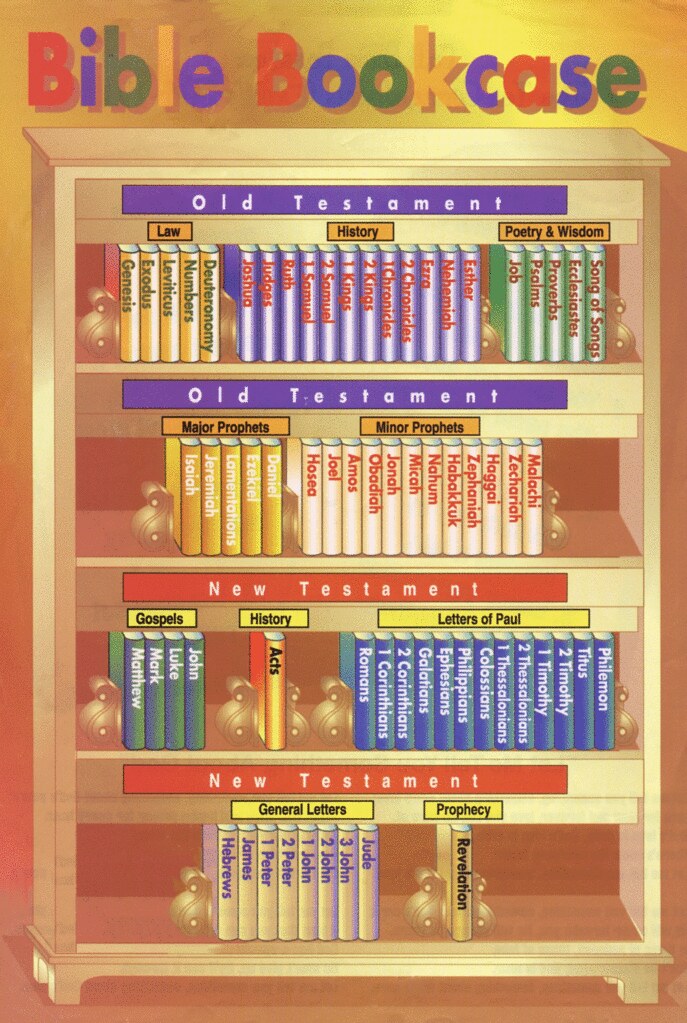
Put Nahum on the Prophets Shelf

BibleBookcase

Nahum - Judgment for Nineveh

LINK: Nahum 1-3

Please read the Introduction to the Prophetical Books if you have not already done so. 

BACKGROUND

Here is where Nahum fits within the historical narrative of the Bible:

-----------------722 ASSYRIAN CAPTIVITY OF ISRAEL (NORTHERN KINGDOM)

2 Chr. 33:      697-640 (2 Kings 21)

                      739-681: ISAIAH 1-66

                      733-701: MICAH 1-7
                      650-620: NAHUM 1-3

Nahum was an Elkoshite which suggests he was from Elkosh, but the site of this city is unknown. His name means "consolation" or "comfort." The destruction of Nineveh, the capital of the mighty Assyrian empire, would have been a great comfort to Judah!

Bold
This is what we know about Nineveh from our study of Jonah:
Nineveh was about 500 miles northeast of Israel. It was on the east side of the Tigris River and the distance required for the journey would have taken more than a month (15-20 miles a day). Nineveh was in modern day Iraq opposite the modern-day town of Mosul.
It was a city surrounded by a 100-foot-high wall, guarded by 200 towers stretching upward another 100 feet. It was also protected by a moat that was 60 feet deep and 140 feet wide! It seemed like an invincible city.

One hundred years earlier, Jonah had preached to this great city to repent, and they turned from their evil ways. Generations later, evil reigned once again, and Nahum pronounced judgment. Nineveh is called a "city of blood" (3:1), a city of cruelty (3:19), and Assyria is judged as arrogant (1:11), idolatrous (1:14), murderous, liars, treacherous, and socially unjust (3:1-19). Nahum predicted their destruction, and it came within 50 years.

We can place Nahum's preaching somewhere between the fall of Thebes under Ashurbanipal in the years 664-663 B.C. and the fall of Nineveh to the Babylonians, Medes, and Scythians in August of 612 B.C. Nahum was a prophet during the reign of Manasseh, one of Judah's most wicked of kings. Judah was a vassal state of Assyria. Nahum was a contemporary of the prophet Zephaniah (640-621 B.C.).

ALL of Nahum's prophesies were fulfilled and are documented in Diodorus Sculus (ca. 20 B.C.), the Babylonian Chronicles (ancient tablets), A.T. Olmstead (History of the Persian Empire, 1948), and various archaeological discoveries. Here are a few facts based on extra-biblical sources:
  • The siege took three years according to Diodorus (3:14).
  • The Ninevites were destroyed while they were drunk according to Diodorus (1:10; 3:11).
  • The city was destroyed by a flood according to archaeological evidence (1:8; 2:6).
  • The city was destroyed by fire according to archaeological evidence because the alabaster slabs of the palace were nearly reduced to lime, which indicates intense heat (1:10; 2:13; 3:13, 15).
These are the key verses in Nahum:

The Lord is good,
A stronghold in the day of trouble,
And He knows those who take refuge in Him.
But with an overflowing flood
He will make a complete end of its [Nineveh's] site,
And will pursue His enemies into darkness.
Whatever you devise against the LORD,  
He will make a complete end of it.  
Distress will not rise up twice. (Nahum 1:7-9)

REFLECTION

I find it amazing how all of these prophecies were fulfilled. God is true to His Word:
For as many as are the promises of God, in Him they are yes; therefore also through Him is our Amen to the glory of God through us. (2 Corinthians 1:20) 
Now behold, today I am going the way of all the earth, and you know in all your hearts and in all your souls that not one word of all the good words which the Lord your God spoke concerning you has failed; all have been fulfilled for you, not one of them has failed. (Joshua 23:14)
I am not excited about the destruction of a city, but God had preached through Jonah once; and while it stuck for a while, they went back to their wicked ways. God is slow to anger (Nahum 1:3).
The Lord is not slow about His promise, as some count slowness, but is patient toward you, not wishing for any to perish but for all to come to repentance. (2 Peter 3:9)
Sadly, Nineveh had not chosen repentance, and God will not leave the guilty unpunished (Nahum 1:3).

What can we learn from the fall of this ancient city more than 2,500 years ago?
1) God is true to His Word! He keeps His promises, even the negative ones. 
2) Arrogance and resistance to God's authority will lead to God's wrath. So, we need to be aligned with His will! 
3) God is in control of powerful people and nations, and we need not be afraid and put our confidence in God because He is the ruler of history, the earth, and all of us!
APPLICATION

Note the characteristics of God described in Nahum 1:2-11. It is a side of God many of us do not always understand. In the midst of verses about this side of God, there is a promise:

The LORD is good,
A stronghold in the day of trouble,
And He knows those who take refuge in Him.
(Nahum 1:7) 

You were created to take refuge in Him. Do that today.

PRAYER

God, we humble ourselves beneath Your mighty, awesome, all-powerful hand today. Help us to be humble, contrite, and tremble at Your Word. We ask this in Jesus' name. Amen.

Tuesday, July 17, 2012

Put Micah on the Prophets Shelf

BibleBookcase

Micah 6 & 7 - Blessings Because of God's Goodness

LINK: Micah 6 & 7 (Read over the next two days) 

BACKGROUND 

Micah 6-7 contains the third message of the book and is a courtroom scene. God has an indictment against His people and calls on the witnesses of the mountains and the hills to listen to His case. 

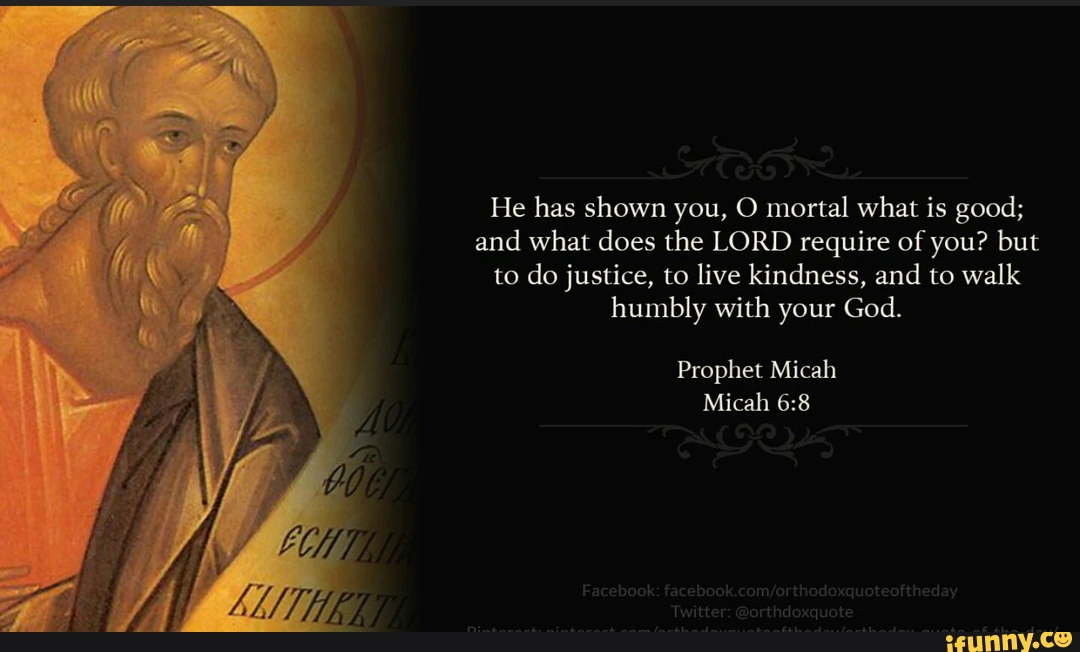
First, He recounts what He has already done for them by bringing them out of slavery in Egypt, recalling the story of Balak and Balaam in Numbers 22-24, and His instructions to them before entering the land He had promised them (Joshua 2:1; 4:19; 5:3-9). The people had forgotten the covenant they made with Him and turned away from God. Yes, they practiced the rituals, but their hearts were not worshipful. True worship should include acting justly, loving mercy, and walking humbly with their God (Micah 6:8). 

Because of God's justice, He would have to punish the nation. They had not acted justly or loved mercy by gaining wealth illegitimately (Proverbs 10:2), cheating customers, and taking advantage of them. Judah also followed the statutes of Omri and Ahab who were two of the worst kings of the Northern Kingdom of Israel (1 Kings 16:21-22:40).  The captivity would be their punishment. 

Micah 7 begins in utter darkness and gloom (7:1-6) as Micah bemoans the nation's sins, but it ends in hope (7:8-20) as he and the godly remnant waited in hope for salvation after the judgment. Out of the darkness, a light would come because God forgives sin and delights to show mercy (7:9, 18).

REFLECTION/APPLICATION
People have tried all kinds of ways to please God (6:6, 7), but God has made his wishes clear: he wants his people to be just, merciful, and to walk humbly with him. In your efforts to please God, examine these areas on a regular basis. Are you fair in your dealings with people? Do you show mercy to those who wrong you? Are you learning humility? (The Life Application Bible, p. 1576)
PRAYER

Try meditating and praying in Micah 6:8 Lectio Divina style.


Lectio Divina has four steps. They are not "set in stone" though! Don't get caught up with doing it "right" and just enjoy interacting with God over the passage. 

Recenter and Relax Yourself

Recenter your scattered senses on the presence of God. Still your mind, heart, and body. Let go of all other distractions. Relax in His presence and attend to Him. I usually read it again at the beginning of each step.

Read the Passage (Lectio)

Read slowly and attentively, followed by a time of silence.

Read it again and...

Reflect on it (Meditatio)

Listen for a word or phrase that shimmers for you. In what way does it touch your life? Let thoughts surface that connect the text to your life.

Read it again and...

Respond to God (Oratio)

Converse with God about the word or phrase and what it has triggered. Think of God in the second person (“you”). Tell God what you are thinking and feeling. Be honest! What do you want of God? What help do you need?'

Read it again and...

Rest in Him (Contemplatio)

Rest in God’s presence. Be silent and without words. Move on when you are ready. 

(Note: Praying Scripture has nothing to do with “getting through” passages; it has everything to do with letting the meaning sink into your life.)

Take a word or phrase with you and repeat it as you perform your daily activities.

Take time to listen to God’s voice and journal something so you will remember the encounter. We often have our time with God and forget to "listen as a disciple" (Isaiah 50:5). Make sure you write down what He tells you, so you do not forget! 

Here are two handouts and a podcast interview about Lectio Divina that I did with my friend, Paul:


Lectio Divina in a Community (Since we talked about leadership yesterday, why not lead a group through this?)


Monday, July 16, 2012

Micah 3-5 - The Second Message Aimed at Leaders

LINK: Micah 3-5

BACKGROUND

The second message begins with the word "hear." The last message was almost all judgment with a little bit of hope. This one contains a two-to-one ratio of hope to judgment. Things are looking up!

Micah 3 contains the judgment that is specifically directed at the leaders of Israel and Judah who hated good and loved evil which was the opposite of what they were supposed to do (Amos 5:15)! They left the people helpless by unfair actions, bribery (3:11; 7:3), theft (2:8), oppression (3:9), and bloodshed (3:10; 7:2). These leaders were a far cry from God's ideal for leaders described in Exodus 18:21 as "able men, such as fear God, men of truth, hating covetousness." Micah proclaimed destruction on the nation because of the sin of the leaders who were leading the people into wicked behavior. This destruction would happen in 586 B.C. when Nebuchadnezzar and the Babylonian army attacked the city (2 Kings 25).

Micah 4-5 foretells a future time when God will reign over His perfect kingdom. Micah 4:1-3 is very similar to Isaiah 2:2-4 which should not be surprising since the same God was speaking through both of them at the same time! The coming kingdom will have a temple that is prominent in the world (4:1a), people of the world will be attracted to Jerusalem (4:1b), it will be the place of instruction for the world (4:2a), revelation will go forth from there (4:2b), the Lord will be the judge of Jerusalem (4:3a), there will be no more war (4:3b), Israel will dwell in peace (4:4), they will be spiritually sensitive to God (4:5), Israel will regather (4:6), they will be made strong (4:7), and Jerusalem will have dominion (4:8). Yet before all this could happen, they would be exiled to Babylon but return and face nations gathering against them.

The Scarlet Thread of Redemption

The most important thing in Micah 5 is the prediction of the birth of a ruler who would come out of little Bethlehem (5:2) whose greatness would reach to the ends of the earth (5:4), and He would be their peace (5:5, see also John 14:27). Of course, this is a prophecy about Jesus, who was from "long ago"! 

In addition to these things, Christ will destroy Israel's enemies, purge Israel of false worship, and will execute vengeance on the nations who refuse to obey the Lord.

REFLECTION and APPLICATION (from 2009)

Leadership is a big responsibility, and Israel and Judah's leaders failed miserably.

What are the characteristics of a good leader? We can learn so much from some of the people we have already studied in the Bible Book Club: Abraham, Moses, Joseph, David, Elijah, and Elisha. We will also learn about Ezra and Nehemiah later this year. 

They were not perfect, but they looked out for the welfare of their people and did not exploit them like the leaders of Israel and Judah in Micah's day. Also, good and godly leaders look to God and turn their people back to God.

We all have leadership roles: in the home, at work, and at church. Take some time to evaluate your leadership today. What can you learn from the good and bad examples of leadership in the Word of God?

I recently came across a book on leadership by a man I really respect called:

The Perfect Leader by Kenneth Boa

I just listened to the first two chapters on my Kindle last night, and it is fast becoming one of my favorite books on leadership!

I also like these books:


Spiritual Leadership by J. Oswald Chambers

Spiritual Leadership by Henry and Richard Blackaby

The Making of a Leader by J. Robert Clinton
(Clinton's book is the one I used to create the Timeline Reflections Handout that I have recommended several times in the Bible Book Club.)

PRAYER

Lord, give us the grace to lead in ways that point people to You. We ask this in Jesus' name. Amen.

Saturday, July 14, 2012

Micah 1 & 2 - The First Message of Judgment

LINK: Micah 1 & 2  (Read over the next two days)

If you have not already done so, please read Introduction to the Prophetical Books before starting your reading of Micah. 


BACKGROUND

Book of Micah

He was from the Judean town of Moresheth-Gath, 25 miles southwest of Jerusalem. Micah's name means "Who is like Yahweh?" Micah was the contemporary of Isaiah and prophesied for about 32 years. His message was similar to Isaiah's in that he spoke about the Assyrian destruction of the Northern Kingdom and the Babylonian defeat of the southern kingdom.

Here is where Micah fits within the historical narrative of the Bible:

2 Chr. 27-32:750-697 (2 Kings 16-20)

                     755-714: HOSEA 1-14 (Northern)

----------------722 ASSYRIAN CAPTIVITY OF ISRAEL (NORTHERN KINGDOM)

2 Chr. 33:     697-640 (2 Kings 21)

                     739-681: ISAIAH 1-66
                     733-701: MICAH 1-7
                     650-701: NAHUM 1-3

The book of Micah has three messages with each one beginning with the exhortation to "hear" or "listen." Like the message of Isaiah, the theme of judgment is prominent, but both books stress the restoration of Israel to prominence in the world with the Messiah as the exalted Head.

Micah 1-2

The First Message: Judgment Will Come

The southern kingdom is heading toward captivity. In this message, Micah predicts the coming judgment, laments over the people, and condemns the sins of Judah and their false prophets. He specifically condemns the exploitation of the poor by seizing their land (2:1-3). See Leviticus 25:25-28.

It is not all gloom and doom though. Micah gives us a little ray of hope in 2:12-13. The remnant will regather, the nation will be blessed, and the Lord will lead His people as a King (2:13b; Isaiah 33:22; Zephaniah 3:15; Zechariah 14:9).

No REFLECTION and APPLICATION because this is a "Keep Reading" day! Enjoy, and I hope you can catch up if you are behind!

PRAYER

Lord, open our ears so that we might hear the message You have for us through the book of Micah. We ask this in Jesus' name. Amen.

Friday, July 13, 2012

Put Isaiah on the Prophets Shelf

BibleBookcase

Isaiah 66 - Which Way Do You Choose?

LINK: Isaiah 66

BACKGROUND

In this chapter we get a picture of our glorious God on His throne with the earth as His footstool (Acts 7:49). He is the Creator, and what He desires from His created people is humility, contrition, and worship rather than just outward conformity to rules. This is the gist of the whole book of Isaiah!

As the chapter continues, there is a promise of the future when Israel will return to the land. In that time, peace and prosperity will come to Jerusalem, but God will come down in judgment on His and Israel's enemies. 

When the Messiah returns, His judgment will be on all nations (Zechariah 14:3; Revelation 19:17-18), and the world will see His glory. Then, the remnant will go out to "proclaim His glory among the nations" (66:19) and fulfill the Abrahamic Covenant that through Abraham's seed "all the nations" would be blessed (Genesis 12:3)! By the way, Tarshish was in southwestern Spain. Lydia in western Asia Minor, and Tubal in northeastern Asia Minor.

The book concludes with Isaiah's prophecy of the Lord establishing a new heaven and new earth where all mankind (meaning people from all nations) will worship the Lord and bow down before Him (Revelation 21:1). The final verses serve as a sobering reminder that judgment will come for those who rebel against the Lord and that unrepentant people need to turn to Him!

The Scarlet Thread of Redemption

Isaiah is embedded with the message that, someday, God would come to earth and dwell among us. 

Jesus came about 700 years later fulfilling Isaiah's prophecies and announcing that He was Emmanuel, "God in the flesh." He came to pay for the sins of the whole world.

As a review of Isaiah, The Anointed One would be:
  • a descendant of Jesse (11:1)
  • miraculously born of a virgin (7:14)
  • a worker of miracles (35:5)
  • pierced and crushed for our sins (53:5)
  • the bearer of our sins (53:12)
  • buried in a rich man's tomb (53:9)
  • a great light (Isaiah 9:2)
  • A righteous ruler (Isaiah 9:6)
  • A wonderful counselor (Isaiah 9:6)
  • A mighty God (Isaiah 9:6)
  • Source of eternity (Isaiah 9:6) 

Hallelujah!

REFLECTION

The summation of the whole book of Isaiah is held in these key verses:

But to this one I will look,
To him who is humble and contrite of spirit,
and who trembles at My word.
But he who kills an ox is like one who slays a man;
He who sacrifices a lamb is like the one who breaks a dog’s neck;
He who offers a grain offering is like one who offers swine’s blood;
He who burns incense is like the one who blesses an idol.
As they have chosen their own ways,
And their soul delights in their abominations. 
(Isaiah 66:2b-3)


There have been two roads since Genesis: 

The way of Abel (devotion) or 
The way of Cain (rebellion).

May we choose the way of devotion straight to the heart of our glorious God.

APPLICATION

There have been times over the last week when I have not wanted to post anything about the chapter because I have been completely overwhelmed by God's glorious presence. The ending of Isaiah is a picture of God's glory filling the earth. So, the only application I can suggest is pure and unadulterated worship.

PRAYER

Thank You for the beautiful picture of YOU we have seen in Isaiah. Lord, teach us to be humble and contrite and to tremble at Your Word. We ask this in Jesus' name. Amen.

Thursday, July 12, 2012

Isaiah 65 - Salvation for All

LINK: Isaiah 65

BACKGROUND 

This is the Lord's response to the remnant's prayer (63:7-64:12). It is a beautiful summation of what God has been saying through Isaiah the entire book:
65:1-7: Israel continually rejected God's outreach of love by disobeying His laws when they worshiped idols (Exodus 20:1-6), consulted spirits (Leviticus 19:31), and ate forbidden food (Leviticus 11). Judgment was necessary. This would come in the form of the Assyrian threat (Isaiah 1-37) and the Babylonian Exile (Isaiah 38-66). 
65:8-12: In judgment, He would preserve a faithful remnant (a few grapes). Jesus made the same point in Matthew 13:36-43.  
65:13-16: God contrasts the Lord's servants (eat, drink, rejoice, sing for joy, and given another name) with those who rejected Him (hunger, thirst, and be shamed, wail in anguish, be cursed, and put to death).  
65:17-25: God will establish His kingdom of righteousness and peace. 
The Scarlet Thread of Redemption

Many themes in Isaiah 63-66 will also be addressed in Revelation:
  • New heaven and new earth (65:17; 66:22; Revelation 21:1)
  • Judge in bloodstained garments (63:1-3; Revelation 19:11-13)
  • No more weeping or crying (65:19; Revelation 7:17; 21:4)
  • Peace like a river (66:12; Revelation 22:1-2)
REFLECTION 

You might recall that I have said God's intention has been for ALL peoples to come to know Him, both Jew and Gentile. Isaiah 65:1 gets at this point:

I permitted Myself to be sought by those who did not ask for Me; 
I permitted Myself to be found by those who did not seek Me. 
I said, "Here am I, here am I," 
To a nation which did not call on My name. 

Even though the Gentile nations did not seek the Lord or experience the blessings He gave to Israel, salvation would go to the Gentiles! 

As further confirmation, Paul quotes Isaiah 65:1 in Romans 10:19-20. If Israel was rejecting God's offer, then He would give it to the Gentiles. For further study about this, see Luke 14:16-24 and Acts 28:23-31. 

And believe it or not, most of us on this blog are GENTILES. So, that is truly GOOD NEWS!!

APPLICATION 

The GOOD NEWS is for every person on earth. Hope you can take that to heart today. You would be surprised to know how many people are sincerely searching for God. We just need to pray that God will lead you to those "people of peace" who really want to hear.

Three main responses (characteristics) that can be summarized about a “Person of Peace with the acronym WOOL:
• WELCOMES/HOSTS us – and often feeds us and wants us to stay in their home  
• OPENS their Oikos (Greek word for family/group/community/network) to the Good News 
• LISTENS to us as we share about God/a new spiritual message (does not necessarily receive the message, but willing to listen to it.) 

PRAYER

Lead us to those who are seeking and teach us to be bold to share the Good News! Amen. 

Wednesday, July 11, 2012

Isaiah 63 & 64 - Judah's Penitent Prayer

LINK: Isaiah 63 & 64  

BACKGROUND

Isaiah 63:1-6 speaks of a day of judgment coming when the blood of the enemies of God's people will stain God's garments as He rides forward to deliver Israel. Edom was a constant enemy of Israel even though they had a common ancestry in Isaac (Genesis 25:23). Bozrah is a city in Edom in southern modern-day Jordan (see Amos 1:11, 12; Obadiah 10, 11; Malachi 1:2-4).

Isaiah 63:7-64:12 is the prayer of the Jewish remnant in Babylon who were hopeless but remembered God's goodness and kindness from times past, especially the Exodus and parting of the Red Sea to save them from the Egyptian pursuers. 

This remnant begged God to remember them in the same way He remembered them in Egypt. They begged for tenderness and compassion and the punishment of their enemies. They implored Him, "make Your name known to your enemies" (64:2). They would acknowledge their sin and lack of prayer (64:5-7). Then, they would wait (64:4) and trust (64:8-12). 

MEDITATION

Here is a more focused meditation on a portion of today's reading from Isaiah 63:7-14. It includes a meditation on God's goodness in your life. It is part of the larger Spiritual Exercises of Ignatius.


REFLECTION (written in 2009)

One of my biggest weaknesses is forgetting to pray and wait. I will often get ahead of God and "make things happen" or get really anxious about things. I have something I am anxious about today. As I read Isaiah 64:7a, "No one calls on your name or strives to lay hold of you," I thought of the words I read by Thomas Aquinas earlier in the morning:
But if we consider the actual petition, then we do offer something to God when we pray. For the very act of petitioning is an act of subjection; it is an acknowledgment of God's power. And the proof of this is that proud men would prefer to submit to want rather than humble themselves by asking anything of others. Further, the petitioner, by the very fact that he petitions, acknowledges that he whom he petitions has the power to assist him, and is merciful, or just, or provident; it is for this reason that he hopes to be heard. Hence petition or prayer is regarded as an act of the virtue of religion, the object of which is to give honour to God. For we honour God by asking things of Him, and this by so much the more as--whether from our manner of asking or from the nature of what we ask for--we acknowledge Him to be above all things, to be our Creator, our Provider, our Redeemer, etc. (On Prayer and the Contemplative Life, p. 35.)
What I see in this section of Scripture is that Israel was not too proud to beg God. They acknowledged His power in the past, and they hoped He would display that power again. 

It is good to remember that we honor God by our asking. 

2014 Update: Huge growth in this area. I am not so sure I struggle with forgetting to wait anymore. It is so fun to read these old entries and see that God is growing me! I do not even remember what I was anxious about that day.

2023 Update: I don't have a lot of anxiety anymore either. I have learned so much about balance and saying, "No" when God tells me to say it. I'm more comfortable with possibly disappointing people. Growth! Three things have helped me to grow in this area:

Immanuel Journaling - I explained it in the Isaiah 41 post.

Walking

St. Augustine once said, "Solivitur Ambulando" (things are solved by walking). Integrating my body into what is swirling in my mind helps me work through things in prayer to God. (There is brain science to back that up too.)

In the walking, I often stop at a labyrinth at the top of the "hospital hill" less than a mile from my house. This labyrinth was an Eagle Scout Service Project. He designed it to have healing plants along the route. I love it because I go there to walk things out with God and receive His healing. 
I walk in and 
Release the negative emotions, sin, burden, etc.

I walk in a circle when I reach the center and
Receive whatever God wants to say to me.

I walk out and 
Return Resolved to walk in what He told me.  

The Healing Labyrinth - I need to get a picture 
in June when it is in full bloom!
APPLICATION 

How can you honor God by your asking today?

Is it time for a walk? As these days get longer, part of your morning time with God can be walking and processing with the Lord.

PRAYER

Lord, I ask You for that special unspoken request I have today. Amen. 

Tuesday, July 10, 2012

Isaiah 61 & 62 - "Get Ready 'Cause Here He Comes"

LINK: Isaiah 61 & 62

BACKGROUND


The Scarlet Thread of Redemption

Isaiah 61 - The Coming of the Messiah

We know that the "me" at the beginning of the chapter is the Messiah. The Hebrew word for Messiah means "the Anointed One," and Christ is the Greek equivalent of this Hebrew word (christos is from the root word chriō, "to anoint"). Isaiah 61:1-2a was read by Jesus in Luke 4:18-19 about Himself.

The mission of the Messiah is clearly stated in these first three verses. Jesus stopped at the first part of 61:2, but 61:2b-3 will be carried out at the second coming of Jesus Christ when He returns to bring judgment on unbelievers (Micah 5:15; Revelation 19:15-20) but comfort, rebuilding, salvation, righteousness, and blessing to Israel.

Isaiah 62 - Preparing for His Coming

In turn, God will cause Israel's righteousness to be known by other nations (61:11; 62:1-2) which is what He wanted for Israel all along! Jerusalem will be given a new name with a new righteous character. In the ancient Near East, names often signified one's anticipated or present character. This name will go from meaning "forsaken/deserted" and "desolate" to "My delight is in her" and "married one." The new relationship between God and Israel will be like a very happy marriage!

The "watchmen" of the ancient world were stationed on city walls to watch for approaching enemies. Righteous Israelites were to pray unceasingly for God's future peace and blessing for them (62:7; Psalm 122:6)! They were to prepare themselves spiritually for His coming (see Isaiah 40:1-11 and Isaiah 62).

REFLECTION - "Get Ready 'Cause Here I Come"

This song by The Temptations kept going through my mind as I was thinking about the Lord coming again, and my preparation for Him. I know it is a secular song, and I hope it doesn't offend anyone. The secular song sings of human love, but Jesus brings true love, and He is pursuing you!

Imagine Him singing it to you:
And I'm bringing you a love that's true
So get ready, so get ready.
I'm gonna try to make you love me too
So get ready, so get ready 'cause here I come
(Get ready 'cause here I come) I'm on my way
(Get ready 'cause here I come)

If you wanna play hide and seek with love, let me remind you
It's alright
But the lovin' you're gonna miss in the time it takes to find you
It's outta sight

So fiddle-lee-dee, fiddle-lee-dum
Look out baby, 'cause here I come. 

And I'm bringing you a love that's true
So get ready, so get ready
I'm gonna try to make you love me too.
So get ready, so get ready 'cause here I come
(Get ready 'cause here I come) I'm on my way
(Get ready 'cause here I come)
APPLICATION

Get ready because He is going to come! 

Here are two ways we can prepare:
  1. Prayer - Are you praying like a "watchman" on the wall and claiming God's promises? Jesus instructed us to pray, "Your kingdom come, Your will be done on earth as it is in heaven" (Matthew 6:10). We are also instructed to pray for the peace of Jerusalem (Psalm 122:6).
  2. Living as a "chosen people" (Exodus 19:5; 1 Peter 2:9) and a bride preparing for the bridegroom (Isaiah 62:5; Revelation 19:7).
God desires that we live lifestyles that are tantalizingly different from the world. It does not mean we have to be weird but different. We should "live lives that demand an explanation" and give a "sweet aroma" to those around us (1 Peter 3:15; 2 Corinthians 2:14). How do you smell lately?

I recently shot photos of a bride preparing for her wedding ceremony. She took great care to be ready for her bridegroom. She smelled nice. She looked beautiful; but most importantly, she presented herself in purity to her bridegroom (which in today's culture is "tantalizingly different"!).

Are you preparing for your bridegroom by letting the Spirit work through you to live a righteous and holy life? See Galatians 5:19-23 as a description of things to avoid as well as fruit to cultivate.


PRAYER

Lord, we are Your bride. We ask Your Holy Spirit to teach us how to prepare the way for You by living righteous and holy lives before You. We ask this because of the holy and righteous life of Jesus Christ. Amen.

Monday, July 9, 2012

Isaiah 60 - Arise, Shine, for Your Light Has Come

LINK: Isaiah 60

BACKGROUND

The last six chapters of Isaiah will deal with the future kingdom. Think LIGHT for Israel, who will turn around and be a light that reveals God's glory for the peoples of the world. People from all over will come to Jerusalem because God was living there, and they would be drawn to His light. One day, people from all over the world will see God as the one true God!

The future reality promised in Isaiah 60:19-20 is also promised in Revelation 21:23, 24, and 22:5.

REFLECTION/APPLICATION

There are no words for this chapter. It is so beautiful. Just soak in it today and praise God!

Jesus is the Light that has come. The words "Behold Your Light Has Come" are in the second verse of this beautiful song, Immanuel, by Michael Card. It always makes me cry. Enjoy this music as you meditate today:


2023 Update: I posted a new video (the old link is broken), and the sun is dawning through the darkness as I listen. It is a God moment. 

PRAYER

We praise You, God, as the everlasting light. Amen.

Sunday, July 8, 2012

Isaiah 59 - Sin Separates, But the Lord Saves

LINK: Isaiah 59

BACKGROUND

Sin separates us from God. The actions of those who sin are like deadly poisonous snakes (vipers/adders, 59:5). As a result, they have no peace, walk in darkness and gloom like blind men, growl like bears, moan like doves, etc. You get the picture, and it is not pretty.

The Scarlet Thread of Redemption

Yet God has a plan for salvation. In fact, He is the only one who can save them (and us). Israel was not able to help herself. Neither can we.

God would act to rescue the nation from the Assyrians and Babylonians, and He would rescue His people from their sin. He would do that through the Messiah, Jesus.

Isaiah 59:20, 21 are quoted in Romans:
For I do not want you, brethren, to be uninformed of this mystery—so that you will not be wise in your own estimation—that a partial hardening has happened to Israel until the fullness of the Gentiles has come in; and so all Israel will be saved; just as it is written, “The Deliverer will come from Zion, He will remove ungodliness from Jacob.” “This is My covenant with them, When I take away their sins.” (Romans 11:25-27)
REFLECTION and APPLICATION

Sin separates us from God, and that is not a good thing. That is why any vital prayer life needs to involve a thorough searching of our hearts for any unconfessed sin.

Search me, O God, and know my heart;  
Try me and know my anxious thoughts; 
And see if there be any hurtful way in me,  
And lead me in the everlasting way. 
(Psalm 139:23-24)

Do not forget to include confession in your prayer time today!

2023 Update: I find the Prayer of Examen so helpful for this. 

In the Examen, you start out with Thanksgiving. This helps you to have your focus on God and your gratefulness to him. Then, you look at moments of consolation - where you saw the light of God in your day and responded to Him. Then, you look at your desolations - where you have turned away from Him. God searches our hearts, but we have been looking at Him and who He really is: compassionate, loving, a giver of good gifts, and present in your day. Actually, Psalm 139 starts with praise and thanksgiving. Then, it gets into His searching our hearts for hurtful ways. Confession of sin is in the "bubble wrap" of a proper understanding of God's love! Who wouldn't want to be in a right relationship with this God?

PRAYER

Lord, we do not want to walk in darkness but in Your wonderful light. Search us and know our hearts today and lead us in the everlasting way. Thank You that we can stand on the promise that if we confess our sins, You are faithful and righteous to forgive us our sins and to cleanse us from all unrighteousness (1 John 1:9). We can stand on this because of the blood of Jesus, and it is in His name we pray. Amen.

Saturday, July 7, 2012

Isaiah 57 & 58 - True Devotion

LINK: Isaiah 57 & 58


Isaiah 57 continues a condemnation of the wicked that started in Isaiah 56:9. He makes the statement that the righteous are better off dead because they can live in peace and be spared the evil of the day! The rest of the Israelites were involved in pagan practices that included idol worship, sorcery, adultery, religious prostitution, and even child sacrifice to the Ammonite god, Molech (2 Kings 23:10; Jeremiah 32:35). Even in the face of dying (57:9) for those practices, they still did not give up their sinful ways but found renewed strength to continue (57:10)!

Israel had forgotten God, but He would not forget them. His anger would not be forever because He is a gracious and forgiving God and would heal the contrite and humble.

Isaiah 58 starts the final section of the book (58-66) which looks to the present and future for God's delivered people. The present is bleak, but the future will bring the Messiah who will shine on Jerusalem, and Jerusalem will shine on all the peoples of the world!

Isaiah 58 is a call for obedience that was not merely external. They were going through the motions of religion without an inward faith. Their religious fasts did not change the poor relationships they had with others and their treatment of the poor, helpless, and oppressed. "True fasting is more than what we don't eat; it is pleasing God by applying his Word to our society" (Life Application Bible, p. 1268).

There is a promise of great blessing for those who practice inner righteousness revealed in outward acts of justice and mercy (58:6-12).

REFLECTION - True Devotion and Social Justice

Isaiah 58 is so timely. My friend, Patty, and I were just talking about our primary goal as believers. She was questioning the value of these one-year Bible training schools that emphasize devotional life and discipleship without an outreach component to them. I pointed out that some of these schools emphasize a deep devotional life for these young people, and that devotion leads to an overflow of service to others. We are involved with several young adults who went to this type of school, and they are deep in devotion and serve the Lord in many ways. In fact, I have a prayer letter for one of them right next to my computer. She is leading a team serving in Southeast Asia this summer!

Let's face it, it would not be true devotion if it did not go beyond personal devotion and growth to acts of kindness, charity, justice, and generosity! But would it be true service for the Lord if a person had no devotion to the Lord behind it? I have seen plenty of very busy believers, but I see no evidence of devotion to the Lord in their lives. They are running on empty. Anyone can "do" service. In fact, there are many people involved in community service who are atheists!

In our discussion, Patty and I concluded that it was all about balance and overflow. We really cannot have devotion without service or service without devotion if we are sincerely walking in obedience to the Lord!

What do you think?

APPLICATION - It is All About Balance Baby! 

Is your service running on empty because your devotional source in the Lord has dried up?

Is your devotional life leading you to look at the world through God's eyes of compassion, kindness, charity, justice, and generosity? Are you acting upon it?

Here is a challenging book that I read lately about service: The Externally-Focused Church

We all struggle with that balance. Thankfully, I live under church leadership that believes in blessing the community and world! So, I am not seen as a "flake" when I do not make it to every church activity and choose to spend time with non-believers instead. Some churches are not like this, and they are constantly demanding our time and attention for internally-focused events.

Our family is purposeful about blessing the community because if we are not, our time gets gobbled up in more internally-focused things. So, we volunteer for our library by delivering books to shut-ins. We also help with the Linn Benton Food Share and its special projects. We try to look for projects throughout the year where we can bless others. We also try to bless our neighborhood by keeping our eyes open for service and by baking bread. God has orchestrated some pretty providential deliveries that have ministered to people.

Another way to bless the community is just by "Random Acts of Kindness." There are little things we can do every day. We just need to keep our eyes open!

Pray for opportunities to bless others this week!

Now, off to do Dial-a-Book deliveries. What a rewarding ministry that we have done since 2002!

2023 Update: COVID killed our Dial-a-Book delivery service because they started delivering to everyone (not just shut-ins) and have continued the service for all patrons who request it. I still bake bread for people in my neighborhood, and here is a story of a more recent delivery that turned out to be such a blessing (when we cast our bread, it comes back to us - Ecclesiastes 11:1).

Also, about outward service flowing out of inward devotion. Here is a video I made regarding that:


PRAYER

Lord, teach us to walk in devotion to You through time in prayer and Your Word and acts of service. We ask us in the name of the One who came to serve and give His life as a ransom for many. Amen.