Thursday, June 14, 2012

Isaiah 29 – Woe but Hope for Jerusalem

LINK: Isaiah 29

BACKGROUND

This is the second of six “woes.” This one was directed toward Jerusalem and Judah. Its purpose was to get the nation to return to God. They would not be swept away by the Assyrians like the northern kingdom, but their judgment would be severe.

“Ariel” refers to Jerusalem and can mean “lion of God” perhaps referring to it being a strong, lion-like city. It can also mean “altar hearth” (see Isaiah 29:2; Ezekiel 43:15-16) which might refer to it being the place where burnt offerings were made to the Lord. The city would eventually become a virtual altar hearth as God’s judgment descended on them. 

Historically, the Assyrians under Sennacherib surrounded Jerusalem in 701 B.C., but it was not taken. This deliverance from Assyria is recorded in Isaiah 37. Jerusalem was spared by God’s sovereign intervention. There are also eschatological (end times) allusions here as nations will attack Jerusalem (Zechariah 14:1-3), but the Lord will come and destroy them.

God’s intervention did not turn them back to Himself. People went through the motions and rituals, but their hearts were far from God, and He saw it all. Yet, in the future, Isaiah prophesies of a time when they would be different. The passage in 29:17-24 is thought by some to refer to the future under Christ’s millennial (1000 year) reign. In that time, there will be no more wars or violence but total safety. It will be characterized by worship of the Lord and acknowledgment of His holiness and understanding.

There is no REFLECTION or APPLICATION. This is a "Keep Reading" day! Blessings!

PRAYER

Lord, You want our hearts and not our religious motions. Please keep our hearts close to Yours, mindful when we go into mindless ritual. I ask this in Jesus' name. Amen. 

Wednesday, June 13, 2012

Isaiah 28 - Learning Like a Child

LINK: Isaiah 28

BACKGROUND

After a brief interlude, we are back to six more “woes” (the Hebrew word hôy is an interjection of impending doom or grief). Our first woe is for Ephraim, a prominent tribe in the northern kingdom. Samaria, the capital city was built by Omri (1 Kings 16:24) and overlooked a fruitful valley. Samaria was called a “wreath” for its exceptional beauty, but Isaiah likens it to a drunkard. Apparently, alcoholism was a problem in both the northern and southern kingdoms.

The fate of this “wreath” is not good. It will be trampled by Assyria, but the true “beautiful wreath” (28:5), the LORD Almighty, will be honored by the remnant of the faithful to Him.

Even with this warning, the leaders of Ephraim took Isaiah's words as if he were treating them like children. Their pride kept them from thinking they needed his warnings. The lines in verses 10 and 13 were a series of Hebrew monosyllables that imitate the babbling of a child and were meant to mock Isaiah’s words. Read them out loud:
Saw lāṣāw (precept upon precept/do on do/order on order/
Saw lāṣāw 
Qaw lāqāw (rule on rule/line on line) 
Qaw lāqāw 
Ze’er sham (a little here, a little there) 
Ze’er sham 
“A little here, a little there” was a method for teaching children in that culture and time. They would be taught a little at a time until they absorbed a particular teaching. 

It sounds like Ephraim needed to have this kind of elementary teaching, but they would not listen. Consequently, they would be “injured and snared and captured” (28:13) by a people whose language they did not understand; becoming like children as they struggled to understand the most elementary phrases. Isaiah was referring to the Assyrians who were advancing on Israel and would soon conquer it.

This message was not only for Ephraim but also for Judah. Jerusalem should have learned from Ephraim’s downfall, but they will continue to trust other nations for help. This passage may refer to Hezekiah’s alliance with Pharaoh Tirhakah against Assyria (2 Kings 19:9; Isaiah 37:9).

Isaiah 28:23-29 are a wisdom poem (a poetic parable) in two stanzas ending in references to God’s wisdom. God would not totally destroy, but He would purge the people like a farmer must crush his crops. Caraway and cumin (herbs that are probably in your cupboard) were beaten out with a rod or a stick instead of threshed. God would bring judgment, but it would not last forever.

The Scarlet Thread of Redemption

Judah’s hope could not be in foreign alliances but in God alone. Their only hope was the “costly cornerstone” of Zion (28:16). This refers to Jesus, the Messiah, and is interpreted this way in the New Testament (See 1 Peter 2:4-7; Romans 9:33; Mark 12:10; Psalm 118:22). God, the Rock was their only hope, not lies (28:15)!

REFLECTION

Having lived in another country, I know the necessity of “becoming like a child” to learn the language. Taking the posture of a learner is so counter-intuitive to our flesh! We want to show people what we know, and it is very humbling to know nothing.

When I lived overseas, I learned the language from a group of 20-somethings (because people my age knew English) when I was almost 40 years old. They led me around like I was a child and taught me about their language and culture as I stumbled through phrases and committed many social blunders.

Even though I had reached a certain level of fluency before I left my country in 1999, I am still a “child” when it comes to their language and will always be a learner. In fact, while visiting old friends in Southeast Asia in 2008 and talking about “fluency” coming back after being there for two weeks, I said, “Words seem to be coming out of the back of my coconut,” but I meant to say that they were coming “out of my head”! The words in this language are very similar. 

How humbling! My friends all got a good laugh with that one.

As I meditated on this passage today, I thought about how we all need to approach God as child-like learners. We cannot think we are “spiritually fluent” and get a big head like the leaders of Israel and Judah. We need to keep on learning from Him “precept upon precept, line on line, here a little there a little” every day of our lives even if we are leaders of others or have a Bible degree.

Heaven is our ultimate home, but we need to learn the language of Heaven in our everyday life here on Earth.

Jesus said, “Truly I say to you, whoever does not receive the kingdom of God like a child will not enter it at all" (Mark 10:15).

Let’s become like children, shall we?

APPLICATION

Do you come to God with a teachable heart? You might want to talk to God about this.

Also, learning from God through His Word "precept on precept" is one of the ways we show our teachable heart. Thank you for coming on this journey through the pages of Scripture one verse at a time. One Bible study that I enjoyed for many years is called "Precept upon Precept." It is an intensive, inductive Bible study. 

There are some weaknesses in this study: 

1) Time-consuming daily "tasks" that can be a lot more of "do on do." Since they are so time-consuming, little time is left for 2-4 below.
2) Praying through and listening to God's voice as you study.
3) Lack of tangible application where we ask God how He wants us to respond.
4) No reflection and sharing of how we lived out what we learned from our study in our everyday life from the previous week. 

If you make time for the above, these studies will be really helpful. I don't like to throw the baby out with the bathwater.

Just ask God, "What do you want me to know and how do you want me to respond to what I just learned from Your word today?" I also find that journaling about it is much better than just doing the daily exercises and answering the questions. 

I think another good question would be, "Who do you want me to talk to about what I just learned?" This helps you to digest it and blesses the other person.

Here is the website with their Bible Studies: 


PRAYER

Lord, we come as children ready to learn from You. Teach us to do Your will, for You are our God. Amen.

Tuesday, June 12, 2012

Isaiah 27 - The Fruitful Vine with a Delightful Song

LINK: Isaiah 27

BACKGROUND 

Each section of this chapter is marked by the words "in that day" (27:1, 2-11, 12-13). This is the time when Israel will be delivered, and all the other ungodly nations will be judged. The wicked are pictured as Leviathan in this chapter. "In ancient Aramean (Ugaritic) literature, Leviathan was a seven-headed monster, the enemy of God's created order" (The Bible Knowledge Commentary, p. 1211). It was probably a crocodile (Job 3:8; 41:1ff; Psalm 74:14).  

Israel is likened to a vineyard which is the same imagery used in Isaiah 5. But in Isaiah 5, the vineyard is fruitless resulting in a mournful, dirge-like song; while in Isaiah 27, the vineyard is fruitful resulting in a delightful song. In the future, Gentiles will come to know God through Israel. 

REFLECTION 
The Bible speaks of three vines: the people of Israel (Isa. 5; 27), Christ and His church (John 15), and godless Gentile society, “the vine of the earth” (Rev. 14:18). The vineyard of Israel is not bearing fruit, the “vine of the earth” is filling the world with poisonous fruit, and God’s people must be faithful branches in the Vine and produce fruit that glorifies God’s name. (Wiersbe, W. W. Be Comforted. An Old Testament study. (Is 27:2-11))

We are "God's people" of John 15 if we put our faith and trust in Jesus. The New Testament has many different ways of defining fruit. 

Fruit (karpos) can mean:

1) Winning others to Christ (Romans 1:13)
2) Growing in obedience and holiness (John 4:35-38)
3) Giving of money (Romans 15:28)
4) Displaying Christian character (Galatians 5:22-23)
5) Exhibiting good works and service (Colossians 1:10)
6) Giving glory to God in praise (Hebrews 13:15)

Do you produce fruit that glorifies God's name?

APPLICATION 

Evaluate your fruit!

PRAYER

Lord, help us to bear fruit that glorifies You. We ask this in Jesus' name. Amen. 

Monday, June 11, 2012

Isaiah 25 & 26 - Songs of Praise and Trust

LINK: Isaiah 25 & 26

BACKGROUND 

After all the prophecies of judgment, how refreshing to come to songs of praise and trust! While the rest of the world is devastated and silent, the redeemed of the Lord will break out in jubilant songs of praise to their God!

Isaiah 24 speaks of God's judgment of sinful people. Isaiah 25 is a praise psalm worshiping the Lord for the deliverance of His people. Isaiah 25:6-8 is a prophecy that "all peoples," with Gentiles and Jews together, will feast together when Jesus, the Messiah, reigns over all the earth. Jesus spoke of this in Matthew 8:11 and Luke 13:28-29. This is a fulfillment of what we have been talking about since Genesis 12 when God promised Abraham that through him, all the nations (peoples) of the world would be blessed. It is the "bottom line" message of the whole Old Testament!

The "covering/veil" that is making the people blind will be lifted, and they will see the true God and Savior! In addition, death will be swallowed up forever and tears will be removed from all faces. This was quoted by Paul in 1 Corinthians 15:54 and John in Revelation 7:17 and 21:4. In summation, the people who have been living by faith will be blessed (25:9), but the people who opposed God, as symbolized by Moab, will be humiliated (25:10-12). 

Isaiah 26 is a song of trust. Those who follow God's way of righteousness will be blessed with peace and new life, while those who trust in themselves will have the opposite. 

REFLECTION 

When reading the prophets, I often feel like I am drowning in a sea of judgment day after day, but Isaiah has these wonderful and refreshing chapters in the midst of them where we can "come up for air"! There is hope in this sea, especially for those who believe.

I hope you can have time to linger long in these two songs by reading and responding in prayer. It is a powerful thing to focus on one to two verses at a time, praise God, talk to Him about what you are reading, and move on to the next one or two verses. It makes for such a rich prayer time to pray Scripture. Most women I have discipled say this is their favorite thing that we did during our meeting times. 

APPLICATION 

I have already suggested one way of applying these chapters by reading and responding. Focus on things about God's character in which you might praise Him. 

Another way is through memorizing a key verse or two. Isaiah 26:3 is one of those key verses that I memorized long ago and has given me great comfort over the years. It is part of the Topical Memory System (TMS). I memorized all the verses in the TMS while in my first discipleship Bible study in college. They have been part of the bedrock of my faith. 

Scripture memory is a wonderful habit! The TMS is a good place to start because it teaches you how to memorize and apply it. 

You do not have to buy it, but it is nice to have the verses printed on cards that you can carry with you during the day. 

Here is a list of all the verses:


Here is a list with links to the verses and a "mini-sermon" by LeRoy Eims. (I had breakfast with him once. So, it is special to hear his voice.)


If this seems too daunting, just memorize this verse from today's reading:

The steadfast of mind You will keep in perfect peace, 
Because he trusts in You. (Isaiah 26:3) 

Hide this verse in your heart and recall it when you are in the storms of life. You will not be sorry!

PRAY responsively through these chapters!

Sunday, June 10, 2012

Isaiah 24 - The Whole World Judged

LINK: Isaiah 24

BACKGROUND

The judgment of the nations through the Assyrian invasions in Isaiah 13-23 is a backdrop for the eventual judgment of the whole world. Isaiah 24-27 describes the devastation of the whole earth and the intense suffering of the people. Depending on your eschatological ("end times") bent, this could mean the time of the Tribulation and blessings of the millennium (1,000-year reign of Christ on earth).

"Earth" is mentioned 16 times in this chapter. It describes the desolation and ruin of the whole earth. It is a time of judgment and "day of reckoning" because the "people must bear their guilt" for their disobedience. God will judge the world in perfect righteousness, but it will not be pretty!

Yet in the midst of this, Isaiah refers to a small (24:6) believing remnant in 24:14-16 who will be left behind after God judges the earth. They will proclaim: "Glory to God, the Righteous One!" The doctrine of "the remnant" is an important part of Isaiah's message (1:9; 10:20-22; 11:11, 16; 14:22, 30). In fact, Isaiah's eldest son's name means "a remnant shall return" (7:3).

This "day of the Lord" will not only affect the earth and its inhabitants but Satan and his hosts. God will judge the "host of heaven on high" (24:21). This will be a part of the spiritual battles that parallel Revelation 20:1-3, an event that will happen right before the thousand-year reign of Jesus Christ (24:23; Revelation 20:4-10) when "the Lord of hosts will reign on Mt. Zion."

REFLECTION

Sin is rampant in our society. One of my friends came over yesterday. She felt a bit overwhelmed because of all the "yuck" going around in our society and even in Christendom. We went to prayer, and Psalm 40:1-3 came to mind:

I waited patiently for the Lord;
And He inclined to me and heard my cry.
He brought me up out of the pit of destruction, out of the miry clay,
And He set my feet upon a rock making my footsteps firm.
He put a new song in my mouth, a song of praise to our God;
Many will see and fear 
And will trust in the Lord.

While in prayer, I had this picture of my friend and me on top of a huge rock in the middle of rushing water that was heading over the precipice. I thanked God for setting our feet on the rock with firm footsteps, but I also had a vision of us standing firmly while seeking to pluck people from the rapids before they went over!

I am thankful for the ROCK I stand on. I do not want to be overwhelmed by the evil swirling around me but "overcome evil with good" (Romans 12:21) and seek, by God's grace, to lead people to the firm ROCK of Jesus Christ so that the deep waters and floor do not overflow them (Psalm 69:2) and sweep them over the edge! 

APPLICATION

Let God put a "new song" in Your mouth that sings praise to God and bears witness to a lost and dying world today!

PRAYER

Lord, thank You for taking us out of the muck and mire and flood of waters falling over the precipice and setting us upon the firm Rock of Christ. Your wrath is great toward those who disobey You, but in Your wrath, remember mercy! We know Your Word says that You take no pleasure in the death of the wicked, but rather that the wicked turn from his way and live (Ezekiel 33:11). Lord, help us to sing a new and loud song of praise to You that drowns out the loud sound of the waters of evil that seeks to drown people. May they hear the song and come and see and fear and trust in You. We ask this in the name of Jesus, our ROCK. Amen.

Saturday, June 9, 2012

Isaiah 23 - Tyre's Economic Devastation

LINK: Isaiah 23

BACKGROUND

Tyre is the last of the "Tale of Woes for Judah's Foes" delivered by Isaiah. These prophecies that began in the east with Babylon (Isaiah 13) moved west until the final prophecy against Tyre of Phoenicia. Tyre was a major trading center of the ancient world with a large seaport. It was very wealthy and very evil. Tyre is rebuked in many prophetic books (Jeremiah, Ezekiel, Joel, Amos, and Zechariah). Historically, Tyre was not destroyed for another 200 years after the Assyrian aggression at the end of the eighth century B.C., but the trade of this city was cut off between 700 and 630 B.C. leading some commentators to believe this is what the "70 years" is referring to in 23:15. Today, Tyre is the fourth largest city in Lebanon. This economic devastation would bring devastation to the whole region and another warning to Judah against political alliances with unstable neighbors.

APPLICATION

We have covered many nations in this "Tale of Woes." Get out a map and pray over the people who live in this region today (Middle East). There are still many "woes" that only Jesus can heal.

PRAYER

Lord, You are the answer to our woes. May we run to You and intercede for those people who do not know You as their healer and helper. Lord, we beseech You to send out workers into the harvest fields of the Middle East who can be a light for Christ to hopeless people. We ask this in Jesus' name. Amen.

Friday, June 8, 2012

Isaiah 22 – Jerusalem’s Indifference

LINK: Isaiah 22 

BACKGROUND

The “Valley of Vision” (22:1) mentioned here refers to Jerusalem because the hill where Jerusalem sits is surrounded by valleys, with higher hills beyond them. It is also called this because the temple in Jerusalem was the place where God revealed Himself to His people giving them a vision for the future.

We do not know which Assyrian invasion is being discussed here, but it could be Sennacherib’s invasion in 701 B.C. (Isaiah 36-37). In this invasion, the entire Assyrian army, including the vassals of Elam and Kir (22:6) took part. God’s purpose in having Assyria invade was to encourage Judah to turn to Him and repent of her sinful ways. Despite Isaiah’s warnings, they responded with indifference, used it as a time of revelry (22:2, 13), and trusted in their own defenses (22:8-11). The New Living Translation sums it up perfectly in 12:11b:

But all your feverish plans are to no avail 
because you never ask God for help.

For the background story that includes Shebna and Eliakim (22:15-25) go to 2 Kings 18-19: Isaiah 36-37.

REFLECTION and APPLICATION

The July 2008 entry from the Daily Walk says it so well:
One man walks with careless abandon along the edge of a sheer cliff and slips to his death; another leaps from the same cliff in a suicidal plunge. Is there any difference between the two? 
Not as far as the outcome is concerned! The net result is the same: death and destruction. But the careless accident lacks intent. The casual cliff walker had no intention of trying to end his life. And yet, carelessness led to a fall that was just as fatal as if he had masterminded his own death. 
No nation plans to collapse. There has yet to be a meeting of heads of state to begin with these words: “Gentlemen, we are here to discuss how to destroy our country.” More often than not, the spiritual collapse of a nation, a family, or an individual is due to a slow leak, rather than a blowout; just careless little things – neglecting time with God or compromising spiritual standards or failing to build spiritual values into the next generation. 
Check for slow leaks in your own spiritual life. Is there a careless habit that is threatening the spiritual health of you or your family members? Deal with it as you would a dangerous precipice, because that is exactly what it is. 

“What people commonly call their ‘fate’ 
is mostly their own foolishness”

PRAYER

Lord, keep us from indifference toward You! In Jesus’ name, Amen.

Thursday, June 7, 2012

Isaiah 20 & 21 - Naked Isaiah and Doom for More Nations

LINK: Isaiah 20 & 21

BACKGROUND

I bet that title got your attention!

Isaiah 20 – Prophecy against Egypt and Cush

In 711 B.C. Ashdod, a Philistine city, was captured by Assyria’s King Sargon II (722-705 B.C.). This told Judah that it could not count on protection through foreign alliances. Some commentators do not think Isaiah was totally naked but just removed his outer garment and sandals.

Isaiah 21:1-10 Prophecy against Babylon

“The Desert by the Sea” (21:1) refers to the area around the present-day Persian Gulf territory near Babylon. In 722 B.C. a Chaldean prince from the Persian Gulf region named Marduk-apla-iddina (called Merodach-Baladan in 39:1) was crowned king of Babylon. Elam (modern-day Iran) was a nation northeast of Babylon that supported his revolt. In 710 B.C. Sargon evicted Marduk. After Sargon’s death, Marduk and Elam revolted against Sennacherib, but Sennacherib defeated him and Elam, devastating the area around the Persian Gulf. This is the situation Isaiah is prophesying about. King Hezekiah may have thought that Marduk would be able to break the strength of the Assyrian Empire, but Isaiah warned otherwise.

Isaiah 21:11-12 Prophecy against Edom

Seir is an alternate name for Edom (modern-day Jordan). Edomites were descendants of Esau. Tiglath-Pileser III (in 734 B.C.) and Sargon (in 711 B.C.) both took tribute from Udumu (Akkadian translation for Edom/Dumah).

Isaiah 21:13-17 Prophecy against Arabia

The Dedanites (21:13) were a tribe from southern Arabia. Tema (21:14; Job 6:19; Jeremiah 25:23) was an oasis in northwestern Arabia. Kedar (21:16-17; 42:11) was in northern Arabia. Isaiah’s oracle tells of hard times for Arabia at the hand of the Assyrians. This came true in 715 B.C. when Sargon II wrote that he had defeated them and deported them to Samaria.

REFLECTION and APPLICATION

These were prophecies against these particular nations, but they were also a warning against Judah that they could not trust in another nation to be their protection, and they must trust ONLY in the Lord. Who do you trust in today?

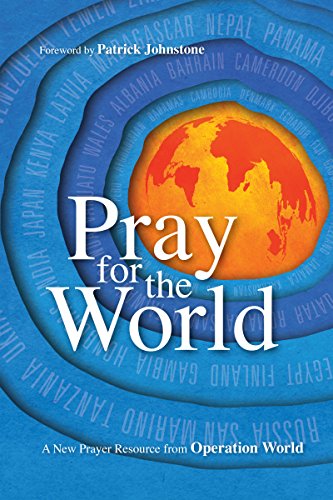
Pray for those nations mentioned in this post (Egypt, Ethiopia [Cush], Iran, Iraq, Saudi Arabia, and Jordan). Here is a wonderful tool to inform you:


(It is a more succinct version of the much larger and more detailed Operation World)

PRAYER

Kingdoms may fall and all will fade away. We praise Your name. We praise You as our only hope! Amen.

Wednesday, June 6, 2012

Isaiah 19 - Tale of Woes for Judah's Foes: Egypt

LINK: Isaiah 19 

BACKGROUND 

Egypt was the country that enslaved God's people for 400 years (Exodus 1). So, the people of Israel hated the Egyptians. Yet, Judah was considering an alliance with Egypt against Assyria (2 Kings 18:17-25). Isaiah warned against such a course of action because God would take care of Assyria in His sovereign time. 


A leading prophetic scholar, Dr. Wilbur M. Smith, once wrote in his 1957 book, Egypt in Biblical Prophecy, that Isaiah 19 "contains the most important prophetic utterance concerning Egypt in all of the Old Testament" (p. 77). 

Isaiah 19 has two main components for Egypt:

1) JUDGMENT: Egypt was crushed by Esarhaddon, king of Assyria, in 670 B.C. Egypt's gods were powerless against this foe. Isaiah also prophesied that there would be internal fighting, the Nile would dry up, and the notoriously wise counselors would not know what to do. 

2) SALVATION: After Egypt is judged, it will turn from idols and worship the one true God united with Assyria and Israel! When they call to God for help, a Savior and Champion will deliver them. The phrase, "in that day," is used five times in 19:16-25 (16, 18-19, 21, 23). This is often used in the Bible when there is a judgment followed by a blessing. 

Depending on your view of end times some would argue that the salvation of Egypt has already occurred with the "highway" from Egypt to Assyria (19:23) being opened up when Jews, scattered abroad, came to Jerusalem at Pentecost and embraced the gospel of Jesus Christ (Acts 2:5; 9-11). 

Others see it as happening at a future time in a Messianic kingdom where the promise to Abraham would be fulfilled in that "all peoples on earth will be blessed through" his seed, Jesus (Genesis 12:3). This would include Gentiles from every language, people, tongue, and tribe, bowing in worship to the true God (Revelation 7:9). 

REFLECTION 

Regardless of your end-times views, take some time to worship the Prince of Peace, who will unite former enemies in love! He breaks down every barrier that man has erected (Ephesians 2:13-19). The only hope for this world of strife is Jesus Christ!

APPLICATION

We live in a time when war is everywhere. Take a look at this:

List of Ongoing Military Conflicts

Take hope in Psalm 2, read the lists in the article above, and pray for our world. 

PRAYER 

Pray through Psalm 2 (see background explanation HERE)

Why are the nations in an uproar 
And the peoples devising a vain thing? 
The kings of the earth take their stand 
And the rulers take counsel together 
Against the Lord and against His Anointed, saying, 
“Let us tear their fetters apart 
And cast away their cords from us!” 

He who sits in the heavens laughs, 
The Lord scoffs at them. 
Then He will speak to them in His anger 
And terrify them in His fury, saying, 
“But as for Me, I have installed My King 
Upon Zion, My holy mountain.” 

“I will surely tell of the decree of the Lord: 
He said to Me, ‘You are My Son, 
Today I have begotten You. 
‘Ask of Me, and I will surely give the nations as Your inheritance, 
And the very ends of the earth as Your possession. 
‘You shall break them with a rod of iron, 
You shall shatter them like earthenware.’ ” 

Now therefore, O kings, show discernment; 
Take warning, O judges of the earth. 
Worship the Lord with reverence 
And rejoice with trembling. 
Do homage to the Son, that He not become angry, and you perish in the way, 
For His wrath may soon be kindled. 
How blessed are all who take refuge in Him!" 
(Psalm 2:1-12) 

Tuesday, June 5, 2012

Isaiah 17 & 18 - Tale of Woes for Judah's Foes Part I

LINK: Isaiah 17 & 18 
Isaiah Part 1, p. 5: Precept Upon Precept, Precept Ministries.

BACKGROUND

The Daily Walk (July 18, 2008, p.23) calls Isaiah 17-20 a continuation of Isaiah's "Tale of Woes for Judah's Foes." I like that! 

Prophecy and Fulfillment for Judah's Foes

Isaiah said Damascus (Syria) would be a "fallen ruin."  Tiglath-Pileser III of Assyria captured Damascus, the capital of Aram, Syria in 732 B.C. Many of them were deported. 

The "fortified city" of Ephraim (Israel) would "disappear." They turned to the Lord, but it was too late. In 722 B.C. Assyria conquered the kingdom of Israel and it ceased to exist. Ahaz, King of Judah, ended up paying tribute to Tiglath-Pileser III (2 Kings 16:1-4). 

Isaiah 18 starts with a prophecy against "Cush" believed to have been given during the days of Hezekiah (2 Kings 19:20). Cush is southern Egypt, northern Ethiopia, Sudan, and Somalia today. The "land of whirring wings" may refer to locusts. The king of Cush heard of the Assyrian army coming and sent messengers up the Nile asking other nations to form an alliance. Judah was asked, but Isaiah told the messengers that God would help them. Assyria was God's instrument in the punishment of Israel. Once this was accomplished, He would also intervene and cut them off (18:5, Isaiah 37:21-38; 2 Chronicles 32:20-23). The prophecy about gifts and worship being brought to Mt. Zion is probably for a future time. Sadly, there is not an extra-biblical account of what happened with Cush. 

No REFLECTION and APPLICATION today. Please keep reading. 

PRAYER

Pray meditatively through these chapters. 

Monday, June 4, 2012

Isaiah 15 & 16 - Bad Moab

LINK: Isaiah 15 & 16

BACKGROUND

Moab was east of the Dead Sea. The Moabites were descendants of Lot through his incestuous relationship with his older daughter (Genesis 19:31-38). Here is a short review of all the bad things about Moab:
  • Moabite women seduced Israel's men during the wilderness wanderings (Numbers 31:15-17)
  • Oppressed Israel for 18 years (Judges 3:12-14)
  • Saul fought Moab (1 Samuel 14:47)
  • David defeated Moab (2 Samuel 8:2, 12)
  • Solomon was influenced by his wives to build an alter to Chemosh, Moab's god (1 Kings 11:7-8)
  • Moab's King Mesha had to pay tribute to King Ahab of Israel (2 Kings 3:4)
  • Mesha rebelled against Joram and was defeated (2 Kings 3:5-27)
Moab had always been an enemy of Israel. Now, Moab would be punished for treating Israel harshly; and when attacked by Assyria, Moabite refugees would flee to Sela, in the country of Edom to the South. From there, they would send pleas (in the form of tributes. See 2 Kings 3:4) to the king of Judah to give them refuge (Isaiah 16:1-5); but although Moab wanted Judah's help, they did not want Judah's God. 

Alas, Moab in their pride, would not submit to Judah or Judah's God. Isaiah (and the Lord) grieved over Moab's destruction (because God takes "no pleasure in the death of the wicked," Ezekiel 33:11). Sadly, within three years (16:14), Moab would be destroyed. Historically, Tiglath-Pileser III invaded Moab in 732 B.C. Sennacherib invaded Moab (and Judah) in 701 B.C. The ruins of Elealeh, Heshbon, Medeba, Dibon, etc. still exist to confirm the defeat of Moab and the truth of this prophecy!

The Scarlet Thread of Redemption

There is a messianic promise in 16:5, pointing to the day when, in love, a man would sit upon a throne and reign in righteousness!


REFLECTION (written in 2009)

Over the last few days, we have heard of the destruction of mighty empires. I feel no satisfaction in the destruction of the wicked! I did not want Saddam Hussein to be executed but reformed. I pray regularly that Osama bin Laden will submit to the One who reigns in righteousness (Isaiah 16:5). Maybe I am a dreamer. (2012 update: Osama was killed in Pakistan on May 2, 2011)

In April 2009, I sat atop Bald Hill as three Kurdish Muslims told me their harrowing tales of life under Saddam's regime (in modern-day Babylon), the gassing of their villages, their flight to the hills during the Gulf War in 1991, life in a refugee camp, the assassination of their loved ones, and their longing for an independent Kurdistan today. My head was spinning at the end of the conversation, and the only answer I had was Jesus. He is the answer to the Kurd's plight. It cannot be solved through political means or democracy but through a change of hearts to the One who reigns on a righteous throne in love (Isaiah 16:5).

So, I continue to sit here and pray for Osama bin Laden and the terrorists who killed my Kurdish friend's father and brother because God takes "no pleasure in the death of the wicked, but rather that the wicked turn from his way and live" (Ezekiel 33:11).

2014 Update: I am in regular contact with one of those three Kurdish friends and praying as ISIS closes in on more Kurdish territory in Syria. 

APPLICATION

Get out a map from biblical times (or Google it) and mark where Babylon and Moab used to be. Pray for the people who exist there today. Pray for the terrorists. Remember that God loves the whole world!

Here is a guide to pray for the people currently terrorizing this region:

ISIS Prayer Guide 
(2023 Update - yes things are still happening)

Here is also a challenging article:


Loving Bin Laden: What Does Jesus Expect Us to Do?
 (2023 Update - This post was written in 2009, and Bin Laden was killed on May 2, 2011, but the principles in the article are timeless.)

PRAYER

Lord, we worship You as LORD of all the earth. You reign on high as the sovereign head of all events throughout history. We long for the day when Jesus will reign in righteousness. Until that time, help us to be instruments of Your peace in a desperate world. We ask this in Jesus' name. Amen.

Sunday, June 3, 2012

Isaiah 14 - Babylon, Assyria, and Philistia's Defeat

LINK: Isaiah 14

BACKGROUND

The LORD will have compassion on Jacob;
once again he will choose Israel
and will settle them in their own land.
Aliens will join them
and unite with the house of Jacob. (14:1)

There is a prominent theme in Isaiah and one I have been pointing out to you periodically throughout the Old Testament: "aliens" (non-Israelites) would join the returning Israelites (56:6,7; 60:10; 61:5). I have been saying since Genesis 12:3 that God's intention has always been that all the world would be blessed through His people. Beyond this and including 2 Samuel 7, through the descendant of David, the whole world could be saved through Jesus Christ. God loves the whole world (John 3:16)!

Isaiah 14:3-21 is a "taunt" (proverb or song) that will be sung by the people who are freed from the fear of the king of Babylon. The king is most likely Sennacherib (705-681 B.C.) because of the parallels in the descriptions in Isaiah 14 and 37:21-29. He was king of both Assyria and Babylon. Sennacherib's grandfather, Tiglath-Pileser III, had made himself king of Babylon in 728 B.C. The Babylonians were rebellious, but Sennacherib's father, Sargon II, cultivated and cared for them. Unlike his father, Sennacherib dominated them and completely destroyed Babylon in 689 B.C. Sennacherib seized Jerusalem in 701 B.C. leaving Hezekiah on the throne as a vassal ruler. Sennacherib's death by assassination (2 Kings 19:37) eight years later would give rest and quiet to Judah and the whole earth. God permitted Babylon to have power in order to punish His rebellious people, but he would again have compassion.

In a Bible Book Club Live meeting back in 2009, Laura made a very good point, "It seems like one minute God is saying He is not having compassion on Israel and the next minute He is having compassion." She is right!

Isaiah 14:1 is in contrast to 9:17, where Isaiah said God, in punishing His nation, would not have compassion ("pity" and "compassion" are the same Hebrew word in these two verses). I believe that this all means that God, because of His justice, must punish them for their sin to bring them to repentance resulting in renewed compassion for them! The purpose of His discipline is always to bring His people back to Himself. He has no compassion for His people's sin, but He has compassion for His repentant people!

Also, it should be noted that some commentators think 14:12-14 refers to the entrance of sin and Satan's fall. Other commentators believe that this is a very "forced" view (Ezekiel 28:12-19 is a much surer bet in that most commentators believe this is about Satan), and it is most likely just referring to Sennacherib.

Though the Lord was using the Assyrian Empire to destroy Babylon, ultimately Assyria would also fall (14:24-27; 2 Kings 19, and Isaiah 37:21-38).

The chapter concludes with a prophecy in the year King Ahaz died (715 B.C.). "The rod that struck you" (14:29) is referring to when Sargon II of Assyria defeated Ashdod, the Philistine city, and Judah when they revolted in 711 B.C. As a result, Philistia became an Assyrian province.

This was a LOT of history today, and my head is spinning. We will suspend with a REFLECTION and APPLICATION until tomorrow!

PRAYER

Lord, we praise You as the God of history and that You do all things with a purpose. It is YOUR story (HIStory). We give the story of our lives to You, asking You to use us for Your glory. In Jesus' name, who gave His life for us. Amen.

Saturday, June 2, 2012

Isaiah 13 - Destruction of Babylon

LINK: Isaiah 13

BACKGROUND

Isaiah 1-12 were primarily about judgment against the southern kingdom (and to a lesser degree, against the northern kingdom). Isaiah 13-23 will be about judgment on nine other nations or cities. They were written so that God's covenant people would be reassured that God will establish His kingdom.

Isaiah 13 is an oracle ("burdensome message") against Babylon. You might recall that Babylon was the home of the infamous Tower of Babel in Genesis 11 and a point of rebellion against God after the flood when the people tried to make a "name" for themselves (See the post for Genesis 11 HERE). Throughout the centuries, as various dynasties ruled over this city, it was viewed as a place of hatred toward God and Israel.

Revelation 17 and 18 use Babylon as a symbol of God's enemies. This oracle occurred at a time Babylon was part of the Assyrian Empire. Assyria was about to attack the Syro-Palestine area where Israel lived. Commentators believe that this oracle was fulfilled when Sennacherib, king of Assyria, sacked the city of Babylon in 689 B.C.

No REFLECTION or APPLICATION. It is a "keep reading" day!

PRAYER

Lord, we praise You God that You are sovereign over all nations. We ask that You fulfill Your plan for the nations today. We ask this in Jesus' name. Amen.

Friday, June 1, 2012

Isaiah 11 & 12 - Reign of the Righteous Branch

LINK: Isaiah 11 & 12

BACKGROUND

Isaiah 11 – Reign of the Righteous Branch

This is a Scarlet Thread of Redemption passage. Isaiah foretells the day when a shoot will spring forth from the seemingly dead stump of Judah. Isaiah glimpses a day when his people’s trials will be over, a glorious kingdom will be established, and a Messiah comes to reign (11:1-9). Jesus would come from the line of David (Review the Davidic Covenant in 2 Samuel 7. Also see Romans 1:3; Revelation 5:5, and 22:16) to be that Messiah and King. We also see the promise of the Spirit (11:2-3a) in this passage. Isaiah refers to the Holy Spirit more than any other Old Testament prophet (11:2; 30:1; 32:15; 34:16; 40:13; 42:1; 44:3; 48:16; 59:21; 61:1: 63:10-11, 14). All three persons of the Trinity are suggested in 11:1-2.

The rest of this passage includes a description of the Messiah and His righteous kingdom where the curse will be lifted, peace and harmony will reign, and even wild animals will be tamed! Peace will reign because “the earth will be filled with the knowledge of the LORD” (Isaiah 11:9; Jeremiah 31:34; Habakkuk 2:14). 

Isaiah 11:10 holds a verse related to the drum I have been tapping since the beginning of Bible Book Club: 

God wants to bless other nations by the Messiah 
rallying all nations to have a part in God’s kingdom. 
(Luke 13:29) 

This is in keeping with God’s promise to Abraham that through his descendants all peoples would be blessed (Genesis 12:3). I hope you can see that. Isaiah 11:10 is a missions verse!

The remainder of this chapter concerns the regathering of God’s remnant from Israel and Judah comparing it to a second “Exodus” complete with a second drying up of waters!

Isaiah 12 – A Song of Praise

This chapter contains a song of praise for the day when Israel and Judah are regathered and the Lord Jesus Christ reigns as a witness to all the nations! God even ties this song to the first Exodus by repeating words from the Israelites’ song after they crossed the Red Sea (Exodus 15:2): 

“The LORD GOD is my strength and my song, 
and He has become my salvation” 
(Isaiah 12:2).

REFLECTION

As I type this morning, there is a sense of holy awe that fills my heart. Jesus, the shoot from the stump of Jesse will come again in all His glory, and He shall reign!

There is something so awesome about reading this prophecy knowing that it was given more than 700 years before Jesus’ birth (Matthew 1:6; Acts 13:22,23)!

APPLICATION – Praise and Making Your Own “Jesse Tree”

Make the six short verses in Isaiah 12 the focus of your praise today! Stand in awe of Him for His great salvation!

The prophecy of the “shoot from the stump of Jesse” is the basis for a wonderful Christmas tradition we began in our home in 1997: The Jesse Tree! 

Our Jesse Tree made my nieces when they were in grade school.
The Jesse Three hangs on our wall beginning on the 1st of December with a new ornament added each day. Each ornament symbolizes a story related to the coming of that shoot from the stump of Jesse! What I love about the Jesse Tree is that 21 out of the 25 Bible passages are from the OLD TESTAMENT and really emphasize The Scarlet Thread of Redemption! What a great teaching tool for your kids and a reminder for all of us!

If you want to make one of these, it is best to start now! 

Here is the guide with Scripture references and activities to do with your kids from December 1-25. I connected it with stories in The Beginner's Bible. 

Here is the Jesse Tree Devotional for download. This helps you go deeper into the passages you will cover with your kids and family.
 
You can also view this devotional in the Bible Book Club blog:  Jesse Tree Online.

I hope this blesses you as it has blessed our family since 1997. Please include the copyright in any copies you might make of the Jesse Tree guide and devotional!

PRAYER

Pray through Isaiah 12 today!