Thursday, February 28, 2008

Exodus 11 & 12 - The Passover

READING: Exodus 11-12

Here comes the climax of the plagues -- the death of the firstborn of every family. And finally, because of this death, Pharaoh let the Israelites leave Egypt, taking with them ALL of the people from the oldest to the youngest, as well as all the livestock, just like Moses requested in the first place. And to top it off, they also took many riches from Egypt that the Egyptian people gave to them. We will see later that many Egyptians joined them on this journey as well.

God had dramatically demonstrated His power and authority through the plagues and had preserved the lives of the Israelites while destroying the life and property of the Egyptians (not to mention the validity of the Egyptian gods). Imagine the excitement Moses must have felt as about two million people followed him out of Egypt! God was doing just what He had told Moses He would do! They had an appointment to keep with God at Mt. Sinai (aka Horeb), where God had appeared to Moses in the burning bush back in chapter three. And now they were on their way!

BACKGROUND NOTES:
11:3 - Moses was greatly esteemed in Egypt. Although Pharaoh's heart was hardened, the hearts of many others were not. They saw that Moses had a more powerful God they theirs. They respected Moses. And the LORD softened the hearts of the Egyptians toward the Hebrew people.

11:7 - a dog shall not even bark - A proverbial saying meaning that no one would offer the least resistance when Israel left Egypt (Ryrie).

12:2 ff - Passover is such a significant event that it will define the beginning of the Hebrew year from now on. It is an event that is to be celebrated every year among the people of Israel.

12:15 ff - The Feast of Unleavened Bread is a seven day commemoration that begins the evening of Passover and is also to be celebrated annually. Leaven is a symbol of sin and is to be cleared completely from all homes on the first day of this feast and kept out until the feast week is over. Likewise, after we are cleansed by the blood of Christ, we are to walk in holiness. (See 1 Cor 5:7.)

Scarlet Thread of Redemption - Passover is a tremendous celebration for the children of Israel and a beautiful illustration of the redemption Christ accomplished at Calvary.

  • At Passover, Israel celebrates liberation from slavery in Egypt, just as Jesus provided liberation from slavery to sin. Romans 6:6 says, ". . . our old self was crucified with Him, that our body of sin might be done away with, that we should no longer be slaves to sin." Jesus said that He came to "give His life a ransom for many" (Mark 10:45), in other words, he came to purchase many from slavery.
  • The lamb had to be without blemish, as Jesus was without sin. John (the baptizer) announced Jesus' arrival in John 1:29 with "Behold, the Lamb of God who takes away the sin of the world!" and Hebrews 9:14 says Christ "offered Himself without blemish to God."
  • The lamb had to be killed, just as Jesus was sacrificed. In John 12, Jesus explained that He had to be "lifted up," that is crucified, in order to draw men to Himself.
  • No bones of the lamb were to be broken, just as Jesus' bones would not be broken on the cross (John 19:31-36).
  • The lamb's blood was applied to the doorway in order to preserve life, just as Jesus' blood is applied for our forgiveness and thus our preservation. Since "all things are cleansed with blood, and without shedding of blood there is no forgiveness" (Heb 9:22).
REFLECTION:
Reflect today on the spotless Passover Lamb and how His blood was shed so that God's wrath could "pass over" you and preserve you, and so you would be forgiven of your sin and set free from its power over you.

POSSIBLE APPLICATION:
Has the blood of Jesus been applied to your life, cleansing you and allowing God's wrath to pass over you? If so, are you progressing toward holiness? "Clean out the old leaven, that you may be a new lump, just as you are in fact unleavened. For Christ our Passover also has been sacrificed. Let us therefore celebrate the feast, not with old leaven, nor with the leaven of malice and wickedness, but with the unleavened bread of sincerity and truth." (1 Cor 5:7-8)

PRAYER:
You are worthy, Jesus, for You were slain and did purchase for God with Your blood men from every tribe and tongue and people and nation. And You have made them to be a kingdom and priests to our God; and they will reign upon the earth. Worthy is the Lamb that was slain to receive power and riches and wisdom and might and honor and glory and blessing. To Him who sits on the throne, and to the Lamb, be blessing and honor and glory and dominion forever and ever. Amen. (from Rev. 5:9, 10, 12, 13)

Wednesday, February 20, 2008

Day 52: Who Me?

READING: Exodus 4-5

SUMMARY:

In chapter 4, Moses argued with God over his qualifications to go on this mission. His first objection was that nobody would listen to him. So God showed Moses a couple of miracles that will get their attention and let them know that Moses is God's messenger. They will listen. So then Moses pointed out his own lack of eloquence. (There's one I can relate to!) But God told him it doesn't really matter, because God is the one who will be speaking, not Moses. God plans to speak through Moses, not have Moses speak on his own. Moses responded with, "Please, Lord, just send somebody else." (That's what verse 13 means.) At this point, Moses was indicating that he will disobey God's command to go. That's when God got angry with him.

Moses did decide to obey and headed toward Egypt. His sons were circumcised, then his wife and sons returned back to Midian, and Moses went on and met up with Aaron (whom God had sent to meet him). They went to Egypt, gathered the elders of Israel together, and told them the message from God. Moses showed them the miraculous signs, and they believed his message from God.

Chapter 5 -- It is commonly accepted that the Pharaoh at this time was Amenhotep II. Moses and Aaron come before Pharaoh with the message from God, and Pharaoh said, "Who is the LORD, and why should I listen to him? Get back to work!" He made the work harder for the Israelites, the Israelites complained to Moses, and Moses complained to God. This is going to be a common pattern!

REFLECTION:

Unfortunately, I think I am an awful lot like Moses. I can come up with many excuses why I'm not the one for the job. As believers, we have a message from God to share with others. But we think, "they won't listen to me," or "they won't believe me." So God gives us the miracle of our own changed hearts as evidence to share. We also have the testimonies of many others and the Bible as witnesses to the truth that we share. So the next common excuse is, "I can't explain it well." God assures us that HE is the one talking; we are simply the mouthpiece through which He speaks. As long as Moses was making excuses, God was patient with him and gave him assurance that He would supply what Moses lacked. He has given us those same assurances.

Over the next forty years, Moses is going to grow a lot! God didn't leave him in his "faithless" condition. As He used Moses to do His work, He was simultaneously working in Moses.

APPLICATION:

The Lord has been urging me to move conversations with others to a more spiritual level. I have had plenty of excuses, but God has answered them all! Last night I had the opportunity to do what He asked. We have supper at church on Wednesday nights, and I sat with a couple I often sit with. But this time I asked them to share with me the story of their salvation. It was a beautiful testimony of God at work in their lives. It wasn't a big thing, but obedience, even in little things, has its reward.

How about you? Are you willing to say, "Here I am, Lord. Use me as You wish." God does His work through His children. Are you obeying Him, even in the little things? Or are you just making excuses?

PRAYER:

You are the great I AM, and You give us -- little as we are -- the opportunity to be in Your service. What an awesome thing it is to have the God of the universe to do His work in us and through us! Lord, give us the answers to our excuses and help us to learn to obey You when You send us on a "mission" for You. It is an amazing privilege to serve You! Thank You for the work You do in our hearts to conform us to Your image and to bring You glory. Amen.

Sunday, February 17, 2008

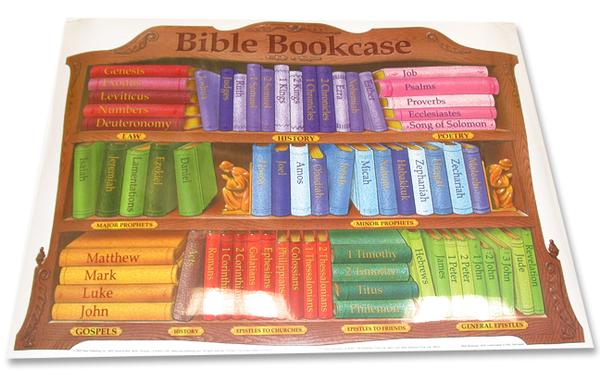
Put Genesis on Your Book Shelf! You are 5% Done!

YOU'RE DONE!

From: http://sschool.com/kids/bookcase.htm


WOOHOO! You have completed 1 of the 66 books in your "Bible Bookcase." When you include our readings in Psalms and Proverbs, we are 5% down the road on our journey.


Speaking of "down the road," if you were to put that 5% on a trip around the world, it would be like the distance between the Garden of Eden in modern day Iraq and Kabul, Afghanistan! (Maybe you can pray for both those countries right now because they certainly need it and so do our troops!)
We will take a break tomorrow in Psalm 11&12 and pick our new book off the book shelf: Exodus!
Also, if you know someone who wants to join us, just have them pick up with Exodus. They are not behind! They are just starting in on a new book with us! They can circle back around and pick up Genesis later.

Thursday, February 7, 2008

Day 38 Joseph's Brothers Bow Before Him

READING: Genesis 42


BACKGROUND:

I think the beginning of this chapter is rather humorous. Here these men sit around looking at one another, wondering what they're going to do as the food runs out, when their father pipes up and says, "Quit staring at each other! There's grain in Egypt. Go get some!" Well, they get off their duffs and head down to Egypt to purchase grain there. (Katrina's paraphrase)

Meanwhile, in Egypt . . . . At the end of the seven years of plenty, Joseph was 37 years old and had been in Egypt for 20 years. A little while into the famine, his ten older brothers show up. Jacob was careful not to send Benjamin on the journey, since he has become the main object of his affection in place of Joseph. As soon as the brothers approach Joseph, he knows who they are. But they have no clue they are bowing down before their brother to ask to purchase grain. This is the fulfillment of Joseph's dream of the sheaves bowing down (Gen 37:7-10).

Then Joseph antagonizes them, probably trying to get information from them without revealing who he is. He had to be wondering if his father was still alive and if they had treated Benjamin badly as well. I'm sure he was relieved to hear that his father and Benjamin were both still alive and well. He was probably trying to determine if their hearts were softened as well.

Joseph is outwardly quite harsh with them, but in his heart is very kind and generous toward his brothers. On the one hand he speaks roughly to them, accuses them of being spies, throws them all into prison for three days, binds Simeon, and makes them leave him "hostage" In Egypt while they return home for the youngest brother (a task they know will greatly distress their father). But on the other hand, he gives them sacks of grain for free, by returning their money in their sacks, and also sends them home with provisions for the journey. He does want to preserve his family.

A very significant part of this chapter is verses 22-23. These men have very guilty consciences! They make the connection between the way Joseph is treating them now and the way they treated Joseph 20 years before! Even thought they don't know it's Joseph! They are sure they are now facing the consequences for their sin against their brother. God leaves no doubt in their minds. And when they discover the money in their sacks (verses 28 & 35), they are even more terrified of God.

In the end (of this chapter), Reuben assures his father that he will take full responsibility of Benjamin's safety on the return trip to Egypt. He offers the lives of his two sons as a pledge. Of course, it would not really be a comfort to Jacob to lose two of his grandchildren, either. The bottom line here is that Jacob does not trust his sons. Very sad!

REFLECTION:

Joseph could have been cruel to his brothers, but instead chose to lavish kindness on them.

He could have charged them right then and there with their crimes against him, but instead allowed God to convict their hearts.

"He (Joseph) clapped them all up in prison for three days, v. 17. Thus God deals with the souls he designs for special comfort and honour; he first humbles them, and terrifies them, and brings them under a spirit of bondage, and then binds up their wounds by the Spirit of adoption." (Matthew Henry Commentary)

He had every "right" to be bitter and angry with his brothers, but had obviously already chosen to forgive them, and he wept when his brothers confessed their sin in front of him.

Joseph also sees the "big picture" here. He knows that if his brothers had not sold him into slavery, he would not have been there to preserve so many people during the famine.

APPLICATION:

Am I like Joseph? Do I show kindness to those who are mean to me? Do I allow God to work in people's hearts, rather than thinking that I need to point out all their faults to them? Do I put my rights aside for the benefit of others? Do I forgive those who are against me? Do I see the big picture of God's hand at work?

PRAYER:

Father, it's your kindness that leads me to repentance. You are the perfect example! Teach me to be kind to others, even those who are not kind to me. Teach me to allow your Holy Spirit to work in the hearts of others, just as you work in my heart. Let me learn to forgive others as you have forgiven me. You are a God who changes hearts. Let me see you at work in my heart, in the hearts of those I love, and in the community and world around me. In the name of Jesus, amen.

Tuesday, February 5, 2008

Inaugural Bible Book Club!


Inaugural Bible Book Club!, originally uploaded by carolfoasia.

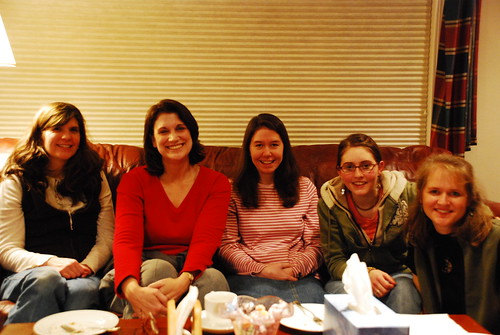
What a great group of ladies (and George) for our first Bible Book Club! We had a great time with rich discussion and wish you all could have all been there. How nice to just talk about the Bible!

From Left to Right: Laura on the North end of town, Me, Jan on the north end, Anna downtown, Cathi from Around the World

Friday, February 1, 2008

Come to the LIVE Living Room Bible Book Club

Yes, you can be in on the INAUGURAL Book Club extravaganza at my house!

When? Monday, February 4th at 7 p.m.
Where? At Carol's House (I won't post the address here, but call or email me for directions)
Why? Because I LIKE you!

It will be a casual and informal time discussing just like we would a book. We will discuss up through the life of Jacob and his boisterous boys!

Monday, January 28, 2008

Day 28: Psalm 7&8

READING: Psalms 7 and 8

BACKGROUND: The Prayer and Poetry of the Psalms
I, Susanne, love reading and praying the Psalms. One of the reasons that I have been so devoted to the Anglican Book of Common Prayer is the Psalter in the back which lays out all 150 Psalms to be read during Morning and Evening Prayer over thirty days. So by reading the Psalms set out for the 1st Morning, 1st Evening, 2nd Morning, 2nd Evening, etc., I can pray through the Psalms each month. I have been far less than perfectly consistent, but still I have read through the Psalms at least five times (conservatively) last year, and I have been praying the Psalter for at least the past five years. You do the math. :)

Obviously, the Psalms are poetry – gorgeous poetry. Rather than having a rhyme scheme and metrical pattern, the Psalms are constructed around repetition. Certain words and phrases are repeated to create a certain effect, mood, tone, etc. Plus, poetry based on repetition is much easier to learn and memorize which is a true blessing to us who desire to learn the Psalms “by heart.” Rhyming and metrical poetry can be quite difficult to translate and maintain the original meaning and craftsmanship, so it makes perfect sense that God’s poetry is written in the most easily translatable manner.

The Psalms express the full range of human emotion, from joyful praise to heartrending contrition and repentance even to anger at God for His seeming indifference. Psalms were specifically designed to be repeated – truly they are an oral poetic form. In monastic life, and especially according to the Rule of St. Benedict, it was and still is common for a brother to read the Psalms aloud while the others eat their meals; in this way, the community listens to the entire Book of Psalms each week. Each week! So cool. Plus, after the Book of Isaiah, the Psalms are the most quoted Old Testament book in the New Testament. So being familiar with the Psalms is an important aid to reading and understanding the New Testament.

PSALMS 7 AND 8
So let’s look at Psalm 7. Under the title for Psalm 7, my KJV Bible states that this Psalm is a “prayer of deliverance,” a “Shiggaion [a meditation or song] of David, which he sang unto the Lord, concerning the words of Cush the Benjamite.” A footnote mentions that Cush the Benjamite was evidently one of Saul’s radical family members. As we read through this poem, we can see that David is quite confident that his own innocence will be proven (vv. 3-5) despite the slander spoken against him, and David is also certain that God will defend him and defeat this Cush guy (vv. 6-17).

The first and the last verses are the ones that draw my attention the most. Verse one gives us the assurance of trusting in God and also lays out the theme of deliverance of this Psalm: “O Lord my God, in thee do I put my trust: save me from all them that persecute me, and deliver me…” (KJV). This verse provides an example of climactic parallelism in which the second line refines, develops, or completes the thoughts of the first line. I pray this verse when life seems to be coming at me from every direction and when I know I must depend on God’s strength and not my own. We all need deliverance, whether eternal deliverance through Christ or daily deliverance from our besetting sins as well as from the Enemy who seeks our destruction.

The last verse of Psalm 7 reads: “I will praise the Lord according to his righteousness: and will sing praise to the name of the Lord most high.” Aaaah, that’s a wonderful verse to pray as we celebrate all that God gives to us, delivers us from, as well as whom we celebrate: The Lord Most High! I love that verse! It reminds us also that the Psalms were songs as well as poetry. The name for the Book of Psalms in the Hebrew Scriptures is “Tehillim,” which means “Songs of Praise.”

Psalm 8 is very dear to me as the kids and I memorized it last year as part of our Sonlight home school religion curriculum. In my study Bible under the Psalm’s title, it reads “God’s glory and man’s honor.” It’s one of my favorite praise Psalms as it acknowledges the majesty and grandeur of our Creator and His Creation in glorious language, most especially His creation of humankind. Verse 5 states, “For thou hast made him [humankind] a little lower than the angels, and hast crowned him with glory and honor.” Literally, that verse should be translated “a little lower than God” (Hebrew "Elohim," the normal generic word for God). However, the Septuagint translated the word as “angels,” and this translation using “angels” is quoted in Hebrews 2:6-8. The word can be taken loosely as “divine beings” which could refer to both God and the angels. Either way, it’s a wonderfully poetic way of celebrating our Creator and His joy in creating this world, and especially us.

REFLECTION:
Besides remembering the old praise song, I always thrill to the almost rhetorical question: “What is man, that thou art mindful of him?” And then as we read the rest of the Psalm, we find out the answers – the many answers – and the overall answer, which is: “It’s God’s perfect plan.” He made us – He gave us charge over His beautiful Creation – He “hast crowned [us] with glory and honor.” What an amazing, incredible, unfathomable God we serve!

APPLICATION:
I always read the Psalms aloud, just so I can hear the poetry. In my 1928 Book of Common Prayer, the Psalter translation is that of the Great Bible of 1540, predating the King James Version by 70 years. Sometimes it’s a little hard to fathom, but oh! The poetry!!!! It’s simply lovely!!! I encourage you to read the Psalms in one of the older translations that do justice to the grandeur and poetry of the Psalms. This is one time that The Message falls flat on its face – a modern “hip” translation loses the diction and repetition and beauty of the older translations. And I encourage you as well: Read them aloud. Slowly. Pray them as you read them. I love to read Psalms aloud with a candle lit before me – it puts me in the frame of mind to worship. And worship is central to the Psalms. They’re there as an aid to worship our amazing God. So enjoy them in a new way today – savor the language. Notice the repetition. And pray them.

PRAYER:
“O Lord our Lord, how excellent is thy name in all the earth!” We honor and praise you, Lord Most High, for giving us the gift of Your Word. Thank you that You created Your Word in such a way that we can not only learn and receive instruction in righteousness but that we can also turn Your Word back to You in prayer and praise! Thank you for making the Psalms voice all our range of human emotion so that we can come to this incredible poetry collection and find a prayer that expresses our hearts, whether we feel joy, thanksgiving, and praise or pain, bewilderment, and repentance. We honor You as the true Poet of our Hearts, O Lord our God. Amen.

Sunday, January 27, 2008

Genesis 30 - Sibling Rivalry

READING: Genesis 30

BACKGROUND:

The stage is set for some major sibling rivalry between Rachel and Leah! Jacob has married both of them, but loves Rachel. God intervenes to compensate Leah for that lack of love by opening her womb and giving her four sons. Chapter thirty opens with an argument between Rachel and Jacob concerning her inability to conceive. Then begins the customary bearing of children through the wives' maids as concubines, so that by the end of this account Leah has six sons, Bilhah (Rachel's maid) has two sons, Zilpah (Leah's maid) has two sons, and Rachel herself has one son. Eleven sons in all. There is at least one daughter also, Dinah. She is mentioned because she will be involved in a major event that will happen later (chapter 34).
Mandrakes were thought to induce fertility. Rachel bought them from Leah but still remained barren. Only God could open her womb.
Once Jacob had worked off his debt of labor to Laban, he decided it was time to return to Canaan. He was ready to leave his cheating uncle, who kept changing his wages (see 31:7). But Laban had recognized that God was blessing Jacob, and through Jacob, he was receiving blessing himself. So he sought to keep Jacob around and offered to let Jacob name his own wages. Then Jacob made an offer Laban couldn't refuse. Jacob would take all the speckled and spotted sheep and goats and leave Laban the "perfect" ones. Laban was sure he would keep Jacob dependent upon him, because his flocks would be worth a lot while Jacob's would be worth little.
However, Jacob had other plans! He used the prenatal influence of the rods as well as selective breeding to increase his own flocks. It isn't clear how the rods affected the sheep, but here are a couple of explanations I found.
"Jacob placed partially stripped branches from certain trees in the watering troughs to stimulate the animals to reproductive activity." (Ryrie)
"He set up streaked rods before the ewes at the watering places, that the coloring of the young might be subject to prenatal influence. It is an established fact, declares Delitzsch, that white lambs can be guaranteed by placing a multitude of white objects about the drinking troughs (New Commentary on Genesis). Jacob also separated the spotted and striped lambs and kids from the herd, but kept them in plain view of the ewes, that they might be influenced." (Wycliffe Bible Commentary, p 34)
Although Jacob used these techniques to increase his flocks while decreasing Laban's, he also attributes his success to God (see 31:7, 9). God has prospered Jacob and made him very wealthy in preparation for his return home. Tuesday, we will begin Jacob's journey back to Canaan.

REFLECTION:

Although Jacob was not willing to count God as his own LORD, he does see the hand of God at work in his life. He is aware that God is keeping His part of the bargain (28:20-21). God has blessed him with sons, is providing great wealth for him, and protecting him from Laban's schemes.

Yet, family relationships for Jacob are very strained and unhappy. The women are truly constant rivals of each other. Like Rebekah, they each want to be in control, and they both want to have the upper hand. That would have created an incredible amount of strife in their family!


APPLICATION:

No matter how we try to manipulate things, God is always the one who is in control. He keeps His unconditional promises of blessing regardless of the behavior of the one(s) He is blessing. God's actions are not controlled by man.


PRAYER:

LORD, you are the God who is in control, and you will bless whom you choose to bless. Help me to trust in you rather than try to manipulate events on my own. You have blessed me abundantly! I recognize that these rich blessings are from your hand and I thank you for them. In the name of the richest blessing of all, Jesus, Amen.

Saturday, January 26, 2008

Genesis 28 & 29 - Jacob (by Rachel)

Link: Genesis 28 & 29

Background: Earlier in Genesis, we saw that God made a covenant with Abraham, promising, among other things, that his descendants would be numerous, that they would inhabit a land of their own, and that through his descendants all nations on earth would be blessed. For a childless man with a barren wife and a nomadic lifestyle, these promises were indeed amazing and would require miraculous intervention. God proved his faithfulness to Abraham by giving him Isaac, the child of promise.

The chain of blessing continued into the next generation; God renewed his covenant with Isaac and provided two sons to carry on the family line. Now in this third generation, again the question is raised whether the covenant would continue, and by what means it would continue. Isaac's generation showed that that the covenant was based on a promise, not upon man's plan, design, or intention. What will the generation of Esau and Jacob show?

Esau, the firstborn son of Isaac and Rebekah, is the next logical successor of the promise. To the firstborn goes the blessing of the father, including the lion's share of his wealth and the position of head of the clan. By natural right, the covenant would pass to Esau. But problems arise when Esau despises his birthright and apparently couldn't care less about protecting the legacy of relationship with God handed down through his grandfather and father. A second problem is that the younger son, Jacob, is a schemer who, along with his mother, seems willing to stoop to any means to get what should not rightfully belong to him. He deceives Isaac and gets the blessing for himself. So Jacob has the blessing, he has the money--everything should be fine and dandy to continue the covenant with God. There's only been a small matter of switching which brother will stand at the head of the family, nothing too insurmountable; Jacob stands poised to take over where the previous generation left off. Unfortunately for Jacob, Esau isn't too keen on the new plan and threatens to kill him once Isaac is dead. This, along with a desire to not have another Canaanite daugther-in-law, motivates Rebekah to send Jacob away to her brother's clan to get an acceptable wife and also to hide out from Esau's wrath.

Chapter 28 begins with Jacob's flight away from Esau. Along the way, he has a strange experience. Lying on the cold hard ground with a stone for a pillow, he has a dream in which he sees angels ascending and descending on a stairway to heaven. At the top of the stairs is the Lord, who speaks to Jacob many of the same promises he spoke to Abraham and Isaac; God is offering to Jacob a renewal of the covenant, offering him a place in the line of blessing. Jacob, the schemer who had deceitfully finangled his way into what he thought would be the good life and then seen his opportunity to enjoy that blessing disappear due to the wrath of the brother he had wronged, now sees something bigger. God repeats the blessing, yes, and enumerates the benefits of the covenant, but he also gives Jacob a picture of something even more wonderful--a pathway to God himself, a bridge from heaven to earth and earth to heaven. The distant God, who speaks and blesses from afar, gives a glimpse of his accessability, his nearness. If I knew how to do colors, I'd put a SCARLET THREAD notation here. Jesus later said, "I tell you the truth, you shall see heaven open and the angels of God ascending and descending on the Son of Man." (John 1:51) Christ himself is the ladder between heaven and earth, and Jacob, the guy who didn't get it, who didn't understand that God's promises were bigger than land and money and position, got to see heaven opened. Can you imagine? To see HEAVEN OPENED? I've been happy many times on a long journey just to see an open gas station with an unlocked, unoccupied bathroom, but to see heaven opened? That would be mind boggling. A way to heaven IS mind boggling. That we have been given a pathway to God is an amazing, wonderful gift. Jacob is amazed by it, too. He says, "Surely the Lord is in this place, and I was not aware of it." God becomes real to Jacob.

But what happens next? Jacob's life takes a turn toward the mundane--finding his uncle, getting a job, falling in love, speed bumps in the course of true love, a scheming father-in-law who beats Jacob at his own game by giving him Leah as a bride in the dark of night rather than Rachel (whom Jacob loved and had worked seven long years for), bickering wives, babies born. The normal stuff of life; the things that make up everyday life for most of humanity. And yet this normal man living normal life was abnormal in one notable way--he was connected to God by God's covenant promises. He belonged to God in a unique way; through Jacob, God's heart and intention and plan for mankind would be preserved, illustrated, and passed down to future generations. God would show himself to mankind through his interactions with this one family. It's as if God says to the world, "Yes, I'm big. Yes, I'm too much for you to comprehend. Yes, you're busy with other things, going about your lives and schemes, unable to grab hold of me. But just watch. Just watch this one family; watch what I do with them, how I come to them and interact with them. Watch this family, and you'll see what kind of God I am." As Genesis unfolds, the family gets larger and has many trials and adventures and challenges. The Old Testament is full of them. And then in the New Testament, the focus turns from the now-huge family to One member of it--the ultimate fulfillment of the promise--Jesus. Like the Israelites ("Israel" was the name later given to Jacob), we've got a long road to travel before we get there, but it'll be an eventful journey! Stay tuned!

Prayer: Heavenly Father, the road from us to you is too long and hard; who can walk it? Who can ascend to your holy mountain? Like Jacob we fret and plot to arrange the details of our lives; we define blessedness for ourselves and lay down the plans and terms for how to achieve those goals. But you open a way bigger than our plans and better than our hopes or schemes. You come to us. Thank you that heaven is open to us. Thank you that all your promises are "Yes!!" in Christ Jesus. Amen

Friday, January 25, 2008

Day 25: Proverbs 1 - It's All About Wisdom

READING: Proverbs 1

BACKGROUND:

This first chapter of Proverbs lays out the purpose of the book: to help us attain wisdom. And Proverbs is written for all types of people. Surely each of us fits in here somewhere: the simple, the young, the wise, the discerning (vv. 4-6) – that covers just about everyone!

What is wisdom and why do we need it?

Wisdom is an understanding of reality that enables good choices. It is the discernment to know the right action for a certain time and place. It is insight given by God into how to live and how not to live. Because God is the maker of all things, of reality, because He is reality, He is the beginning of all wisdom and knowledge. Fearing Him, living in reverent awe of Him, is the starting place for becoming wise (Proverbs 1:7; Job 28:28; Psalm 111:10; Proverbs 9:10).

As Myrna Alexander says, wisdom enables us to “live life with skill, like an accomplished craftsman who creates something of lasting value – in this case eternal. Our brief-as-grass hours are filled with decisions over the details of living. Proverbs gives explicit counsel about how life should be lived for our own good, as well as that of others. This book makes us aware that God will be glorified through even our smallest action. Thus, Proverbs lifts everyday life once and for all out of what man calls ordinary into the extraordinary of permanent significance.”

Proverbs contains many proverbs. (Duh!) Most are from Solomon, but some are from others like Agur and King Lemuel. What is a proverb? In the ancient Near East, proverbs were common. It is important to understand the purpose of proverbs. They’re not promises from God. A proverb simply asserts a general truth.

“A proverb is a brief but vivid statement of reality that causes the hearer to reflect upon a proper perspective of practical everyday human condition that might otherwise remain obscure and incomprehensible” (Bruce Waltke). The proverbs in this book reveal God’s perspective on the best way to live everyday life.

Proverbs, along with Job and Ecclesiastes, is one of the books of wisdom literature, and is poetry. Poetry touches the heart and creates a response in the hearer by making the abstract concrete. The poetry in Proverbs uses figurative language, as we see in this first chapter, where wisdom is personified as a woman calling our for all to hear. This poetry also uses parallelism, with balanced or contrasting thoughts paired. Look for these balanced statements throughout the book – it’s full of them!

This book opens as if written from a father to his son, with advice for everyday life. But before the father gives his advice, and because he understands that the advice will go unheeded if the son himself isn’t motivated to seek wisdom, the father seeks to whet the appetite, to create a desire for wisdom within his son (and within us!).

REFLECTION:

Who wouldn’t want to attain “wisdom and discipline,” “understand words of insight,” “lead a disciplined and prudent life,” “ do what is right and just and fair” (vv. 2-3)? I can’t imagine rejecting those things. Yet I know some do. But just in case we’re not interested in wisdom, the father “paints” two pictures in this passage: the first of someone who is acting without wisdom; the second of what happens when wisdom is rejected.

The first story warns us not to be enticed by those who do wrong and hurt others to gratify their greed, their own desires. Even birds know enough not to fly into a net in plain sight! Those who do wrong in order to get what they want are their own worst enemy. They end up losing themselves.

Let’s reflect a bit on the picture of wisdom in the last part of the chapter. Wisdom is a woman here, perhaps to contrast with the adulteress we will meet later on. What is wisdom saying? How is she saying it? What are the consequences of not responding to her rebuke, of rejecting her and ignoring her advice? Whose fault are those consequences?

God is the true source of wisdom. So often we substitute other things for Him. Eve wanted wisdom. It says in Genesis 3: 6, “When the woman saw that the fruit of the tree was good for food and pleasing to the eye, and also desirable for gaining wisdom, she took some and ate it.” Eve wanted wisdom, but she left the Source of wisdom. So sad. Yet so often I do the same thing; I listen to the lies instead of the One who is Wisdom.

APPLICATION:

Who are you listening to? Do you hear wisdom calling? When you hear her call do you listen to her rebuke, to her advice? As I’ve written these words I’ve thought about that for me. If I truly believe God is wisdom’s source, that in Christ “are hidden all the treasures of wisdom and knowledge” (Colossians 2:3), then I will want even my smallest actions and thoughts brought under His authority. I will long to obey so that I can reflect Him even in the unseen places.

Look up the definitions of “prudent,” “insight,” “discernment,” and “discretion,” in a good dictionary or in a Bible dictionary. Sometimes we use words without really understanding them.

PRAYER:

Dear Father God, You have made Heaven and earth and all that is.. You are the God of reality and have told us how to live in your Word. You are the source of wisdom. Help me to fear you, to trust you, to listen to you and obey you, so that I can begin to be wise.

Sunday, January 20, 2008

Genesis 20 - Abraham and Abimelech

READING: Genesis 20


BACKGROUND


Abraham is traveling again and has arrived in Gerar, a city believed to have been near Gaza. There, he meets up with Abimelech. (Abimelech means father-king and is likely a title rather than a name.) Once again he tells the king that Sarah is his sister in an effort to save his own skin. Apparently he has been doing this all along since leaving Ur twenty-four years earlier (verse 13).


God calls Abraham a prophet in this passage. This is the first occurence of the word. The Hebrew word is nabi, which means "to proclaim, declare, speak as an intermediary." The emphasis here is that Abraham will act as the official intercessor for Abimelech.


Once Abimelech knew the truth about Sarah and Abraham being married, he was very generous to them with silver and land. Abraham prayed to God for Abimelech and his household, so the LORD allowed them to bear children.


REFLECTION


Christians can develop the attitude that God only works in their lives and ignores the unbelievers. This is far from the truth. Here we see God working in the life of a pagan king. He even speaks to him in a dream. The best thing God did for Abimelech, though, is He kept him from unwittingly sinning against God.


When God revealed the truth to Abimelech in his dream, Abimelech responded with great fear. He feared the true God as soon as He revealed Himself to him. Ironically, Abraham had lied to Abimelech because he thought "surely there is no fear of God in this place" (verse 11).


Abraham thought he needed to take things into his own hands and lied to protect himself. Then when he was caught, he came out with his rationalization to justify himself (verse 12). This is so much a part of our sinful human nature! We can always have a "good" reason why we sinned.


APPLICATION


Do I trust God enough to obey Him completely and let Him handle the details? Or do I limit God to what I think He can or will do? I wonder how many times I've missed seeing what God can do in my life, because I've rushed in ahead and made arrangements myself. Maybe I need to step back more and let God be God.


PRAYER


Lord, let me see your hand at work, not only in my own life, but in those around me. You are the God who can do amazing things! Help me learn to be patient and to allow You to be in contol. Let me learn to trust You completely and obey You completely. Amen.

Saturday, January 19, 2008

Day 19, Part 2: Meditating with Music

Here is another way to meditate and mull over this passage. Again, the music really would help, but I can't find it on line anywhere. :)

God Will Provide a Lamb

by Michael Card
Genesis 22:1-14 & Hebrews 11:17-19

Three days journey to the sacred place
A boy and a man with a sorrowful face
Tortured yet faithful to God's command
To take the life of his son in his own hands

CHORUS
God will provide a Lamb
To be offered up in your place
A sacrifice so spotless and clean
To take all your sin away

Here's wood and fire, where's the sacrifice
A questioning voice and the innocent eyes
Is the son of laughter who you waited for
To die like a lamb to please the Lord

Chorus

A gleaming knife, an accepted choice
A rush of wind and an angel's voice
A ram in the thicket caught by his horns
And a new age of trusting the Lord is born

For God has provided a Lamb
He was offered up in your place
What Abraham was asked to do He's done
He's offered His only son!

What Abraham was asked to do He's done
He's offered His only son

Tuesday, January 15, 2008

Poem Meditation on Psalm 3 & 4

The voices speak strong.
They shout my fear,
That God does not hear,
That He’s not near.
But are they wrong?

I watch and see to whom they flee.
Where do they go?
They trust in what their eyes can see,
A view that’s low.

They twist God’s power and His glory
To wring out shame upon His name.
And dream up stories…
Delusions… Lies…
And worship something tame.

I bow my head and sigh.
“My God!” I cry.

A voice speaks strong.
If I will yield,
He'll be my shield.
The Truth’s revealed.
Yes, they are wrong.

Becky (Dancingirl)

Monday, January 7, 2008

Psalm 1 Poetry by Becky and Susanne

In case you missed it in the comments section yesterday, I wanted to share two beautiful poems written by Susanne and Becky in 2008 as a result of their meditation on Psalm 1:

Psalm 1 by Becky

Parched ground,
Withered tree,
Water near,
How can it be?

Roots grow deep;
Water seeps.
Never fear
God is here.

Leaves do show;
Fruit will grow.
Dig in deep.
You will reap

Fruit that feeds,
Brings forth seed,
Leaves to heal,
Spirit's seal.

Musings on Psalm 1 by Susanne

My delight springs
from His Holy Word.
As the cooling waters
of His Truth
envelop my roots,
I am blessed --
renewed --
strengthened --
enabled to stand firmly
against wind and storm.

Reaching toward the Light,
my leaves stretch forth
with surety and wellness,
anchored by the Word made Flesh.

Tuesday, January 1, 2008

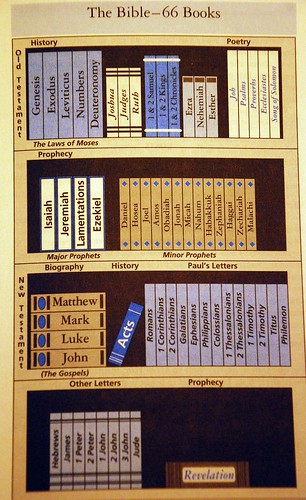
Your BBC Bookcase


From Living by The Book by Howard G. and William D. Hendricks.
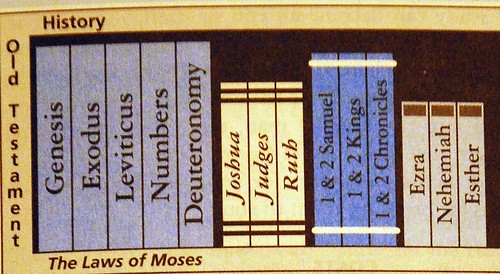
This year, we will be reading the history books on the first shelf of your Bible bookshelf:

Thursday, December 27, 2007

More Details about the BBC

I had an email with questions, and I thought I should probably fill you in on more details of the BBC by cutting and pasting my response to her:

Amount per day: About a chapter a day. It is more if the chapter is short. In my Bible, it is a page and a half. Just reading it takes about five minutes (but it is short so you can LINGER in verses that really "hit" you as you read!).

The goal is a smaller portion of Scripture everyday so you can mull it over and chew on it a while. We can talk about how to meditate on the Word too and how to dig more deeply in study in passages where you want to understand more than what you learn from just reading it.

Process: I will post on the Bible Book Club Blog on a daily basis. There I will give background info (if needed), reflections, possible applications, and a prayer. There is opportunity to give comments on the blog so everyone can read them and respond too. I hope it can be interactive.

ALSO, I would LOVE it if any of you would like to do the "post for the day" with your own background research, reflections, prayer, application! Blogspot has the capacity to allow more than one contributer on the blog. It would be great to have other "contributers for the day (week, month, etc)"! There will be times when I will be on vacation and not near a computer. So, I may even be asking for this. I am not expert on the Bible! So, don't be shy. This is a time of mutual accountability and encouragement!

Monthly Live Book Club: The discussions are face to face in my home for anyone who wants to come. :) It will be the first Monday of each month starting in February where we will talk about Genesis up to the life of Joseph. It will be a book discussion just like our book club. :) Just sharing what you learned from your reading. They are OPTIONAL though. No pressure to come, but I would love it if you did! Someone mentioned "online chat," but I don't know how to do those anymore!

SCHEDULE

Year One: The History of Israel from Genesis to Esther

Jan Genesis 1-35 (Discuss first Mon in Feb)
Feb Genesis 36 - end (Discuss first Mon in March)
Mar Exodus (Discuss first Mon in Apr)
Apr Leviticus (First Mon in May)
May Numbers (you get the idea)
Jun Deuteronomy
July Joshua
Aug Judges, Ruth
Sep 1 Sam
Oct 2 Sam, 1 Kings (skipping 1,2 Chronicles till Year Two)
Nov 2 Kings, Ezra
Dec Nehemiah, Esther

There will also be reading Psalms in their historical context. 

Year Two: Wisdom Literature and Prophets from Job to Malachi

Jan Job
Feb Ecclesiastes, Song of Solomon
Mar 1 Chronicles (Placed here to preceed prophets for context)
Apr 2 Chronicles
May Isaiah 1-33
Jun Isaiah 34-66
Jul Jeremiah 1-27
Aug Jeremiah 28-52, Lamentations
Sep Ezekial 1-32
Oct Ezekial 33-48, Daniel
Nov Hosea, Joel, Amos, Obadiah, Jonah, Micah, Nahum, Habakkuk
Dec Zeph, Haggai, Zechariah, Malachi

Psalms 73-150 and Proverbs 16-31 are sprinkled throughout

I don't have Year Three all figured out yet, but we have some time for that!

Hope this helps you!

Tuesday, December 25, 2007

My FIRST Bible Book Club Post on Christmas Day 2007: How the Bible Book Club Came to Be

I had been mulling over the idea of reading through the Bible with a “book club” group since 2004. But here is what I wrote on Christmas Day 2007:

I have been mulling over this idea for YEARS! What better way to celebrate this day, the coming of the Christ, than inviting people to join me in reading through the BOOK that holds The SCARLET THREAD of His Redemption of mankind revealed from Genesis to Revelation!

Whether you have read through the Bible multiple times, read bits and pieces, or never even touched the thing, you are welcome to join me in this adventure. I have purposely spread it over three years because I know people get so discouraged when they cannot complete their ONE YEAR Bibles in a year. They get behind by the middle of January, and they quit. Ask me how I know? Because I have been there! Listen to my story.

MY STORY

Simply put, I wasn't raised on the solid food of the Bible. The Bible was never read to me in my home, and I did not read it on my own as a young child. The few times I did go to Sunday school in my early years left me with a hodge-podge of Bible stories with great big gaps in the larger story. It was all interesting to me, but I did not have any string that tied it all together. I did have Christmas down as the birth of Christ, but I could not have told you that Easter was about the resurrection of Jesus!

Then, at ten years old, after four years of praying that someone would show me who God was and where I would go after I died, I met Jesus at Green Oaks Ranch in Vista, CA (September 1969). Following that, I devoured every single topical follow up Bible study they sent me through their correspondence course. I went to church without my family and joined "Jet Cadets for Jesus" and even memorized John 1 for pins in my "hat," but I was so embarrassed when it came to the "Bible Baseball" game when all these "church kids" would know all the answers to the Bible questions, and I did not know any of them. It was humiliating for me as a kid (keep that in mind when you invite non-churched kids to your Sunday schools and play Bible games, by the way). By junior high, I gave up on church because I was too embarrassed there. I was just a misfit. I was still a pretty good kid though, but church was not the place for me.

(God did get my heart at the end of high school though. That is another story, and I will tell it here some time, but I am focusing on the Bible stuff for right now.)

Eventually, I went to Oregon State University, joined a great group called The Navigators, and learned how to study the Bible, meditate on Scripture, and memorize it. I ATE it up and grew in my love for Him and His Word and others. By the end of college, I had a pretty good understanding of the New Testament, who Jesus was, why He came, and the life of being His disciple and investing in others through discipleship.

One thing I could never do was read through the Bible though! I had a big mental block. The Navigators put out this magazine called The Daily Walk where you were guided through the Bible in one short year. Simple? Nope. I would die at Leviticus every time! I was still in The Navigators after college and shared a room with my friend, Debbie Brizee. Every night, she would faithfully get out her Bible and Daily Walk and read.

I was in awe.

I used to joke with her that it was more like The Daily Run than The Daily Walk! (Debbie was a track runner in college though. Maybe that is why she could do it. LOL!) I admired her discipline, but I did not worry about it too much for me. I was still in God's Word, and I was growing so I was not going to be stressed about reading through it.

It was not that I did not want to read it, but I am much more geared toward chewing on smaller portions (Thus, why meditation on small bits of Scripture comes so much more easily for me.) and really understanding what I am reading through studying it (I love to do word studies!), but because I was not raised on the Bible, the Old Testament was really difficult for me to get through.

In 1982, I was in Spain helping nanny some children while their parents were learning the language. I had a conversation with one of the people there about the Bible, and he asked me how long I had been a follower of Jesus. I replied, "Fourteen years." He said (in a very condemning tone), "I can't believe you have been a believer for fourteen years, and you have never read through the Bible!"

Sigh . . . Not really encouraging was he?

Fast forward to a few months later back at the University Inn at the University of Oregon, and I am following up a brand new follower of Jesus named Karen. She had come out of a punk-rock background (It was the early 80's.), and she knew nothing about the Bible. She had questions about Creation, the Fall, the Flood, the patriarchs. Oh my! I was in over my head! The New Testament was more my specialty. "Karen, let's talk about Jesus, shall we?" Still, she persisted in wanting to know the answers to all her questions. I was sweating it when it came to finding the answers.

I needed HELP so I sent an S.O.S. distress call to my Navigator campus leader, Dennis Blevins. He offered to meet with both Karen and me. I will never forget that evening in the spring of 1983 when Dennis pretty much mapped out the whole "
Scarlet Thread" of redemption from Genesis to Revelation on a Lion's Restaurant napkin. We flew over the Old Testament through Abraham, Isaac, Jacob, and the history of Israel and landed right at the feet of Jesus! What a thrilling ride. It all fit together. How did he do that?

I was in awe.

The awestruck spell was broken, however, when Karen complained, "How come you know all of this and Carol doesn't?" (Awe to horror in a matter of seconds - I was ready to hide under the table at that point.)

Dennis asked me, "Carol, how long have you been a believer?" I managed to squeak out, "Fourteen years," remembering the sharp rebuke I received from another leader in Spain just months before when asked the same question. I braced myself for the sting of another rebuke.

Dennis graciously replied, "Karen, Carol has been a believer for only fourteen years and was not raised in a Christian home. I was raised in a home where they taught the Bible to me on a daily basis, and I have been a believer for a lot longer than Carol. So, she is doing just fine where she is at right now. She is just a 'teenager' in the Lord. That's all. Give her time."

Thank you Dennis B!!!!!

(Editor's Note: I should also say that Karen is now a professor of Old Testament Theology at a seminary. So, she had this need to know planted in her by God!)

Somehow, Dennis' "give her time" gave me the freedom to just take the time to understand the "full counsel" of God's Word on God's timetable for me and nobody else's. So, I started afresh with my Bible reading with a daily "stroll" through the pages of Scripture at my own pace. I did not put any legalistic expectations on myself that I had to finish in a year.

It took me five.

That was in the mid-‘80s. I have read through it many times since then (One time my husband, George, and I did not watch any TV or read any books and spent much of our evening time reading it and read through it in four months!). It gets sweeter and sweeter to me every time as I see this BIG GOD and His BIG PLANS for mankind through Jesus.

Since that time, I have graduated from Bible School in which I took some awesome Old and New Testament courses along the way, but I will always treasure that first time of just putting the pressure off myself to finish it and just enjoying the incredible journey of reading this love letter from God because it really is not about the reading but the relationship that grows between me, the reader, and Him, the Author of life.

So, I am inviting you to come along with me on this journey, and I pray that we will all be eternally changed through it.


Bless you!